People born with a congenital heart defect (CHDs) and living with congenital heart disease (CHD) have very different symptoms, risk factors, and quality of life compared to individuals without CHD. CHD is a significant contributor to birth-defect-related healthcare costs in early life and increasing healthcare costs among adolescents and adults. People with CHDs face a life-long risk of health problems such as issues with growth and eating, developmental delays, difficulty with exercise, heart rhythm problems, heart failure, sudden cardiac arrest, stroke, breathing problems, kidney failure, seizures, mental health challenges and increased risk of cancer. People with CHDs are now living long enough to develop illnesses like the rest of the population, such as obesity, high blood pressure, high cholesterol, coronary artery disease and other acquired heart disease. Read Congenital Heart Defects: Know the Facts for answers to frequently asked questions about CHD.
Because of their broad impact at the population level, a public health approach is needed to address the challenges of these common, critical and costly conditions. The CHD framework is a public health model which emphasizes monitoring outcomes and optimizing interventions at the population level. Core components of the model are summarized below. Read the full article “Public Health Approach to Improve Outcomes for Congenital Heart Disease Across the Life Span” (J Amer Heart Assoc, April, 2019).
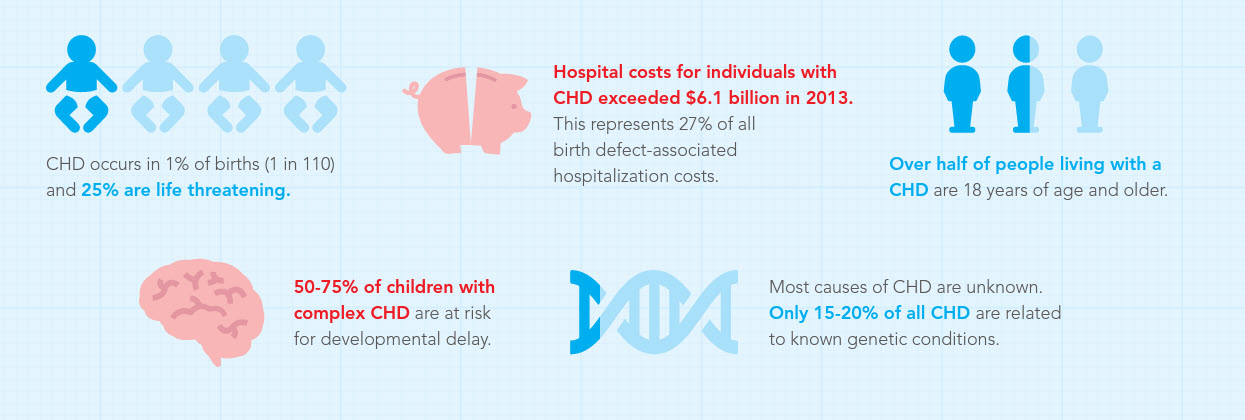
Public health Framework Infographic
 Identify and Investigate
Improve both the public health monitoring and investigation of evidenced based interventions to prevent CHD. Reduce complications and improvement of outcomes for the many infants who continue to be born with CHD

Develop Interventions and Policies
Improve the health and well-being of people living with CHD. Relay unified and aligned efforts to effectively address CHD from a public health perspective. Together we can reduce risk, improve outcomes and assure equitable access to care.

Implement and Evaluate
Implement solutions based on what is already known about CHD; and that can be advanced through prevention education, quality care and evaluation efforts.
Actions to support public health outcomes for people with CHD
- Read the article “Public Health Approach to Improve Outcomes for Congenital Heart Disease Across the Life Span.”
- Learn the facts about congenital heart defects.
- Join the CHPHC to receive monthly communication alerts about congenital heart defects and information and activities to improve outcomes for affected children and adults.
The Congenital Health Public Health Consortium (CHPHC) is supported by the Centers for Disease Control and Prevention (CDC) of the U.S. Department of Health and Human Services (HHS). The outputs of the CHPHC are solely the responsibility of the CHPHC and do not necessarily represent the official views of, or an endorsement by, the member organizations of the CHPHC, CDC/HHS, or the U.S. Government.

Last Updated
02/12/2025
Source
American Academy of Pediatrics