The National Center for a System of Services for CYSHCN supports state/jurisdiction Title V CYSHCN programs and their partners in advancing the system of services for CYSHCN by offering technical assistance, tools, training, and connections to support care for all children and youth with special health care needs (CYSHCN) and their families.
Peer-to-peer connections and mentoring are key methods programs can use to learn and apply activities in their own state/jurisdiction. This page features vignettes from Title V CYSHCN programs for quick reference and to elicit further connection and conversation. These vignettes focus on highlighting programs addressing emerging policy issues, priority needs and embodying cross sector partnerships that all align with the principles and strategies to advance the system of services for CYSHCN. Vignettes are identified by the National Center through technical assistance activities and are not an exhaustive list of national activities. Explore this section to learn about the different activities and contact information for the featured Title V CYSHCN program to connect for more information.
Arizona
The Arizona Title V CYSHCN Program is advancing policy and systems change efforts by establishing an Engaging Families and Young Adults Program to engage advisors with lived experience to inform Title V-funded work. They are finalizing a policy and procedure manual to support the integration of these advisors across all program areas. Additionally, they have expanded the involvement of family and young adult advisors statewide, implementing the program across 14 counties. For more information, please Contact Us.
California
The California Title V CYSHCN program is advancing the medical home model by aligning language and practice across state systems, local agencies, and schools. To help build shared understanding, the program engaged Maternal, Child, and Adolescent Health (MCAH) state and local staff through presentations and questionnaires focused on the core components of the medical home. The California Title V CYSHCN program is developing practical tools to support this work, including a medical home graphic one-pager, a medical home components table, created in collaboration with child-serving partners, such as Family Voices, a CYSHCN definition and identification flowchart, and an ecosystem map that illustrates how medical home activities are integrated across services statewide. For more information, please Contact Us.
Colorado
The Colorado Title V CYSHCN Program has been leading innovative policy and systems change efforts in their state through the development of a statewide electronic closed-loop referral system for developmental screening and referral to Early Intervention, participating on Medicaid policy workgroup to inform requirements and standards for Medicaid contractors, and a CYSHCN decision tool designed to help agencies reassess their roles in enabling and population health services for CYSHCN. For more information, please Contact Us.
Illinois
The Illinois Title V CYSHCN program is shifting its medical home efforts to focus on access to care, quality of life, and family-centered care. The program is aligning this work with its statewide care coordination programs (four programs total), and all care coordinators are trained on the core components of the medical home. To better meet the needs of medically underserved families and rural communities, the Illinois Title V CYSHCN program is building stronger partnerships with community-based organizations and local health departments, mapping the CYSHCN system to improve referrals and coordination, and is continuing to engage families to ensure their perspectives inform planning and implementation. For more information, please Contact Us.
Indiana
The Indiana Title V CYSHCN program supports a collaboration between Indiana Family-to-Family (INF2F), the state F2F and Family Voices affiliate, and the Division of General and Community Pediatrics at the Indiana University School of Medicine (IUSM), to improve access, information, and support for all children and youth with special health care needs (CYSHCN) and their families. INF2F brought together caregivers of CYSHCN to form a statewide family council, Indiana Family Colleagues Transforming Systems (IN-FaCTS), to identify and address issues facing families. IUSM trains statewide health and social service care supporters through the Aligned Care Support Network of the Indiana Complex Care Coordination Collaborative (ASCN), learning new ways to de-silo systems of care and improve services with emphases on relational interactions, collective accountability, and targeted outcome completion. ACSN delivers asynchronous learning modules using an e-learning platform and facilitates Community of Practice live virtual discussions. IN-FaCTS and ACSN members support each other’s work reciprocally, with IN-FaCTS sharing their experiences and visions to provide a depth of real-world examples within ACSN training activities, and with ACSN assisting in family council recruitment and training. For more information, please Contact Us.
Iowa
The Iowa Title V CYSHCN Program integrated a national framework for CYSHCN and the National Standards for Systems of Care for Children and Youth with Special Health Care Needs Version 2.0 into its needs assessment process to guide its next five-year action plan. Data collection was structured around a national framework for CYSHCN with analysis and reporting aligned to the National Standards for a System of Services for CYSHCN. The Iowa team identified priorities that aligned with the National Standards for the system of care for CYSHCN, including affordable insurance coverage, and evidence-based care, along with core domains tailored to emerging needs within their state, such as access to care, medical home, community-based services and supports, and transition from pediatric to adult-centered care. This approach offers a practical framework for prioritizing goals, objectives, and strategies. To learn how this comprehensive approach can support other state Title V programs in planning and tracking progress effectively, please Contact Us.
Louisiana
The Louisiana Title V CYSHCN program is enhancing support for healthcare practices through comprehensive implementation guides within several provider toolkits. The toolkits focus on developmental screening, care coordination, and pediatric to adult health care transition. Additionally, the program is investing in the future healthcare workforce by providing medical home didactics to medical residents, nurse practitioner students, physician assistant students, and nursing students across the state. For more information, please Contact Us.
Minnesota
The Minnesota Department of Health Children and Youth with Special Health Needs and Disabilities (CYSHND) Section approaches family engagement as a partnership, recognizing families as experts in their own experiences and essential partners in systems change. Through the Family Support Organization Collaborative (FSOC), CYSHND brings together family support organizations from across Minnesota to build connections, share learning, and identify opportunities for collective impact. The collaborative was co-created with community partners and continues to be shaped through co-design, ensuring that priorities, activities, and solutions reflect the needs and strengths of families and the organizations that support them. For more information, please Contact Us.
Ohio
The Ohio Title V CYSHCN program is working to improve access to oral health services through the Ohio Dental Care Collaborative (ODCC). The ODCC is a cross-sector partnership that brings together dental care providers, state agencies, the Ohio Chapter of the American Academy of Pediatrics (AAP), community partners, family members, and individuals with lived experience. With funding support from the Ohio Developmental Disabilities Council, the ODCC meets four times a year, is developing a statewide data and research report on dental care for people with developmental disabilities across the lifespan, and is hosting a Dental Care Summit this summer to develop recommendations to improve oral health care for CYSHCN and their families. Ohio plans to sustain this work through continued collaboration, data sharing, and advancing implementation of recommendations statewide. For more information, please Contact Us.
Rhode Island
The Rhode Island Title V CYSHCN Program is actively working to create incentives for clinicians to offer key transition preparation services as part of Early and Periodic, Screening, Diagnosis, and Treatment (EPSDT) using Medicare rates applicable at the time of implementation. These services will include readiness assessments, education/counseling, medical summary preparation, and, for youth with serious medical/developmental/behavioral/social needs, joint telehealth visits. Guidance will be provided to managed care organizations (MCOs) and clinicians about this new payment opportunity, alongside plans to explore a health care transition (HCT)/EPSDT performance improvement project to enhance transition-related care. For more information, view the tip sheet developed by The National Alliance to Advance Adolescent Health/Got Transition titled, Paying For Health Care Transition Services Under Medicaid’s Early and Periodic, Screening, Diagnosis, and Treatment (EPSDT) Benefit: Rhode Island State Example or Contact Us.
Tennessee
The Tennessee Title V CYSHCN program is supporting youth and family engagement through innovative projects led by the Department of Health’s Youth Advisory Council (YAC) and Family Advisory Council (FAC). Both councils helped inform the Tennessee Department of Health and Family Voices of Tennessee about the needs and challenges affecting their communities. This past fall, the YAC led a participatory geographic information system (GIS) mapping project to identify obstacles to quality healthcare for children and youth with special health care needs (CYSHCN). Data was collected to uncover challenges to access, including transportation and mobility challenges (i.e., limited wheelchair access), scheduling, language differences, and other community health factors that impact their communities. This project helped youth build skills in gathering and using information, leadership, and shaping decisions, while generating data to inform strategies that improve access to quality care. The FAC is developing a Guide of Statewide Safety tools to help Tennesseans and other community partners understand the unique needs of CYSHCN and their families who may travel throughout the state, while also raising awareness of the council. For more information, please Contact Us.
Utah
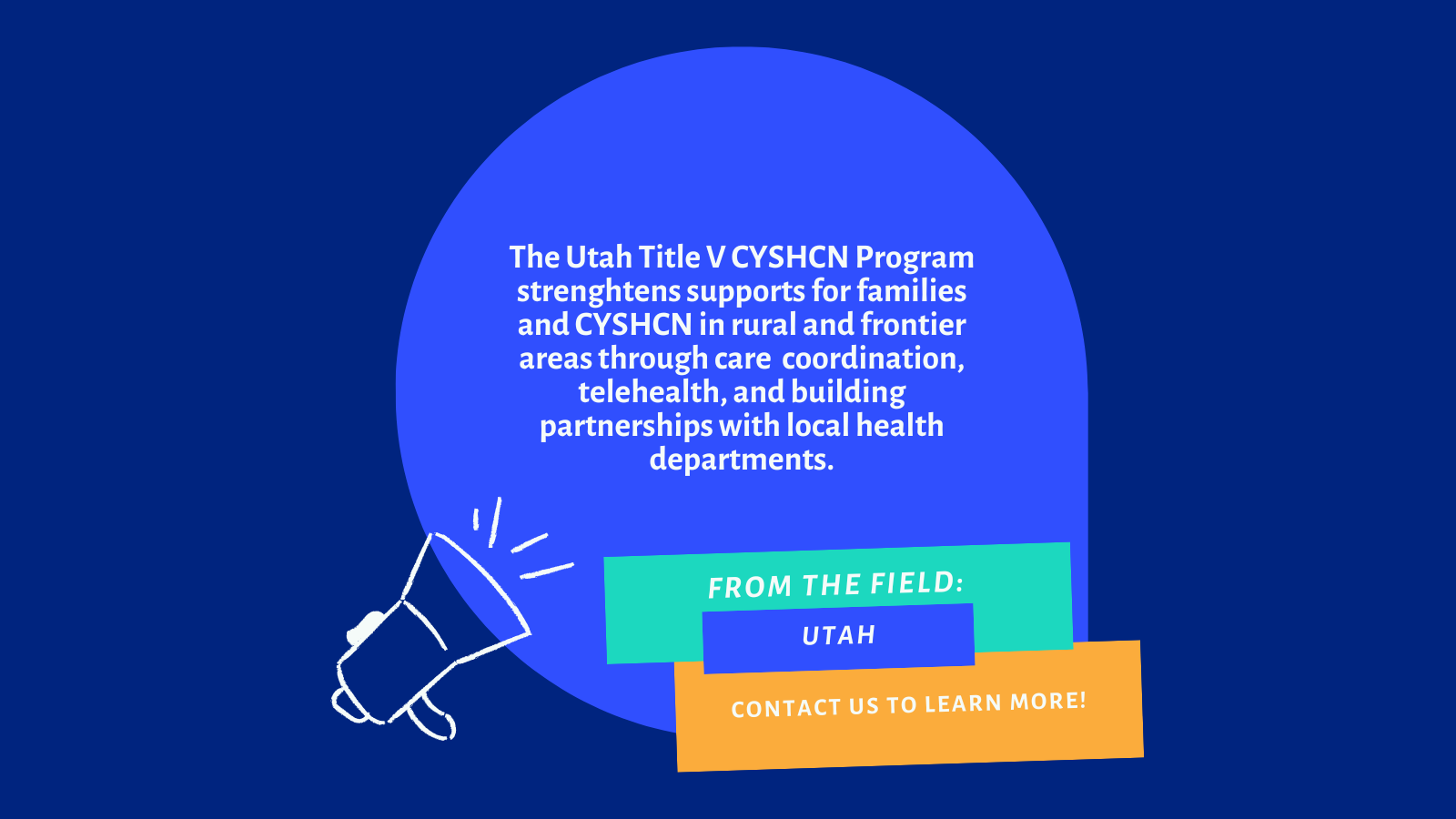
The Utah Title V CYSHCN Program engages families and CYSHCN in rural and frontier areas through care coordination, telehealth, and leveraging local partnerships. The program shifted from supporting direct care through travel clinics to more enabling and population health efforts by focusing on care coordination. Establishing contracts with local health departments has helped to support care coordination and build a connection with rural and frontier communities across the state. The program also supports the use of telehealth by helping health departments acquire the necessary equipment to improve access to services like teleaudiology. Despite facing challenges in staffing turnover for care coordinators and having limited capacity in more remote areas across the state, Utah’s strong local partnerships have helped to sustain and advance their efforts in supporting families and CYSHCN in rural and frontier areas. For more information, please Contact Us.
Wyoming
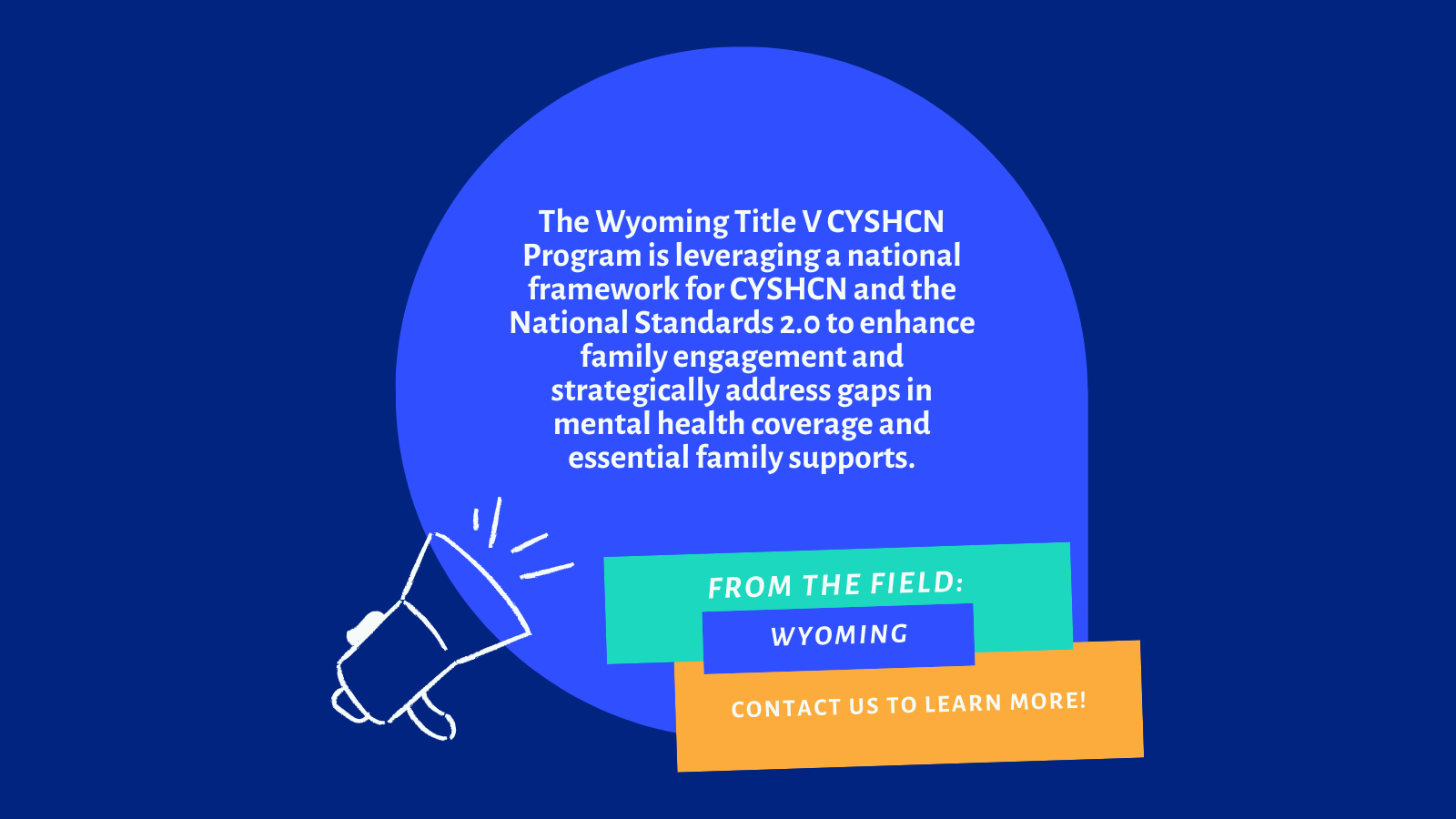
The Wyoming Title V CYSHCN Program used the National Standards for Systems of Care for Children and Youth with Special Health Care Needs Version 2.0 to identify areas for improvement within its CYSHCN system of care. The program also launched their needs assessment to align with a national framework for CYSHCN. This revealed key gaps in access to care, mental health coverage, medical equipment support, and addressing families’ basic needs (i.e., housing, food, etc.). By leveraging the framework strategies and enhancing family engagement efforts, the Wyoming team is using these insights to strategically prioritize resources to address the gaps identified. For more information, or if you're interested in sharing your state’s Title V CYSHCN Program efforts, please Contact Us.
Interested in sharing your state’s Title V CYSHCN Program efforts? Submit a short blurb about the important work your state is doing here.
Last Updated
05/13/2026
Source
American Academy of Pediatrics