Atherosclerosis begins in childhood and a lipid screen is recommended at least once between 9 and 11 years of age.
Assess
- Anthropometric measurements (growth charts).
- Physical examination.
- Screen for risk for anemia (vegetarian and not taking an iron supplement).
- Lipid profile is recommended at one visit between 9 and 11 years, before pubertal changes in lipids and lipoproteins occur.
- 15% of 6- to 11-year-olds have at least 1 adverse lipid level.
- Atherosclerosis begins in childhood.
- Risk factors include smoking, obesity, hypertension, elevated triglyceride level, and elevated cholesterol levels, and these are associated with cardiovascular events in adulthood.
- Assess for risk of disordered eating.
- If the child does not receive fluoride in their primary water source, offer supplements.
- Assess fluoride intake carefully because the risk of fluorosis is high.
- Ask about a dental home.
- Screen for food insecurity using the validated 2-question Hunger Vital Sign tool.
Disucss
Remind parents to
- Provide a nutritious breakfast, which is correlated with healthy weight.
- Make nutritious foods and drinks (lowfat milk, water) the usual options at home for meals and snacks.
- Avoid all energy drinks, which can be dangerous.
- Limit juice to 8 oz of 100% fruit juice per day.
- Limit sports drinks, which are high in sugar.
- Only give after vigorous exercise lasting more than >1 hour (but even after 1 hour of exercise, a sports drink or juice may provide more calories than burned).
- Ensure sufficient calcium- and vitamin D–containing foods and beverages each day.
- Children aged 9 and 10 years need 20 to 24 oz of lowfat or fat-free milk each day plus an additional serving of lowfat yogurt and cheese.
- Remember that dieting for weight loss can be dangerous.
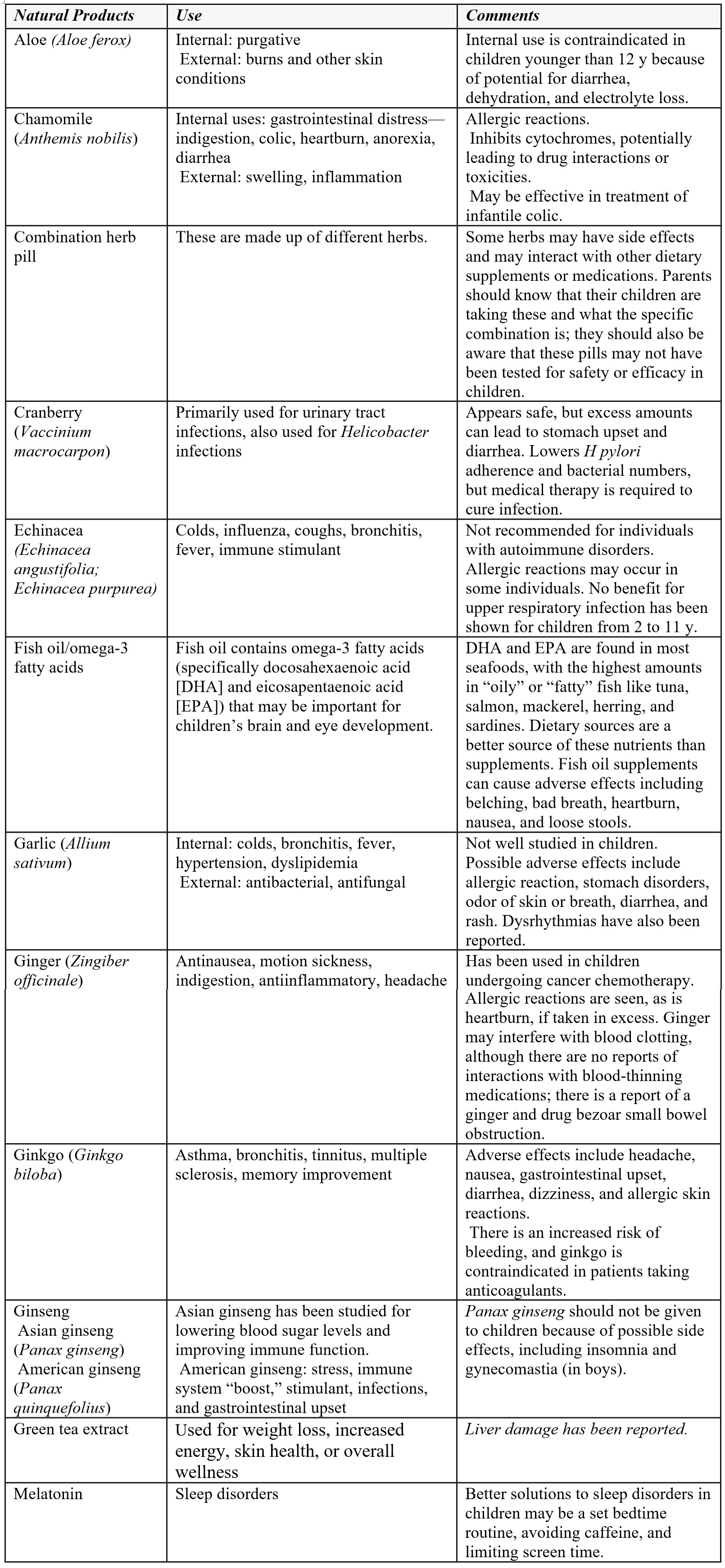
- Ask about the use of herbal medicines, natural products, and botanicals.
- The NCCIH offers safety tips on dietary supplements and mind and body practices for children and teens.
Common Natural Products Parents Give Children
Additional Resources
- AAP resources regarding Nutrition in Schools are available.
- The AAP Institute for Healthy Childhood Weight provides clinical practice guidelines and other nutrition resources for pediatricians.
- Estimated energy requirements (kcal/d) for children 3 to 13.99 years (weight in kg; height in cm)
- Males
- Inactive: −447.51 + (3.68 × age) + (13.01 × height) + (13.15 × weight) + 20/15/25
- Low active: 19.12 + (3.68 × age) + (8.62 × height) + (20.28 × weight) + 20/15/25
- Active: −388.19 + (3.68 × age) + (12.66 × height) + (20.46 × weight) + 20/15/25
- Very active: −671.75 + (3.68 × age) + (15.38 × height) + (23.25 × weight) + 20/15/25
- Females:
- Inactive: 55.59 − (22.25 × age) + (8.43 × height) + (17.07 × weight) + 15/30
- Low active: −297.54 − (22.25 × age) + (12.77 × height) + (14.73 × weight) + 15/30
- Active: −189.55 − (22.25 × age) + (11.74 × height) + (18.34 × weight) + 15/30
- Very active: −709.59 − (22.25 × age) + (18.22 × height) + (14.25 × weight) +15/30
- Energy cost of growth for boys: 3 y: 20 kcal/d; 4 to 8 y: 15 kcal/d; 9 to 13 y: 25 kcal/d.
- Energy cost of growth for girls: 3 y: 15 kcal/d; 4 to 8 y: 15 kcal/d; 9 to 13 y: 30 kcal/d.
- Males

The development of this resource was made possible with support from Abbott. The AAP maintains full independence in its editorial and strategic activities. Financial supporters have no influence over AAP content, policies, or leadership decisions.
Last Updated
02/12/2026
Source
American Academy of Pediatrics