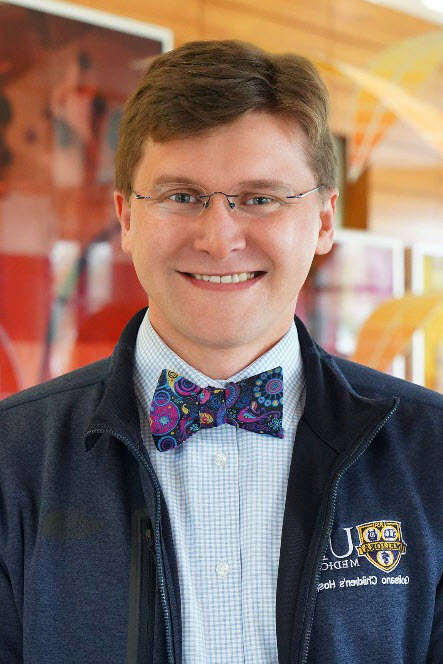
Christopher Monson, MD, FAAP
AAP Section on Critical Care
2023 Advocacy Conference Report
I attended the 2023 AAP Advocacy Conference as a 3rd-year PICU fellow. By that point, I had all but completed my scholarly project and was working on writing the manuscript. What I had hoped to get out of the conference were tools to champion the findings of my research and other topics I was passionate about. As with most adventures out of one’s comfort zone, I quickly found that I was naive and out of my depth in so many ways. Even so, the tools and skills I took away from the conference were both unexpected and, upon reflection, exactly what I needed.
My fellowship research was a public health and injury prevention project looking at the (unsurprisingly deleterious) effects of legalizing the use of all-terrain and similar vehicles on public roads. The state of Iowa, where I was training had happened to roll back these regulations in an unusually piecemeal county-by-county way that was ripe for analyzing the effect of legislation relatively removed from the typical pre-/post-implementation study design that is rife with time-based confounders. We found a shockingly large effect size that I was really hopeful would help change the minds of well-meaning legislators. Turns out that data doesn’t have the same pull in the state house as it does in the world of academia; a law allowing ATVs on public roads/highways passed the legislature and was signed by the governor that same year.
The excitement ahead of my trip to D.C. was accordingly quite subdued, because I had already failed in my first real push for advocacy on behalf of my patients. I was quickly reassured, over and over again, by both the big-name plenary speakers and so many amazing ordinary pediatricians that failure is just an expected step on the path to change. Banner policies that have saved countless lives generally all failed in their first, second, etc. push toward becoming law. The people that I heard and met inspired me to keep speaking up for my patients and to not stop until the status quo changes for the better. And it was more than empty (if inspiring) words - there were Q&A sessions and workshops to give direct feedback and strategies for moving the needle on my current target and next projects.
More broadly, one of my biggest takeaways was a new understanding of how advocacy works on the federal level. The old analogy of seeing how the sausage gets made doesn’t even do justice to the difficult and sometimes unsavory work that goes into choosing what issues to champion, how to build meaningful support in congress, and when to make a public push for specific legislation. Anyone can go yell at their congressperson; that’s our right as citizens and it feels good temporarily. But the pragmatic choices, stubbornness, and hard work that is needed to actually get legislation passed and change policy takes time and expertise that I got my first taste at this conference.
Lastly, I’ve never felt more empowered than when I was told that I truly am an expert whose opinion matters. My passion and experience have the ability to change so many more lives for the better than at each individual patient bedside - but only with a little luck, a lot of persistence, and the right tools that I began to hone under the guidance of seasoned advocates at the AAP Advocacy Conference.
Last Updated
02/12/2025
Source
American Academy of Pediatrics