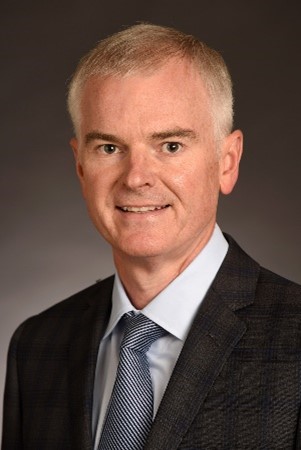
Dear Colleagues,
The American Academy of Pediatrics Section on Urology (AAP SOU) holds a unique position among pediatric urology organizations. While the Societies for Pediatric Urology (SPU), Society for Fetal Urology (SFU), and other professional bodies focus on our specialty's internal affairs, the AAP SOU exists within the nation's largest child advocacy organization. This distinction matters deeply. Our mission extends beyond advancing pediatric urology practice—it's about advancing children's health through the very best urologic care.
Through the AAP, we connect with over 67,000 pediatricians and policymakers who shape our patients' lives. This allows us to advocate for healthcare policies that improve access, provide educational resources for the wider pediatric community, and remind our colleagues that pediatric urology isn't simply adult urology practiced on smaller patients, it's a distinct discipline with its own knowledge base and nuances.
When I assumed the role of Chairperson, I felt the weight of this responsibility deeply. My journey began in 2019 when I joined the executive leadership as Secretary-Treasurer. Since then, our world has changed dramatically. A global pandemic emerged, claiming millions of lives. We've witnessed political transitions and the troubling politicization of public health measures that once enjoyed broad support. Today, we face a world where care for our most vulnerable children is no longer assured, where vaccine safety is disputed despite overwhelming evidence, and where efforts to ensure equal opportunity face mounting threats. In this environment, the work of the AAP—and our Section within it—has become even more critical.
A Defining Moment
One of the defining moments in our Section's recent history occurred in 2012. Unresolved differences between SOU leadership and the national AAP leadership led our Section to withdraw from organizing the annual international pediatric urology meeting that coincided with the AAPs National Conference and Exhibition (NCE). The SPU Fall Congress was established in its place, jointly hosted by the AAP, SPU, and SFU. While this autonomy offered certain benefits, over time the AAP stepped back from the meeting's organization. It gradually came to resemble an SPU fall meeting rather than the shared platform we'd envisioned. As SPU’s ties with the AUA pulled the meeting toward the adult urology community and away from pediatrics, we found ourselves without a dedicated meeting. Our visibility within the Academy diminished, and with it, our influence.
This weakening inadvertently weakened pediatric urology itself. We cannot afford to remain on the periphery of an organization with the AAP's political and policy clout. When pediatric urologists disengage, we lose both a venue for education and our voice in broader debates about child welfare.
Unintended Consequences
As our connection with the general pediatric community weakened, our support from adult urology diminished as well. While I'm proud that we obtained subspecialty certification through the ABU—thanks to many former SOU leaders' hard work—this recognition has come at an unexpected price. Some general urologists now believe that without subspecialty certification, they're no longer responsible for caring for children. Many of you have seen teenagers with testicular torsion transferred long distances, suffering testicular loss because local urologists refused to perform the straightforward surgery required.
I recently spoke with a urology department chairman who planned to reduce pediatric urology training time, stating that "pediatric urology training doesn't matter now that there's a pediatric subspecialty certificate." We must acknowledge this threat and look to the AAP for policy support to ensure all children receive proper care. Our field remains vulnerable without the AAP's protective umbrella.
John Lattimer, one of the influential leaders who created this section, understood this when he invited every urologist east of the Mississippi to join the AAP in New York in 1964. At that meeting, with over 2,500 attendees in a standing-room-only crowd, our Section was born. Lattimer recognized the AAP's importance, something we lost sight of in 2013 when we exited the NCE. As pediatric urologists, we must remember that we are pediatric physicians first and align ourselves with the community that can ensure our long-term success.
Building Bridges
Another challenge comes from within pediatrics itself. As we've withdrawn from certain forums, other specialties have moved to fill the vacuum. Pediatric nephrologists, surgeons, and gynecologists increasingly address urologic issues, sometimes without the depth of training we provide. Rather than isolating ourselves, we must engage with colleagues across pediatrics, clarify our expertise, and offer collaboration. The AAP provides the ideal platform for building these bridges. Our return to the NCE has already fostered joint sessions with surgery and nephrology, and we'll continue expanding such collaborations to demonstrate that we're the specialists best equipped to manage children's urologic care.
The Path Forward
I believe we've begun addressing these concerns through our Section's revitalization. When I joined the leadership in 2019, I viewed reestablishing our presence within the AAP as essential. We recognized that the AAP SOU must have its own independent meeting to thrive. We pursued a two-fold path: returning to the NCE while affirming our partnership with the SPU and SFU toward a Fall Congress with better AAP involvement.
I'm proud that both goals have shown early success. Gil Rushton, MD, FAAP, and Israel Franco, MD, FAAP, dedicated countless hours to ensure the 2023 Fall Congress succeeded with its "Master’s Class" format. That same year, our return to the AAP NCE in Washington, DC, drew standing-room-only attendance for our voiding dysfunction program under John Pope, MD, FAAP's leadership. The Master’s Class format continued successfully in 2024, with Kate Kraft, MD, FAAP leading another wonderful AAP SOU meeting in Orlando.
This year, the AAP will participate in the Joint Meeting at the 35th ESPU Congress in Vienna in early September. We'll present the AAP Urology Medal and host the Lattimer Lecture, featuring Maria Liakata, an AI expert from the Alan Turing Institute, who will address the need for maintaining the human element in this technology. We'll then meet September 27-29 in Denver, where Michael Kurtz, MD, FAAP, and Juan Corbetta, MD, FAAP, have assembled an outstanding panel. This busy program will provide clarity on practical pediatric urologic management questions, including androgen use in hypospadias, the latest approaches to evaluating ureteropelvic junction hydronephrosis, perinatal considerations in posterior urethral valves, innovative megaureter management, and genetic screening's role in congenital anomalies. This promises to be an extraordinarily enriching meeting, and I encourage you and your colleagues to attend.
Gratitude and Recognition
Many people deserve thanks for helping me through my months as Chairperson. Melissa Marx, our section administrator, comes immediately to mind—without her tireless efforts, our successes would be far more limited. I must also thank our current leadership team: William Robert DeFoor Jr, MD, MPH, FAAP, our Chairperson-elect; Anthony Herndon, MD, FAAP, our Secretary-Treasurer; and Executive Committee members Jordan Gitlin, MD, FAAP; Kathleen Kieran, MD, FAAP; Gina Lockwood, MD, FAAP; and Jason Van Batavia, MD, FAAP. Each brings expertise and commitment that strengthens our Section.
Our committees have been driving forces behind the Section's revitalization. Since beginning our restoration efforts, we've seen significant membership growth. I encourage all of you to remind colleagues about becoming Section members. Membership in the SOU represents more than a CV line, it's a commitment to children's health and a pledge to collaborate with pediatricians. The letters FAAP after your name convey to referring pediatricians your dedication to their patients, and I encourage you to display this designation proudly.
Looking Ahead
As I conclude this reflection, I'm filled with optimism. The AAP SOU is an incredibly powerful organization with a rich history. When Dr. John Lattimer sent those invitations in 1964, that simple act sparked our Section's birth and laid the foundation for decades of collaboration. Today we stand on the shoulders of those pioneers, poised to expand our influence and shape pediatric urology's future. Our recent return to the NCE, membership growth, and renewed collaborations signal a resurgence.
Yet our work is far from finished. We must continue recruiting members, mentoring trainees, advocating for evidence-based policies, and championing our patients' interests. We must recognize that pediatric urology and the care of our patients remain vulnerable, and only through our inclusion within this 60,000-member organization can we truly thrive.
Thank you for your dedication to our patients and our profession. I look forward to working with you in the months and years ahead and to seeing many of you in Denver at the NCE.
Sincerely,

Gregory E. Dean, MD, FAAP
Chairperson
St Christopher’s Hospital for Children
Temple University, Philadelphia, PA
Last Updated
08/22/2025
Source
American Academy of Pediatrics