Why Do We Need Z-Scores?
Pediatricians, caregivers and children have seen and used pediatric growth charts and understand the benefit of tracking children on these growth charts. Unfortunately, the growth charts we routinely use do not always provide us with a full understanding of the adequacy of a child’s weight and growth over time. This is true particularly for children who fall above or below the percentile curves on the growth charts. Z-scores allow us to understand and compare children’s weights even when they are above or below the percentile growth curves. Z-scores can be represented by a bell curve just like other population-level data. Most of the z-scores for any given parameter (e.g., weight-for-age) will be concentrated in the center around the mean (average), and the z-scores on the tail ends will represent the outliers (e.g., those with the lowest/highest weight-for-age)
How Do You Calculate a Z-Score?
A z-score is calculated with the following equation:

More About Z-Scores
- A z-score is a number. It can be zero, or a positive or negative number.
- A z-score can be an integer (1) or a non-integer (1.25).
- A z-score of 0 is equivalent to the average, mean, or 50th percentile (half of the scores are less than 0 and half of the scores are greater than 0).
- A positive z-score is greater than the average (e.g., 1, 2, or 3) while a negative z-score is less than the average (e.g., -1, -2, -3).
- A z-score is considered a measure of distance (i.e., how far away a weight is from the mean/average).
How Do Z-Scores Compare to Percentiles?
Data for a 6-month-old female is being used here as an example. Whole and half numbers for z-scores are being used in this example for simplicity, as are approximate percentiles.



Faltering Weight Defined
- Weight-for-length or BMI-for-age < -1.65 z score (5th percentile)
- In children < 2 years of age, weight gain <-2 z scores for age
- Decline in weight, weight-for-length or BMI ≥ 1 z score.
Example 1
Information From Weight and Percentiles Only
Two patients of the same age and sex, Patient A and B.
Patient A’s weight = 6.4 kg (between the 10th and 25th percentile).
Patient B’s weight = 8 kg (between the 75th and 90th percentile).
Patient A weighs 1.6 kg less than Patient B.
Information Added From Z-Scores
Patient A’s weight is at a z-score of -1 (1 z-score below the average/mean weight).
Patient B’s weight is at a z-score of 1 (1 z-score above the average/mean weight).
Patient A’s weight is 2 z-scores below Patient B.
Example 2
Weight-For-Length Z-Score Change
At 2 months of age, Patient A has a length of 57 cm with a weight of 4.7 kg, which is a z-score of -1.
At 4 months of age, Patient A has a length of 58 cm with a weight of 4.3 kg, which is a z-score of -3.
In 2 months, Patient A has lost 0.4 kg with a decrease in z-score from -1 to -3 (2 z-scores).
Looking solely at the data, the weight loss is concerning, but the addition of the decline in z-score raises the level of concern. When the weight-for-length data is then compared with the faltering weight definition, it is clear that the patient meets the definition for faltering weight.
Z-scores also allow you to compare patients of a different age, sex or both.
Example 3
Sibling patients are being followed for faltering weight.
Patient A is a boy and Patient B is a girl.
At 6 months of age, Patient A weighs 6.4 kg and Patient B weighs 5.7 kg.
Both weights are at a z-score of -2, which is 2 z-scores below the average weight for their respective weights-for-age.
At 8 months of age, Patient A weighs 10.7 kg and Patient B weighs 6.3 kg.
Both patients have gained weight; Patient A has gained 4.3 kg and Patient B has gained 0.6 kg.
Patient A now has a z-score of 2 but Patient B still has a z-score of -2.
Knowing that Patient B only gained 0.6 kg in two months and that her z-score remains at -2 while Patient A, her brother, has gained weight and increased his z-score to 2 is helpful.
(Z-scores give you additional information when comparing the weight of one patient with the weight of another, or when comparing one patient’s weight over time.)
Growth Charts and Data Tables
The CDC and WHO have published charts and tables that can be used along with standard growth charts to diagnose and monitor children with faltering weight. You can also use the information to calculate z-scores for your patients if desired/needed, and the standard deviation can be calculated from the data provided. A few publicly available z-score calculators are provided below to assist with gaining comfort with z-scores and for those using EMRs that do not automatically calculate z-scores. We recommend correcting for gestational age up until the age of 2 years for those children who were born prematurely (i.e., a 2-month-old ex-30-week infant would be corrected to 38 weeks gestation when plotting on all growth charts).
- WHO weight-for-age z-score growth charts
- WHO weight-for-length/height z-score growth charts
- WHO BMI-for-age z-score growth charts
- WHO weight velocity z-score and percentile charts
- CDC percentile data files
- Publicly Available Z-Score Calculator
- Publicly Available Z-Score Calculator 2
- Publicly Available Z-Score Calculator 3
- Computer Program to Analyze Children’s Growth Data
- Information for Healthcare Providers
- Modified Z Scores in the CDC Growth Charts
How Do I Explain Z-Scores to My Patients and Their Families?

A z-score is a number. The number may be a positive number (greater than 0) or a negative number (less than 0).
A child with a positive z-score or a number higher than 0, weighs more than the average child of the same age and sex.
A child with a negative z-score or a number lower than 0, weighs less than the average child of the same age and sex.
Z-scores are also called standard scores because they convert the weight to a number. By converting the weight to a z-score, we can then compare two weights for the same child over time to better determine the adequacy of any change.
A child with a z-score of 0 has a weight that is equal to the average weight for a child of that age and sex (50th percentile on the growth chart). It is not the lowest weight or the highest weight for a child of that age and sex, it is in the middle of the weights for children of that age and sex.
Using stairs or steps as an example can also be helpful. A patient with a z-score of -2 is like going down 2 steps from the main floor. A patient with a z-score of 2 is like going up 2 steps from the main floor. Both patients are 2 steps from the average child (the mean) or a z-score of 0, but they are 4 steps away from each other.
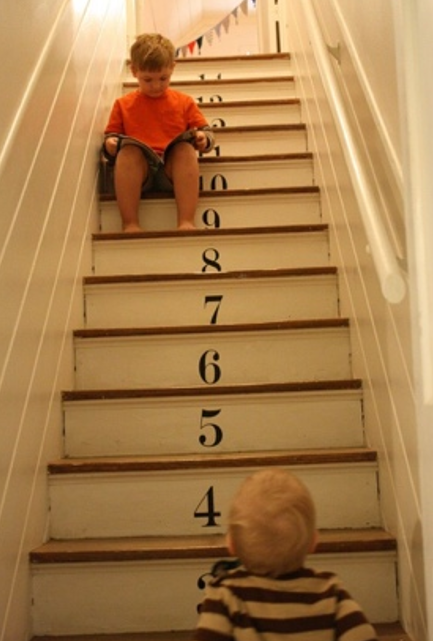
Given the familiarity of parents and children with growth charts, the WHO growth charts with z-scores (see below), provide a good way to introduce them to z-scores.


The WHO also has z-score charts for weight-for-length/height and BMI. See links below.
Last Updated
03/16/2026
Source
American Academy of Pediatrics