Congenital heart defects represent the most common birth defect in the United States (US), af fecting 1 in 100 children born. They account for 6% of all infant deaths and 15% of all pediatric hospitalization expenses in the US each year. Advancements in surgical and catheter-based interventions and medical therapies for congenital heart disease (CHD) have dramatically increased the survival rates for infants and children, resulting in more than 90% of children with CHD surviving into adulthood. The growing population of children and adults living with CHD requires equitable access to multidisciplinary, life-long care. Geographic location, race, ethnicity, and socioeconomic status should not impact access to that care.
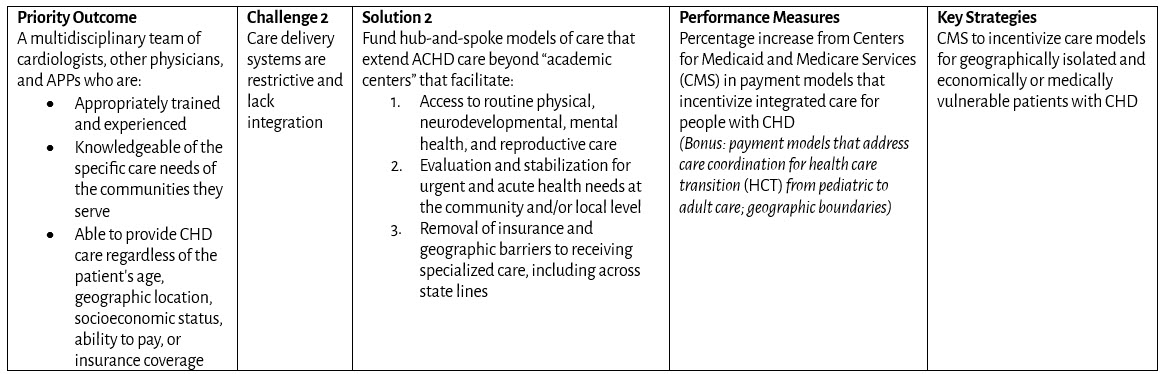
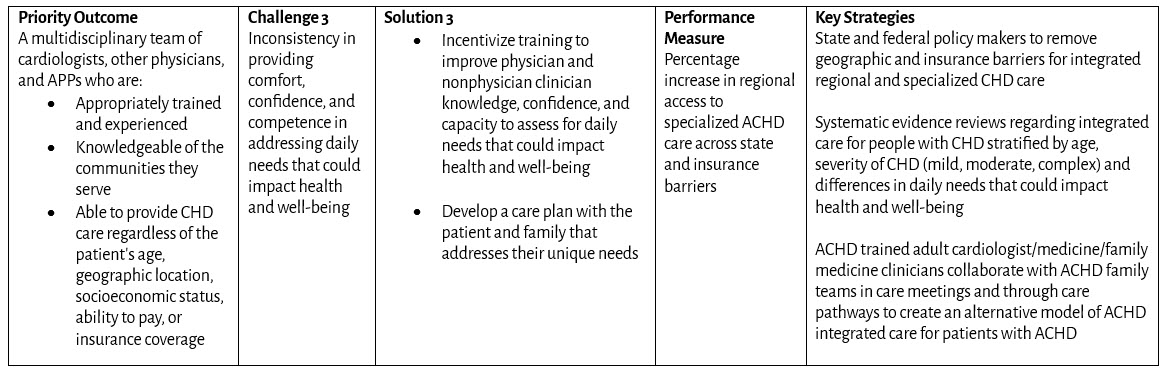
Access to Care Framework for Congenital Heart Disease
Goal: All infants, children, adolescents, and adults living with congenital heart disease (CHD) in the United States have access to comprehensive, high-quality, congenital cardiology care across their lifespan.
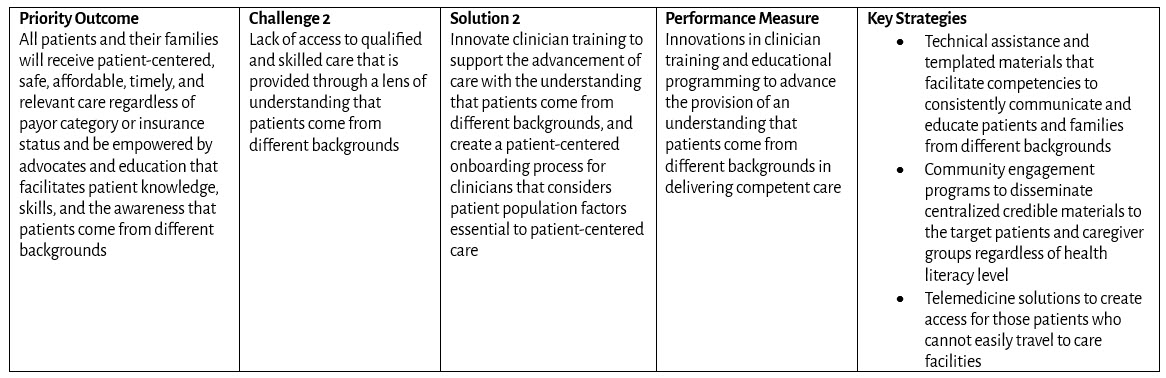
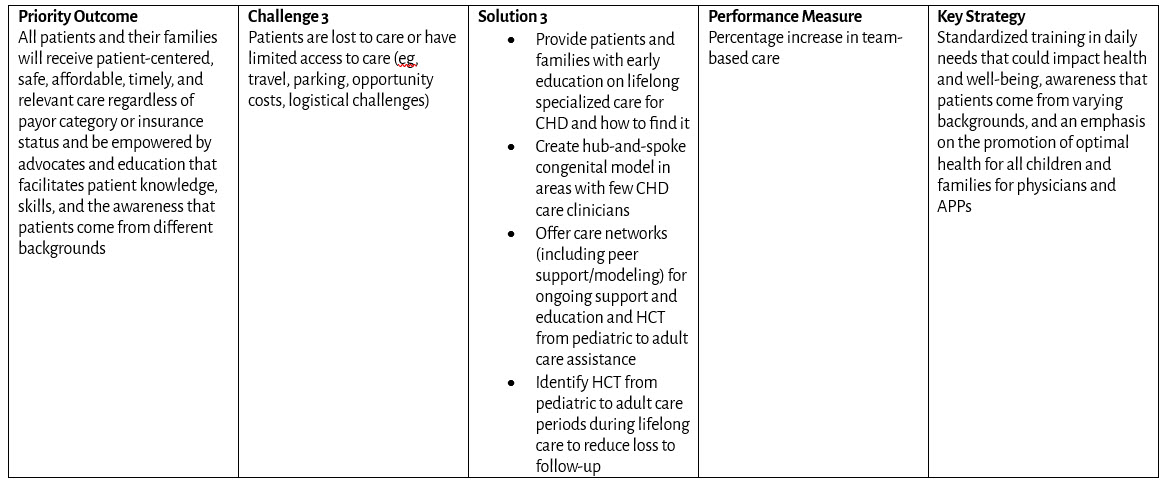
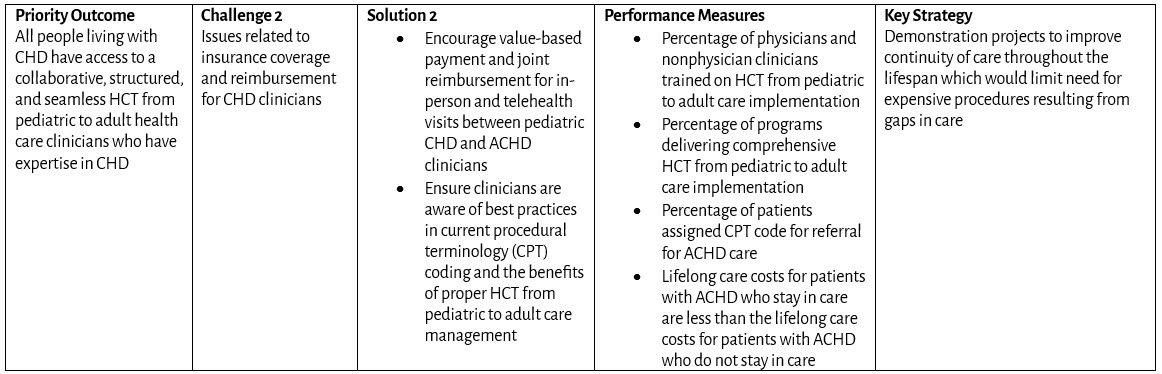
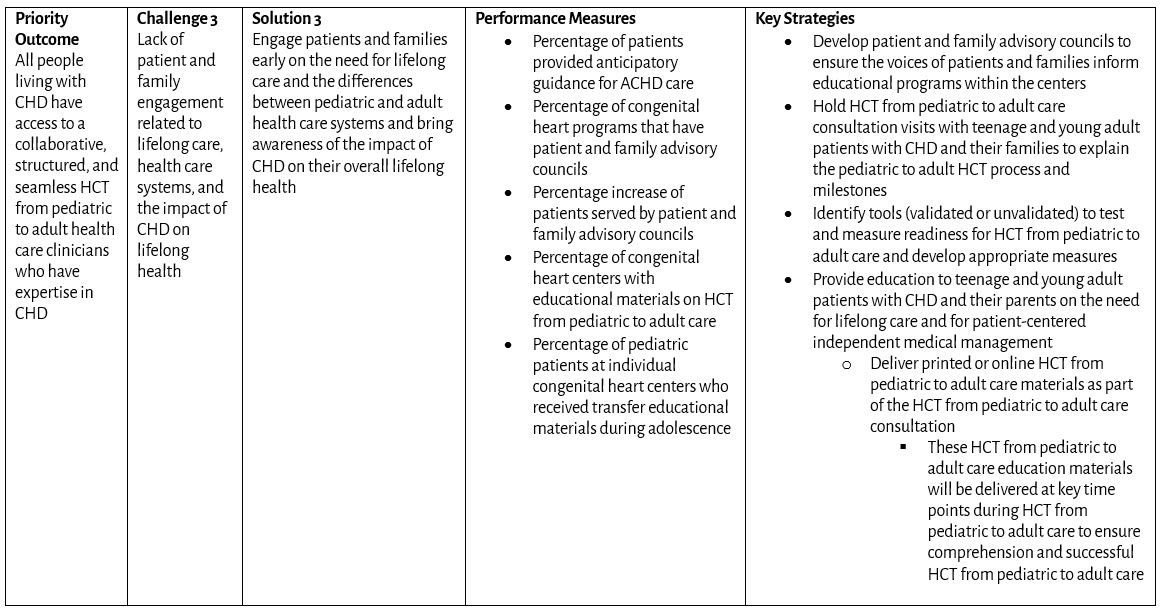
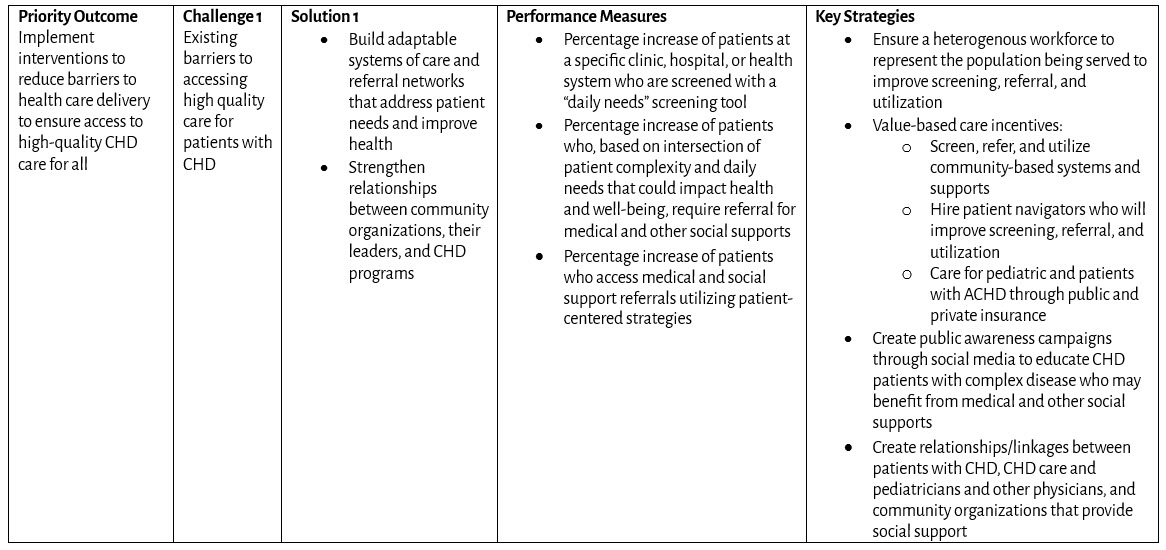
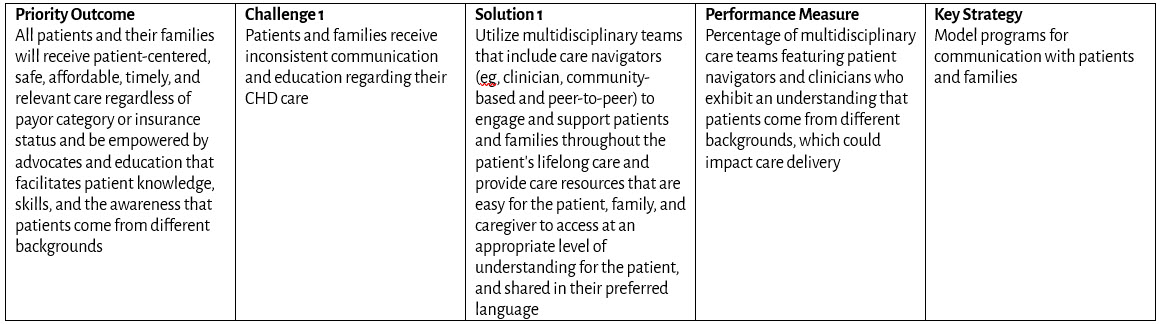
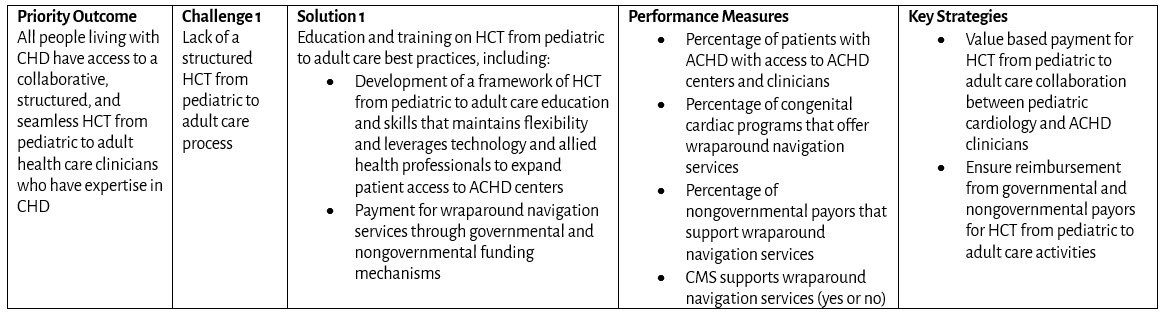
Priority Outcomes: What changes in behavior, condition, or status are required?
Challenges: What are the public health challenges that create barriers to congenital cardiology care?
Solutions: What public and private sector initiatives will advance public health outcomes for CHD?
Performance Measures: How do we measure progress toward outcomes?
Key Strategies: Which programs will drive results?
Amplification and Diversification of Workforce
Coverage and Reimbursement

Barriers to Access to Care Based on Daily Needs that Could Impact Health and Well-being

Patient and Family Engagement

Health Care Transition from Pediatric to Adult Care and Transfer


Ensure Equitable Access to High-Quality CHD Care
Challenge: The urban locations of CHD care and social inequalities cause some patients to travel long distances or forgo required CHD care.
Solutions:
- Elevate patient-centered strategies to deliver care that meets people where they are [e.g., home visits, home health, community care locations (network of care), telehealth, social media].
- Create a database of resources available to those that experience additional challenges related to social inequities.
- Increase provider and patient/family awareness of coverage, cost, and prior authorization issues among individuals with CHD.
- Partner with Community Health Workers to encourage adherence to cardiac care recommendations.
Challenge: Patients with CHD and their families of ten receive inconsistent and inequitable communication and education about their diagnoses and long-term care requirements.
Solutions:
- Simplify and translate patient care resource materials into multiple languages at a health literacy level that is easily understood, developmentally appropriate, and can be accessed and disseminated by all health care professionals.
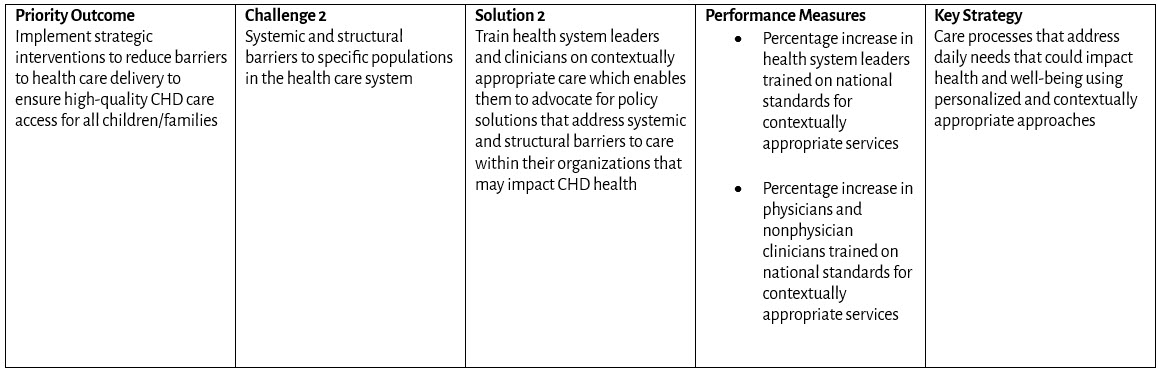
- Train health care professionals about the existence and impact of socioeconomic and racial differences on health outcomes, empowering them to create patient- and family-centered treatment and care plans.
- Encourage a standard language and approach to integrating social equity considerations into care planning.
- Ensure that patient portals consistently provide information in the most common languages, include access to medical records and educational materials, and promote active communication with providers.
- Teach health care professionals and patients about the importance of preventative CHD care to minimize superimposed chronic disease (e.g., heart failure, hypertension, blood clots).
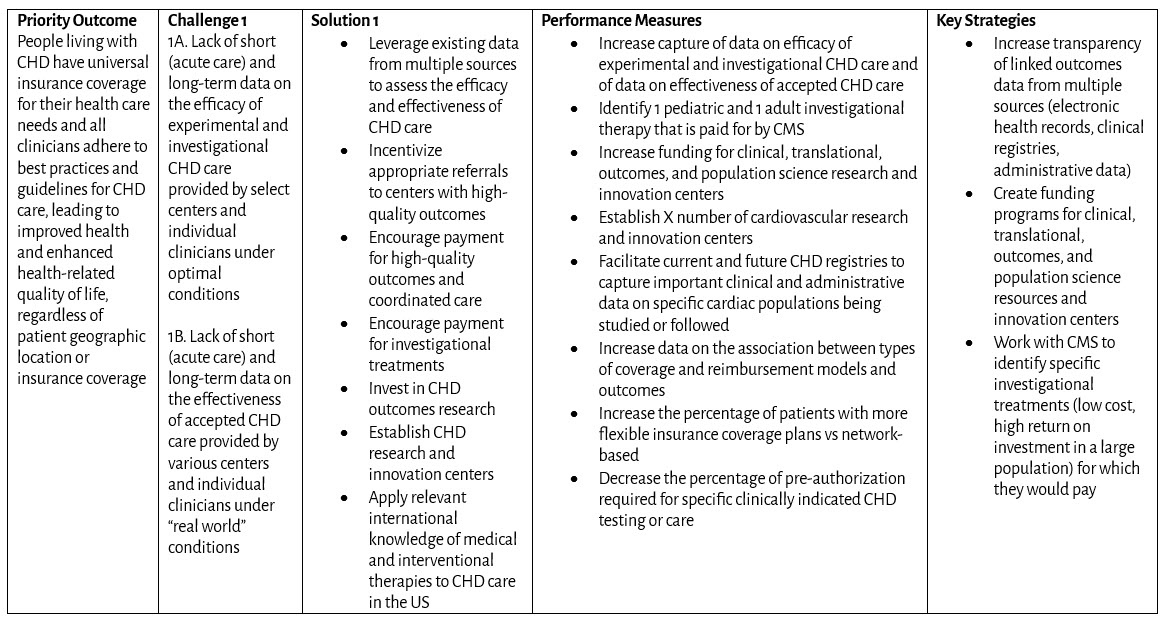
Improve Coverage and Reimbursement for CHD Care
Challenge: Lack of short- and long-term data on the potential ef ficacy of experimental and investigational CHD care modalities provided under optimal conditions and on the ef fectiveness of established CHD care modalities provided under “real world” conditions.
Solutions:
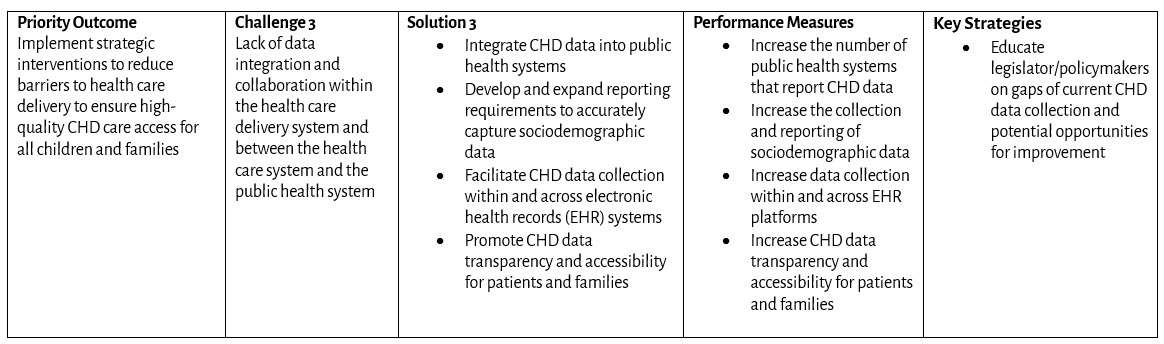
- Combine and leverage existing data from multiple sources (e.g., electronic health records, clinical registries, administrative data) to provide critical information on efficacy and ef fectiveness.
- Encourage payment for investigational treatments.
- Invest in CHD outcomes research.
- Establish CHD centers for cardiac innovation.
- Encourage data-driven payment strategies that reward performance and coordinated care.
- Incentivize appropriate referral to centers with the capacity to produce optimal outcomes.
- Adapt successful new clinical interventions used internationally into the US healthcare system.
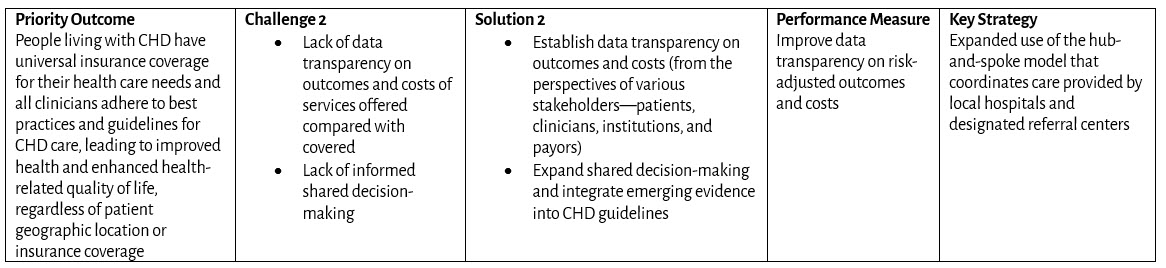
Challenge: Lack of transparency of data on clinical outcomes, costs of services that are of fered by providers and covered by insurers, and lack of informed shared decision-making.
Solutions:
- Improve the availability of data on outcomes and costs of services of fered and covered from the perspectives of various stakeholders
- Create models that allow patients and providers to make more informed shared decisions.
- Integrate emerging evidence into CHD care and coverage guidelines.
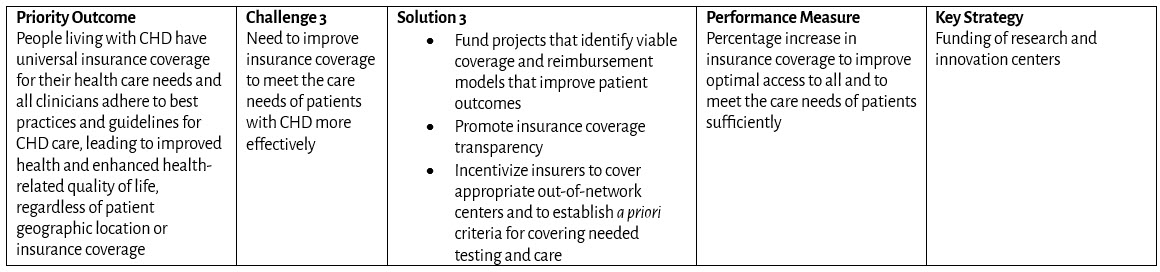
Challenge: Need to improve insurance coverage to meet the care needs of patients with CHD more ef fectively, including addressing the needs of CHD patients transitioning from pediatric to adult care.
Solution:
- Fund innovation projects that identify viable coverage and reimbursement models resulting in optimal patient outcomes.
- Incentivize insurers to cover appropriate care at out-of-network centers and the establishment of a priori criteria to provide necessary cardiac care.
- Incentivize insurers to cover appropriate care for patients transitioning from pediatric to adult care.
Ensure Adherence to CHD Care Guidelines
Challenge: Insurance coverage policies may not incentivize providers to conform to the best clinical practices.
Solutions:
- Educate payors on cardiac care guidelines for infants, children, and adults with CHD.
- Engage the United States Preventive Services Task Force to embed CHD guidelines in decision support platforms.
- Encourage payors to incentivize outreach care and reduce barriers to appropriate care (e.g., telehealth state licensure or in-network insurance requirements).
- Ensure that CHD providers receive adequate service reimbursement to support competitive hiring of CHD specialists with required expertise.
- Engage payors to compensate for services and time required for optimal transition care for patients with CHD (e.g., case management).
Challenge: Many providers are unaware that a formal process of transition to adult congenital heart disease (ACHD) care is needed, nor how to implement a process of transition in daily practice.
Solutions:
- Ensure that all pediatric patients have a plan for transition to adult care by 1) educating the interdisciplinary team on the need for transition and transfer, and 2) providing practical resources to assist in transition/transfer planning (e.g., case management).
- Increase provider awareness of existing billing codes for appropriate reimbursement for care transition activities. Encourage value-based payment for bundled care transition activities.
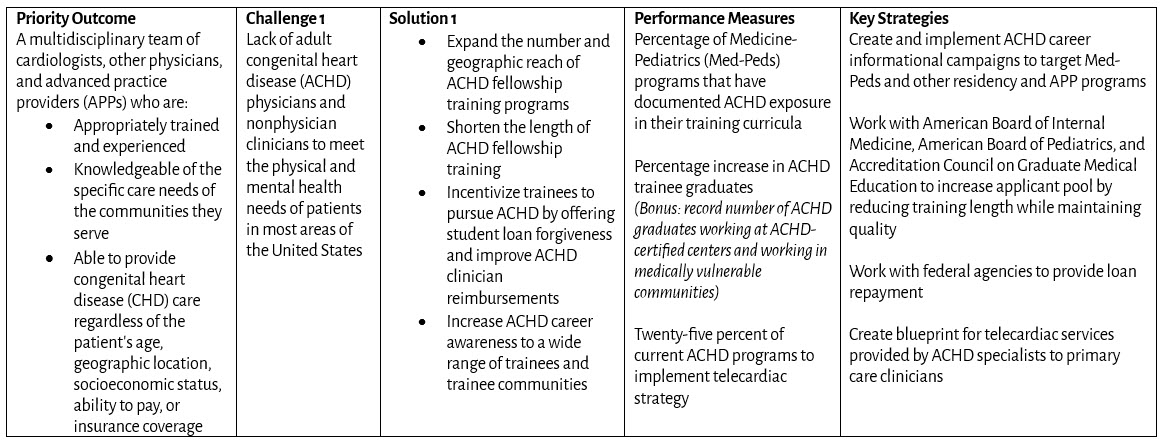
Amplify and Diversify ACHD Workforce
Challenge: Lack of health care professionals with ACHD expertise even though ACHD patients now outnumber pediatric CHD patients in the US.
Solutions:
- Expand the number and geographic reach of ACHD fellowship training programs and shorten the length of ACHD fellowship training.
- Incentivize trainees to pursue ACHD through student loan forgiveness and improved ACHD provider reimbursements.
- Increase ACHD career awareness to diverse trainees and trainee communities.
The Congenital Health Public Health Consortium (CHPHC) is supported by the Centers for Disease Control and Prevention (CDC) of the U.S. Department of Health and Human Services (HHS). The outputs of the CHPHC are solely the responsibility of the CHPHC and do not necessarily represent the official views of, or an endorsement by, the member organizations of the CHPHC, CDC/HHS, or the U.S. Government.

Last Updated
08/05/2025
Source
American Academy of Pediatrics