What is a developmental-behavioral pediatrician?
A developmental-behavioral pediatrician (DBP) is a board-certified, medical subspecialist that cares for children with a wide range of conditions by recognizing the multifaceted influences on the development and behavior of children and addressing them through systems-based practice and a neurodevelopmental, strength-based approach that optimizes functioning. Developmental-behavioral pediatricians care for children from birth through young adulthood along a continuum including those suspected of, at risk for, or known to have developmental and behavioral disorders.
The value of DBPs lies in the rigor of their medical training, interdisciplinary approach, and boundary-spanning practice settings.
What training do developmental-behavioral pediatricians receive?
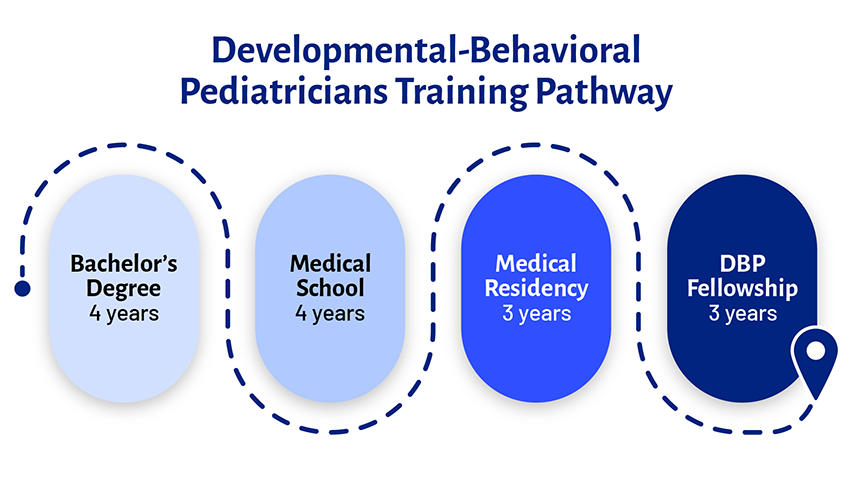
DBPs are highly trained medical subspecialists with dual American Board of Pediatrics certifications in general pediatrics as well as developmental-behavioral pediatrics. The training pathway for DBPs is typically 10 years post-bachelor’s degree, and incorporates multi-disciplinary learning.
A distinguishing characteristic of developmental-behavioral pediatricians is their boundary-spanning practice across medical, educational, and other social support systems. Unlike other medical providers, DBPs regularly work beyond traditional medical settings, collaborating with schools, therapists, and other family support professionals in the broader community. DBP fellowship training recognizes this, and incorporates interdisciplinary learning about the physiologic, genetic, and environmental influences related to DBP disorders.
What are DBP core competencies?
DBPs are trained experts in childhood development. Core competencies are in the medical prevention, diagnosis, and treatment of a range of developmental and behavioral symptoms and conditions. DBPs evaluate, counsel, and provide treatment for children, adolescents, and their families with a wide range of developmental and behavioral conditions:
- Developmental disabilities including cerebral palsy, spina bifida, intellectual disability, autism spectrum disorder, and visual and hearing disorders
- Learning disorders including dyslexia, writing difficulties, math disorders, and other school-related learning problems
- Attention and behavioral disorders including attention-deficit/hyperactivity disorder and associated conditions including oppositional-defiant behavior, conduct problems, depression, and anxiety disorders
- Tics, Tourette syndrome, and other habit disorders
- Regulatory disorders including sleep disorders, feeding problems, discipline difficulties, complicated toilet-training, enuresis (bedwetting), and encopresis (soiling)
- Delayed development in speech, language, motor skills, and thinking ability
- Behavioral and developmental problems complicating the full range of pediatric chronic illnesses and conditions (for example, genetic disorders, epilepsy, prematurity, diabetes, asthma, cancer)
- Environmental exposures including those that occur during the gestational period
Given the complexity of many developmental-behavioral disorders, DBPs frequently coordinate care across a range of subspecialists and other professionals, using a team-based approach. Team members may include a clinical social worker, nurse practitioner, neurologist, occupational or physical therapist, speech-language pathologists and others.
This resource was made possible through the generous support of AAP donors to the Friends of Children Fund.
Last Updated
01/21/2026
Source
American Academy of Pediatrics