What are the new COVID-19 vaccine recommendations for Fall 2026-2027? Who is eligible to receive the updated vaccine?
Each year, updated formulations of COVID vaccines are manufactured to provide better protection against currently circulating variants and prevent serious consequences of COVID-19, including severe disease, hospitalization, death, and long COVID.
The AAP recommends COVID-19 vaccination as follows:
- Completion of an initial vaccination series for everyone ages 6 -23 months of age, or a single dose for those under age 2 years who previously completed their initial series.
- Two or more doses for children 6 months – 18 years of age who are moderately or severely immunocompromised.
- A single dose for all children and adolescents 2-18 years of age who are at high risk for severe COVID-19, residents of long-term care facilities or other congregate settings, persons who have never been vaccinated against COVID-19, or persons whose household contacts are at high risk for severe COVID-19
- Children 2-18 years of age whose parent or guardian desires protection from COVID-19 for their child should be offered a single dose.
There are two types of COVID-19 vaccines recommended for use in the United States – mRNA vaccines and the protein subunit vaccine. There is no preferential recommendation when multiple vaccine options are available.
Please see the AAP Pediatric COVID-19 Vaccine Dosing Quick Reference Guide for more details, including recommendations on the intervals between doses.
Additional Resources:
Who is considered at high risk for severe COVID-19?
AAP recommends a single dose of COVID-19 vaccine for all children and adolescents 2-18 years of age who are at high risk for severe COVID-19 (other than moderately or severely immune compromised children, who are recommended to receive multiple doses). These risk groups are described in the AAP Policy Statement as follows:
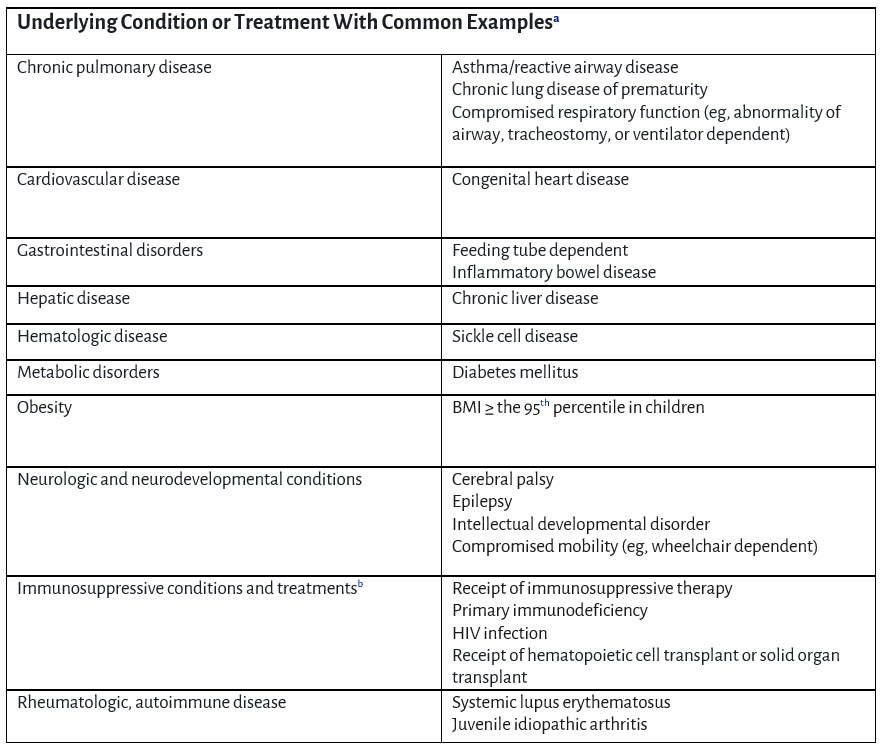 a List of examples is not exhaustive
b Children who are moderately or severely immunocompromised require 2 or more doses of COVID-19 vaccine. Refer to AAP Recommended Child and Adolescent Immunization Schedule or AAP Pediatric COVID-19 Vaccine Dosing Quick Reference Guide for dosing guidance.
Which COVID-19 vaccines have been approved for use in the US?
Moderna mRNA Vaccine
- Spikevax Package Insert (ages 6 months and up)
- mNEXSPIKE Package Insert (ages 12 years and up)
Pfizer-BioNTech mRNA Vaccine
- Comirnaty Package Insert (ages 5 years and up)
Novavax Protein Subunit Vaccine
- Nuvaxovid Package Insert (ages 12 years and up)
What is the recommended interval between the doses of an mRNA COVID-19 vaccine series? How can I determine what my patient needs if they already received at least one COVID-19 dose?
Please refer to the AAP Pediatric COVID-19 Vaccine Dosing Quick Reference Guide for dosing intervals. This resource offers the dosing intervals for unvaccinated children and previously vaccinated children. Also included is dosing information for children who are moderately or severely immunocompromised.
What are the vaccine recommendations for a child who turns 2 years old during their initial vaccine series?
A child should receive the recommended dosing based on their age at the START of their vaccine series. For example, a child who begins their initial series at age 23 months should receive two doses of Moderna Spikevax vaccine.
Which vaccine dose should a child with moderate or severe immunocompromise receive if they have a birthday between doses?
A child should receive age-appropriate vaccine product and dosage based on their age on the day of vaccination. For example, for children who turn 11 to 12 years of age, administer the recommended product/dosage for 12 year olds for all doses that are administered after the child turns 12 years of age. See additional information in the AAP Pediatric COVID-19 Vaccine Dosing Quick Reference Guide.
Can I administer a COVID-19 vaccine to a patient who is currently sick with COVID-19?
COVID-19 vaccination should be deferred for patients with a current SARS-CoV-2 infection until they recover from their acute illness.
Individuals who recently had SARS-CoV-2 infection may consider delaying COVID-19 vaccine by 3 months from symptom onset or positive test (if infection was asymptomatic). Studies have shown that increased time between infection and vaccination may result in an improved immune response to vaccination.
Are there any different side effects or safety concerns with the updated 2025-2026 formula mRNA vaccines?
No, the side effect and safety profile are the same as that of previous formulations. The side effects have been similar to other routine vaccines- sore arm or leg, redness, fatigue, fever, chills, headache, myalgia, and arthralgia. The side effects are temporary and mostly mild or moderate. Anaphylaxis has been observed following receipt of COVID-19 mRNA vaccines, but this has been rare. Rare cases of myocarditis or pericarditis have been reported – most often in males between 12-39 years of age. Additional information on common side effects and rare adverse reactions can be found in the package inserts of the vaccine products:
Moderna mRNA Vaccine
- Spikevax Package Insert (ages 6 months and up)
- mNEXSPIKE Package Insert (ages 12 + years)
Pfizer-BioNTech mRNA Vaccine
- Comirnaty Package Insert (ages 5+ years)
Novavax Protein Subunit Vaccine
- Nuvaxovid Package Insert (ages 12+ years)
Last Updated
10/06/2026
Source
American Academy of Pediatrics