
The Center is dedicated to promoting the evidence base and best practices for healthy social media use by synthesizing and sharing the current research surrounding social media and mental health.
This page is for researchers and others interested in diving deeper into current research. We will highlight government reports, new research studies, publications and published commentaries from the Center’s Co-Medical Directors, and an annual review of relevant gaps in the literature.
What the Research Says
NEW: Second Annual Review of the Gaps in the Literature
Explore our second annual review of key research gaps in social media and youth mental health, including emerging risks like AI, short-form video, and the need for longitudinal and intervention studies.
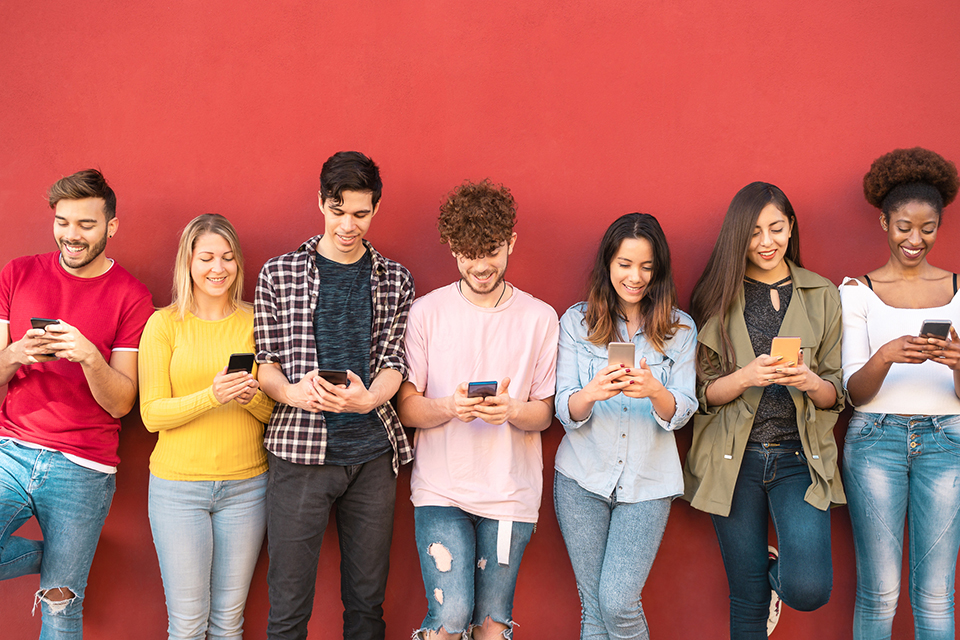
New Research on Digital Media and Youth
Highlighting emerging research that shows what parents and teens think about media and how the use of media continues to change.
Parent-Reported School Phone Policies: Prevalence, Components, and Violations
Dr. Megan Moreno, Co-Medical Director of the Center, and her team surveyed 2,500 parents of children ages 10-17 to learn more about parent perceptions of school phone policies, including how families communicate and how that communication may be connected to phone policy violations. In the study, published in the Journal of Adolescent Health, the authors found that most schools have a smartphone policy, but they vary in level of restrictiveness, and many parents frequently contact their children on their smartphone during the school day, either once daily (25%) or multiple times a day (38.5%). They also found children were more likely to have a phone policy violation if they had an ongoing or chronic health condition, their parents contacted them at school by phone at least once a day, their school had a less restrictive policy, or their school’s policy was new in the past year.
Digital Media Use and Child Health and Development: A Systematic Review and Meta-Analysis
A recently published systematic review and meta-analysis of 153 longitudinal studies conducted globally explored the association between digital media use and risks to child and adolescent health and development, including socialemotional, cognitive, physical, and motor health. Specifically, studies explored social media use, video gaming, and other media use, including digital devices (e.g. computers, smartphones) and messaging and communication platforms (e.g. emails, text messaging, video chatting). Authors considered potential moderators such as age, gender, and year of study publication, but did not address factors such as child-specific differences, contextual factors, or the purpose or content of the digital media. Overall, the authors found that digital media use is consistently associated with risks to child and adolescent health and development, though the level of association varies by media type.
How Teens Use and View AI
New research from the Pew Research Center discusses how teens use AI chatbots, how they think chatbots will impact their lives, and parents’ perceptions of their teens’ use. A majority of teens report using AI chatbots, including nearly 3 out of 10 who use them daily. Overall, teens tend to view the impact of AI on their own lives more positively than negatively, but many are concerned about the impact of AI on society. Despite the high level of use among teens, parents’ perception of their teens’ use is lower than their actual use. This report details these findings and suggests how common chatbot use has become in many teens’ everyday lives.
How Parents Manage Screen Time for Kids
New findings from Pew Research Center show how widespread screen use is for children under 12, and dives into the reality parents face trying to manage it. Most children are introduced to screens very early, often before age 2, and many parents provide smartphones for contact, learning, or entertainment. At the same time, parents express significant concerns about social media risks, question whether they are doing enough to manage screen time, and want stronger action from tech companies and lawmakers. These findings highlight how deeply screens are embedded in daily family life.
Boys in the Digital Wild: Online Culture, Identity and Well-Being
A new report from Common Sense Media shares survey data from more than 1,000 adolescent boys from across the United States. The report highlights that constant exposure to masculinity-related content is linked to loneliness and emotional silence. The data also demonstrates the importance of relational health and support systems - parents are a boy's first choice for support, and other adults like teachers and coaches have a large role to play as well. The report also includes recommendations for parents and others on how to best support young boys navigating this digital ecosystem.
Diverse Platforms, Diverse Effects: Evidence from a 100-day Study on Social Media and Adolescent Mental Health
A new study from the Netherlands examined the association between social media use and mental health among 479 adolescents aged 14-18-years-old. The results highlight that impacts of social media use on youth mental health can vary based on the platform used. These findings support recommendations from our 5 Cs of Media Use, especially a focus on the Child and Content. In the study, the authors note that TikTok, Instagram, and YouTube are highly visual platforms, and edited content encountered on these platforms might contribute to social comparisons and decreases in self-esteem. Snapchat and WhatsApp are primarily used for direct communication with friends and family and may increase social connection, which can have a benefit on well-being and friendship closeness. Thus, how teens use social media and the content they engage with can impact their experiences, and subsequently, their well-being.
The Good and Bad of Social Media: What Research Tells Us
The connection between social media and mental health is complicated and personal. Everyone responds to social media differently. This infographic provides a few ways to think about how social media impacts kids and teens.
Social Media & Mental Health: What Teens Ask, What Research Says
Explore evidence-based answers to questions we commonly get asked in interviews with middle school- and high school-aged students about social media and youth mental health.
AAP Research Reports
Youth, Social Media & Mental Health in Schools: Needs Assessment
Discover key insights from a national needs assessment on youth, social media, and mental health. Learn what educators are seeing in schools, the challenges they face, and the resources they need to promote healthy digital behaviors and student well-being.
Center of Excellence on Social Media & Youth Mental Health
|September 10, 2025

NTIA’s Request for Comment on Initiatives To Protect Youth Mental Health Safety and Privacy Online
In November 2023, AAP responded to the National Telecommunications and Information Agency’s call for comment on Initiatives to Protect Youth Mental Health Safety and Privacy Online.
American Academy of Pediatrics
|November 16, 2023

Putting Forward a New Narrative for Adolescent Media
Co-Medical Directors, Drs Megan Moreno and Jenny Radesky discuss what we currently know about social media and youth mental health and the need to shift the popular narrative about media use that dominates the media.
Center of Excellence on Social Media & Youth Mental Health
|August 1, 2023

Community-Informed Solutions for Social Media and Youth Mental Health
In Summer 2024, Center researchers, with the Hassenfeld Child Health Innovation Institute and the National Parents Union Center for Parent Voice, conducted 5 focus groups with 48 caregivers from diverse racial/ethnic and socioeconomic backgrounds to understand how they see the problem and potential solutions around social media and mental health. This report reflects those focus groups and key takeaways from parents/caregivers.
Center of Excellence on Social Media & Youth Mental Health
|August 1, 2024

Kids Online Health and Safety Task Force (KOHS) Report
The Kids Online Health and Safety Task Force (KOHS) report provides best practices for parents and caregivers on safer social media and online platform use for youth and recommended practices for industry.
Substance Abuse and Mental Health Services Administration (SAMHSA)
|July 19, 2024
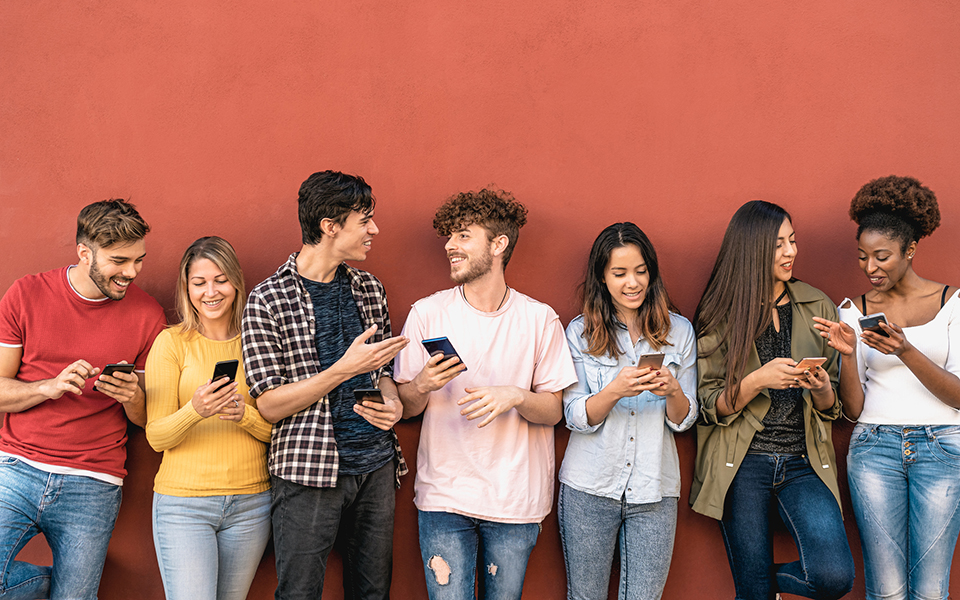
First Annual Review of Gaps in the Literature
From May 2023 to April 2024, Center researchers conducted literature reviews and environmental scans of existing resources to inform our Q&A Portal answers. From this review, they identified current gaps in the literature.
Center of Excellence on Social Media and Youth Mental Health
|December 11, 2024
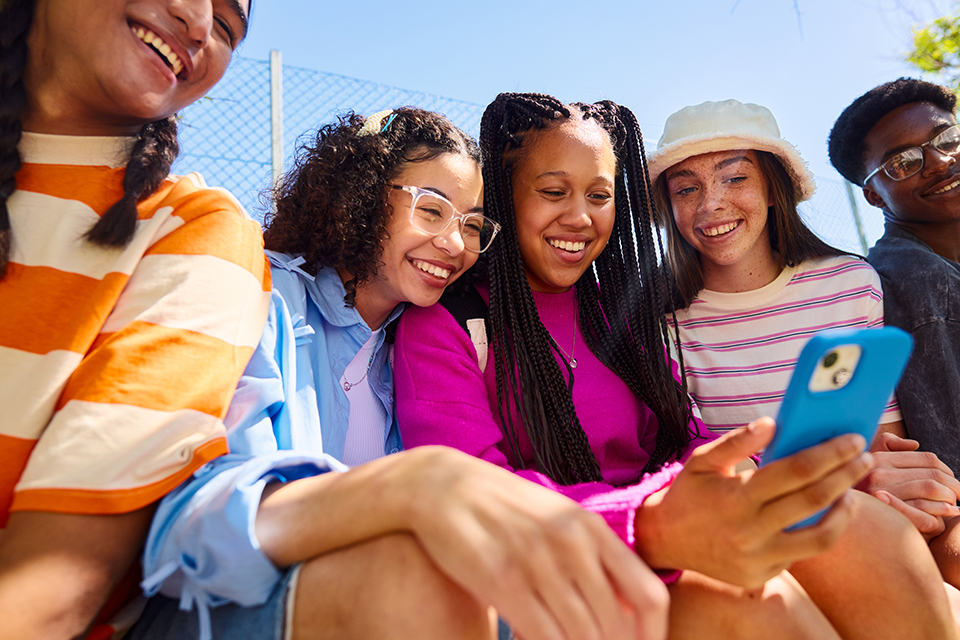
Q&A Portal Research Process
Watch this short clip detailing the research process for all Q&A Portal submissions and check out some of our featured Portal questions.
Research On The Effects Of Social Media Use By Geographic Region
Question: Is there any research surrounding the effects of social media on youth based off of geographic regions?
Answer: Great question! Unfortunately, there is limited research on geographic differences and social media use among youth in the U.S. and even less that looked at the actual effects of this usage. Read the rest of this answer here.
Social Media & Youth Mental Health Q&A Portal
|October 18, 2023
School Phone Policies
Question: We are looking for any research on the impact of cell phone use policies, or lack of policies, in middle and high schools. We have heard that a policy of no phones during instruction time improves learning.
Answer: Overall, most of the research on cell phones in schools examines the impact of phone use on student behavior, rather than evaluation of whether cell phone policies are successful at improving learning. Read the rest of this answer here.
Social Media & Youth Mental Health Q&A Portal
|April 12, 2024
Related Research

National Academies of Sciences, Engineering, and Medicine Report: Social Media and Adolescent Health
A December 2023 report from the National Academies of Sciences, Engineering, and Medicine offers recommendations for social media companies, Congress, the U.S. Department of Education, and others to minimize the harm of social media use on adolescents’ health while maximizing its benefits.
Read

Funding for the Center of Excellence was made possible by Grant No. SM087180 from SAMHSA of the US Department of Health and Human Services (HHS). The contents are those of the author(s) and do not necessarily represent the official views of, nor an endorsement by, SAMHSA/HHS or the US Government.
Last Updated
03/06/2026
Source
American Academy of Pediatrics