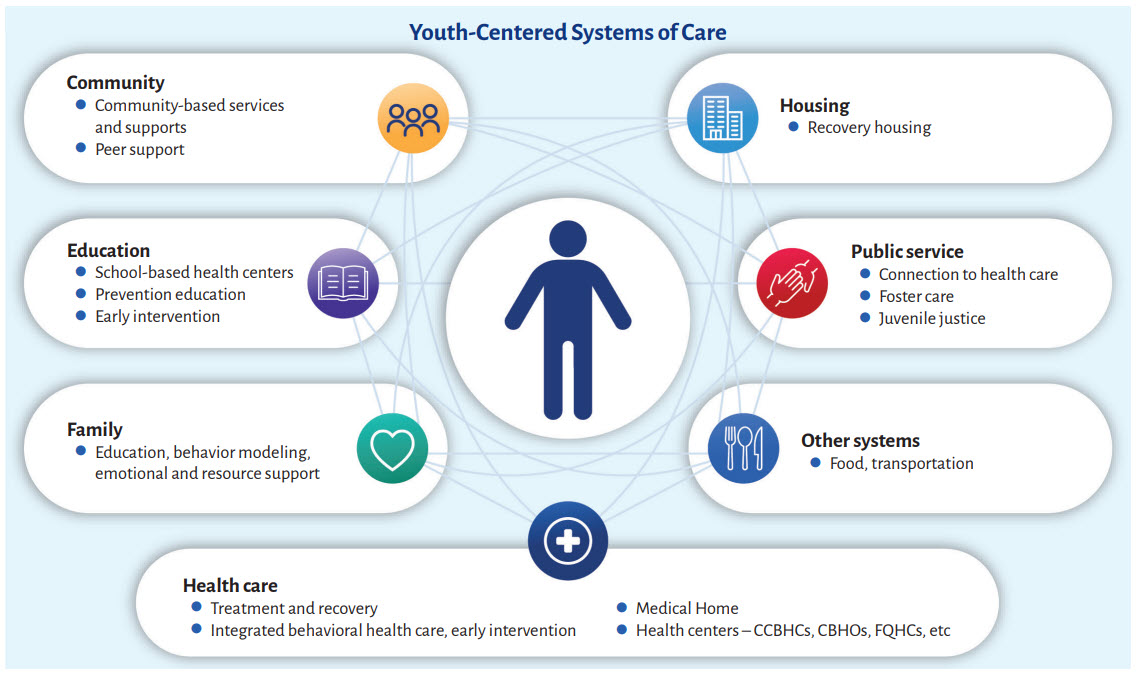
Effective AYA substance use treatment requires coordinated, youth-centered systems of care:
Multi-system Coordination: Successful substance use treatment engages all systems that impact AYA, including family, schools, health care, social service, community organizations, and housing programs.
 What to Know: Traditional youth substance use treatment programs often experience challenges with retention, with national data indicating that about one third of AYA leave treatment before completion.10 In a retrospective study conducted on a primary care-based substance use treatment program, one in three AYA who discontinued treatment later returned to care.3
 What to Do: This study highlights the potential value of flexible, accessible care models in creating pathways for ongoing care for AYA. Treatment programs should respond to individual AYA needs, create opportunities for return to care, and collaborate with primary care, schools, and families to create comprehensive support.
What to Know: AYA who encounter multiple systems have a high likelihood of dealing with significant levels of trauma.
What to Do: Use trauma-informed practices to avoid re-traumatizing or further traumatizing AYA. Create flexible care plans to help address and accommodate for social and environmental factors influencing ability to access services.5
What to Know: AYA experiencing child welfare and juvenile justice systems are at significantly higher risk for substance use.6,7
What to Do: Embedding screening, assessment, referral, and treatment into child welfare and juvenile justice settings can help connect youth to behavioral health care earlier and more consistently.
 Foster care case planning and juvenile justice intake can include routine substance use and mental health screening, warm handoffs to behavioral health providers, coordination with schools and health care providers, and family-centered treatment planning.
In juvenile justice settings, this may also include offering treatment, and recovery supports during detention, probation, or reentry planning, so youth are connected to care rather than only receiving punitive responses.
What to Know: AYA struggling with substance use often experience comorbid conditions. In 2024, two fifths of adolescents who had a substance use disorder in the past year also had a major depressive episode.1
What to Do: Systems can help address co-morbidities by integrating behavioral health care with other medical care, anticipating the potential need for treatment of mental health disorders, referring to additional care through warm hand-offs, and by strategizing for ongoing (re)engagement with AYA.5
Universal screening and early identification with multiple points of screening and brief intervention.
What to Know: Screening is a key component of AYA substance use prevention and early intervention. Early identification of a substance use concern helps get AYA necessary care.11
What to Do: Build screening into routine touchpoints during school-based health center visits, annual wellness visits, behavioral health intakes, and emergency department encounters. Screenings should be done at regular intervals, such as every six or 12 months. Use AYA validated screening tools, such as CRAFFT, S2BI, and BSTAD, for early detection of substance use.
What to Know: Strong referral pathways can also support timely follow-up care and help ensure AYA remain connected to needed services.
What to Do: Positive screens should be followed by brief interventions using motivational interviewing techniques. Warm handoffs to higher levels of care, or other service providers can be done as necessary.
Comprehensive education to support prevention and informed decision-making.
What to Know: Families are key partners in prevention. Family-based interventions have been found to reduce initiation and use of substances in adolescents ages 10–14.12 This includes training parents and caregivers in preventive skills to support youth and can result in improved family life, social connection, and even reduction in parent alcohol use.12
What to Do: Train families in family-based interventions around communication, rule-setting, and monitoring, and provide substance use education. Gain buy-in by engaging community organizations for recruitment and asking parents and caregivers what information they would like to receive. Host education and training sessions at multiple locations and times to reduce barriers to access.
What to Know: AYA may have varying levels of knowledge of specific substances, risks related to substance use, and policies/regulation. Community, family, and school norms can also influence substance use and help-seeking behavior.13 Prevention activities can help provide evidence-based information, address misinformation, promote help-seeking behavior, and teach healthy life and relationship skills.
What to Do: Offer comprehensive, destigmatized substance use education integrated into community, school, and health care settings to give AYA the tools and knowledge to make informed choices, including asking for support when needed. Lead with supportive resources, emphasizing autonomy over punishment, to effect sustainable behavior change. Consider partnering with community coalitions for community intervention and community-led education campaigns.
What to Know: Prevention messaging should include provider guidance, youth perspectives, and the voices of youth with lived experience and be easy for families and AYA to access.
What to Do: Expand prevention messaging across settings by sharing clear, youth-centered information through schools, community organizations, health care settings, social media, and other trusted communication channels.
AYA-centered care includes AYA voice in decisions that affect their care.
What to Know: Centering AYA voices can happen at multiple levels, from individual treatment planning to broader prevention, program design, and policy efforts. It expands beyond treatment into collaboration in substance use prevention messaging, program planning, and policy. This collaboration supports the development of authentic, effective education campaigns and programs that meet the needs of AYA.
What to Do: Review existing needs assessment or survey data and incorporate information about AYA needs and desires into program planning. Create feedback loops for AYA receiving services, such as a survey or suggestion box, for AYA to share their preferences., Iand incorporate that feedback.
What to Know: Establishing treatment plans and goals in collaboration with AYA and their families can support finding solutions to address barriers proactively. AYA- friendly services prioritize confidentiality and safety in comfortable settings with welcoming providers.4
What to Do: When possible, co-design programs and referral pathways with AYA, seeking their feedback and suggestions to inform each step of their care. Provide accessible information up front and creatingcreate individualized approaches.