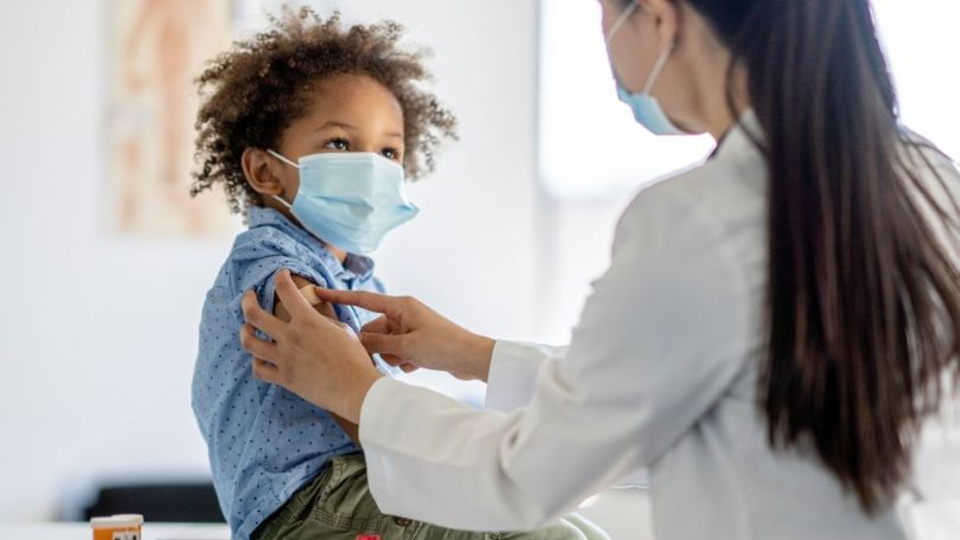
The American Academy of Pediatrics (AAP) strongly endorses the use of safe and effective infection control procedures to protect children and adolescents. During the COVID-19 pandemic, effective infection prevention and control requires the correct and consistent use of a well-fitting face mask (click here for information on types of masks). Face masks should fit over the mouth and nose and fit snugly along the side of the face without any gaps (click here to learn how to improve the fit).

The Centers for Disease Control and Prevention (CDC) continues to recommend that vaccinated people should wear a mask indoors in public if they are in an area with substantial or high transmission, AND that universal indoor masking for all teachers, staff, students, and visitors to K-12 schools, regardless of vaccination status, should be implemented for the 2021-22 school year. The AAP continues to recommend universal school masking. Face masks can be safely worn by all children 2 years of age and older, including the vast majority of children with underlying health conditions, with rare exception. Children 2 years of age and older have demonstrated their ability to wear a face mask. In addition to protecting the child, the use of face masks significantly reduces the spread of SARS-CoV-2 and other respiratory infections within schools and other community settings. Home use of face masks also may be particularly valuable in households that include medically fragile, immunocompromised, or at-risk adults and children.

Consistent use of a face mask is one part of a comprehensive strategy (in addition to vaccination, physical distancing, and hand washing) to mitigate risk and help reduce the spread of COVID-19, particularly in those who are not fully vaccinated or not eligible to receive a COVID-19 vaccine.

Pediatricians are encouraged to discuss infection control practices with their patients and families.

  • When you wear a face mask, you protect others as well as yourself, especially if you are not vaccinated and/or are around others who are not vaccinated.
  • All students older than 2 years and all school staff should wear face masks at school and child care settings (unless medical or developmental conditions prohibit use).
  • Per CDC guidance, face masks are recommended while indoors in public for fully vaccinated persons in an area with substantial or high transmission..
  • For those who are unvaccinated, face masks should be worn, with an emphasis on indoor masking. In areas with high numbers of COVID-19 cases, consider wearing a mask in crowded outdoor settings and for activities with close contact with others. Public health mask mandates may vary based on the level of SARS-CoV-2 circulating in each community, and it is recommended that local guidance be followed.
  • In both indoor and outdoor settings, unvaccinated individuals should continue to physically distance around people who do not live in their household.
  • Proper use of a face mask for all indoor sports training, competition, and on the sidelines is strongly recommended for people who are not fully vaccinated and for all athletes (regardless of vaccination status) in counties with substantial or high transmission per CDC criteria, except for sports in which the mask may become a hazard (see AAP interim guidance on Return to Sports and Physical Activity).
  • Face masks should be worn any time you are traveling on a plane, bus, train, or other form of public transportation traveling into, within, or out of the United States and in US transportation hubs such as airports and bus stations. This includes transportation via school bus (see AAP Interim Guidance).
  • People who are immunocompromised or people who live in a household with an individual who is immunocompromised, at increased risk for severe disease, or is unvaccinated might choose to wear a face mask regardless of the level of SARS-CoV-2 transmission in their community.
  • Wear a face mask inside your home if someone you live with is sick with symptoms of COVID-19 or has tested positive for COVID-19.
  • Wash your hands with soap and water for at least 20 seconds or use hand sanitizer with at least 60% alcohol after touching or removing your face mask.

Additional Information for Families from HealthyChildren.org


Interim Guidance Disclaimer:
 The COVID-19 clinical interim guidance provided here has been updated based on current evidence and information available at the time of publishing. Guidance will be regularly reviewed with regards to the evolving nature of the pandemic and emerging evidence. All interim guidance will be presumed to expire on June 30, 2022 unless otherwise specified.

Last Updated

11/15/2021

Source

American Academy of Pediatrics