A voluntary post-event survey was shared with attendees following the forum. Overall, responses suggested the event was well received and left participants feeling more informed and better equipped to support their digital well-being.
- Positive experience: Participants shared that they enjoyed the webinar and found the content engaging and relevant.
- Increased knowledge: Teens reported leaving with a stronger understanding of what a healthy relationship with social media can look like.
- Greater confidence: Respondents indicated they felt more confident finding and using tools and strategies to support their mental health online.
- Useful resources: The tools and resources shared during the forum were described as practical and helpful.
- Intent to apply learning: Participants expressed interest in using what they learned in their own social media use and sharing strategies with others.
When asked how they plan to use what they learned, respondents most often mentioned applying strategies to their own social media habits and sharing tools and information with friends, peers, and others in their communities.
What We Heard from Youth
Throughout the event, teens stayed engaged and supported one another in the chat. They even chose a “word of the day” to describe their relationship with social media: complicated.
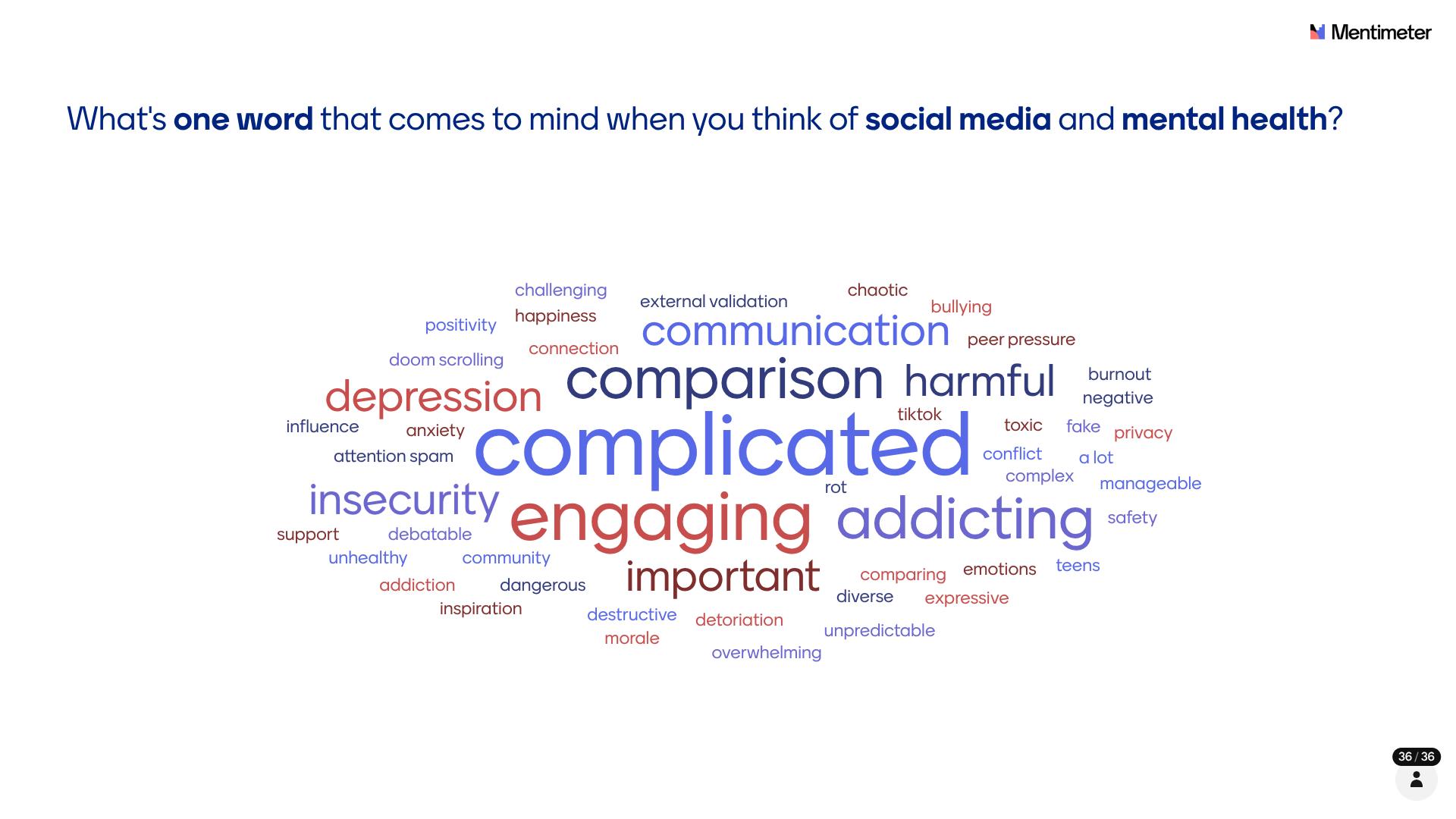
This word cloud shows various words teens used to describe their feelings about social media and mental health.
- Engaging and relevant: Youth shared that the event content felt engaging, relatable, and relevant to their day-to-day experiences online.
- Clear and impactful delivery: Participants noted that presenters communicated in a clear, easy-to-follow way and shared information that felt meaningful and useful.
- Ideas to improve future forums: Youth suggested shortening or condensing parts of the event, creating more opportunities for teens to speak, and adding more interactive small-group discussion. Some also asked for more real-world examples or case studies.
- Topics youth want next: Suggested topics included communicating with adults; how social media affects relationships and friendships; culture and comparison (including academics); and how social media can shape identity and comparison, including specific impacts on girls.
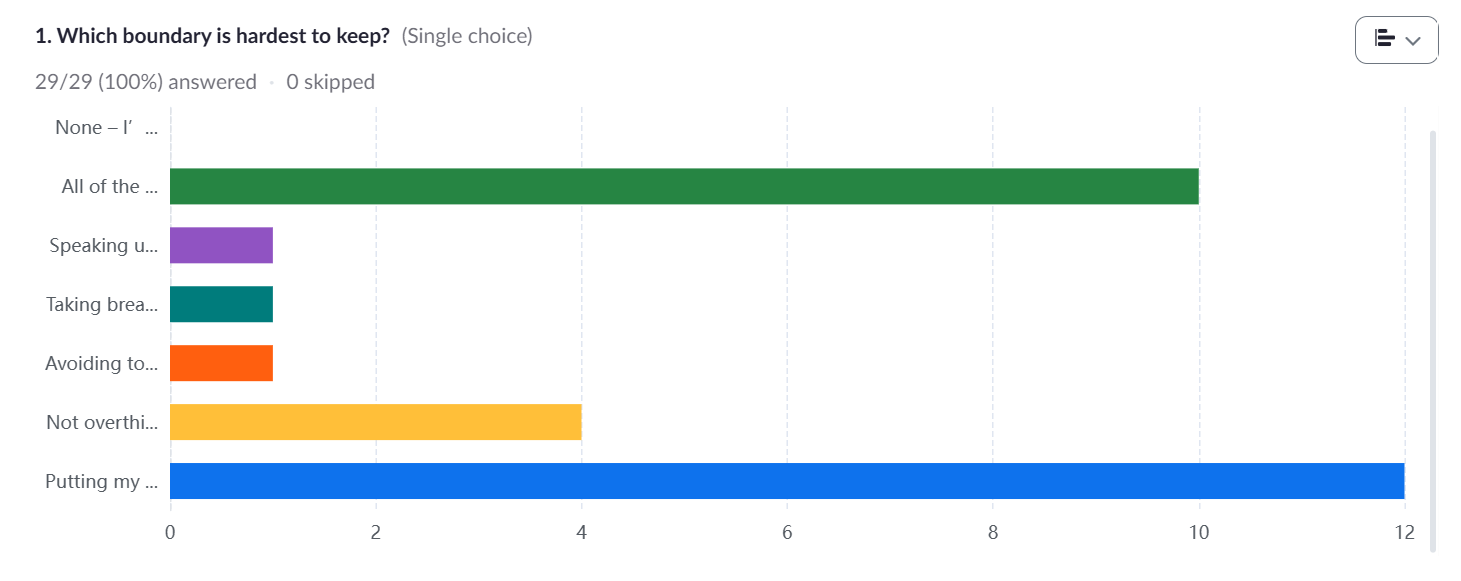
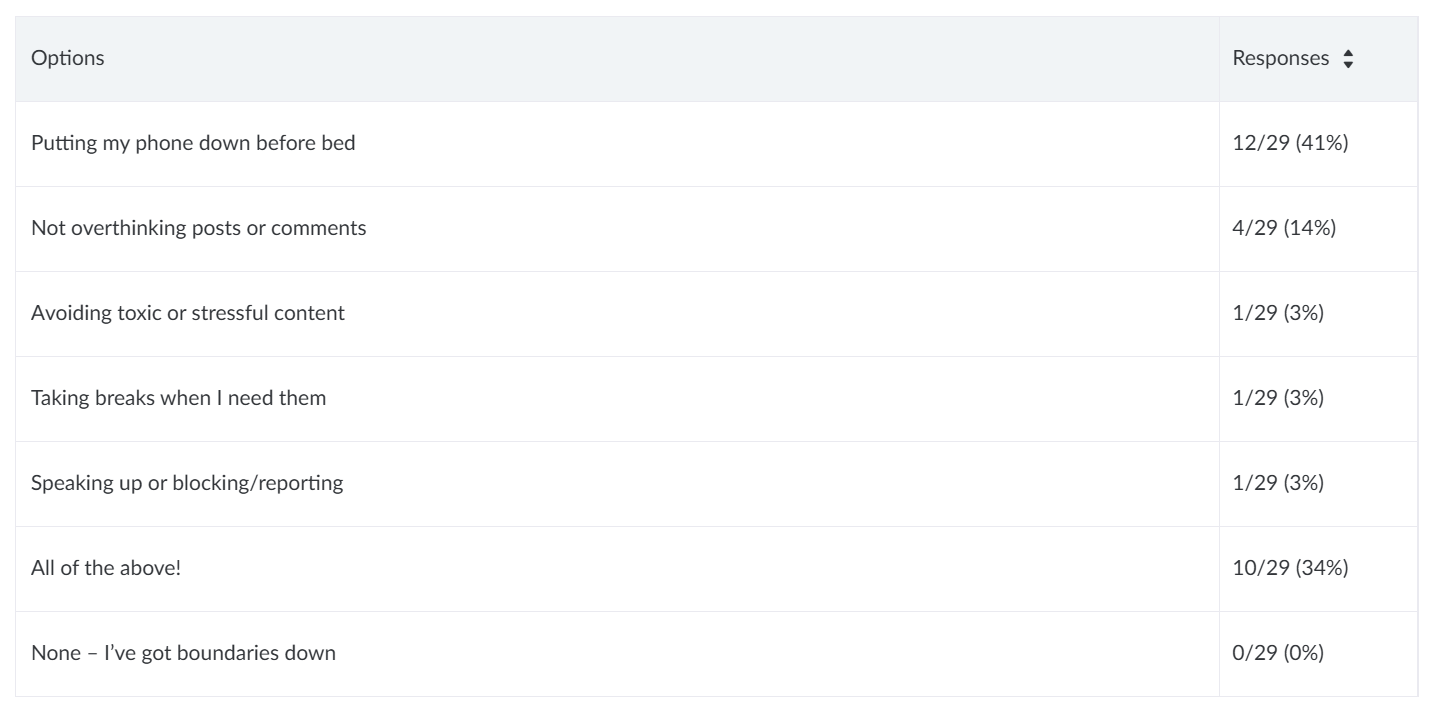
A majority of teens surveyed (41%) indicated that putting their phone down before bed was the hardest boundary to set when it comes to their social media use.
Thank You
Thank you to the Youth Advisory Panel members, speakers, panelists, and every young person who showed up ready to learn, share, and support one another. We’ll use what we heard to shape future youth-centered events and resources focused on healthier digital spaces.