The adolescent substance use landscape is shifting rapidly. Today’s youth face heightened risks from counterfeit pills, polysubstance use and unintentional opioid exposure, even those without traditional risk factors.
Pediatricians play a vital role in early identification, compassionate intervention, and long-term support. This resource offers clinically grounded guidance to build comfort and confidence in screening for opioid use and connecting patients with evidence-based treatment and resources.
The Landscape Has Changed: What Pediatricians Need to Know
What’s different about youth opioid exposure today?
- Today’s drug supply is unpredictable and dangerous.
- Adolescents are now more likely to encounter powdered substances and counterfeit pills that look like legitimate prescription medications but may contain fentanyl or other synthetic opioids.
- Polysubstance use including combinations of opioids, benzodiazepines and stimulants is common and increases overdose risk.
- These trends have contributed to a sharp rise in overdose deaths, particularly among American Indian/Alaska Native and Latinx youth.
What does the data tell us?
- After two decades of stability, adolescent overdose deaths began increasing in 2019.
- Synthetic opioids like illicit fentanyl now drive the majority of these deaths.
- Youth may unknowingly consume opioids through counterfeit pills or contaminated substances.
Why should I screen everyone, even those who don’t seem at risk?
Substance use can affect any adolescent, regardless of background or presentation. Universal screening helps normalize the conversation, reduce stigma and detect issues early, even in young people who may not disclose use unless asked directly. Even if an adolescent doesn’t disclose, this opens the door to have safe conversations about substance use in the future.
What tools should I use for routine screening?
- Begin universal screening in early adolescence using tools like CRAFFT or SBIRT.
- Incorporate screening into annual well visits and behavioral health check-ins.
- Approach with curiosity, not judgment. This fosters trust and increases honest responses.
What do I do if a patient discloses substance use?
- Thank them for sharing and acknowledge their honesty.
- Ask about what substances they’re using, how often, and in what context.
- Assess for immediate risks, such as overdose potential or driving under the influence.
- Offer support and guidance, including brief intervention or referral as needed.
- Consider close follow-up.
What strategies can reduce overdose risk among youth?
Advise patients that not using substances is the safest way to prevent overdose and that if they or a friend is using them, it’s important to familiarize themselves with the signs of overdose and the steps in overdose response.
If a patient is going to use substances, here are some steps they can take to reduce risk:
- Be around other people who would be able to call 911 in case of an emergency.
- Have naloxone accessible in case it is needed.
- Consider using fentanyl test strips to check for the presence of fentanyl.
What should I know about naloxone?
- Naloxone is a safe and effective opioid overdose reversal medication.
- It’s available by prescription, over the counter and through community organizations.
- There are no age limits on who can carry and administer naloxone.
- Dispensing naloxone does not increase youth substance use.
- Naloxone can save lives.
- Most states have Good Samaritan laws that protect those who call 911 in an overdose situation including youth.
Are medications appropriate for adolescents with OUD?
Yes. Medications like buprenorphine are evidence-based treatments that reduce cravings, prevent overdose and support recovery. Sometimes families may wonder if medication treatment is replacing one drug for another. It’s important to acknowledge their questions and also provide guidance that incorporates evidence and information on medication. Here are some points you can offer about the benefits of medication treatment.
Medication for opioid use disorder (OUD):
- Improves retention in care
- Decreases opioid-positive drug screens
- Reduces overdose and all-cause mortality
Despite these benefits, treatment remains underused in youth populations.
Should adolescents be in therapy to receive medication treatment?
Behavioral therapy for OUD or other co-occurring mental health or substance use disorder may be indicated but medication treatment should not be contingent on therapy. Requiring therapy as a condition of treatment can create unnecessary barriers and delay care. Instead, therapy should be offered as an additional support when indicated, not as a prerequisite for starting medication.
Treatment Access and Gaps
Why is it hard for adolescents to access medication-based treatment?
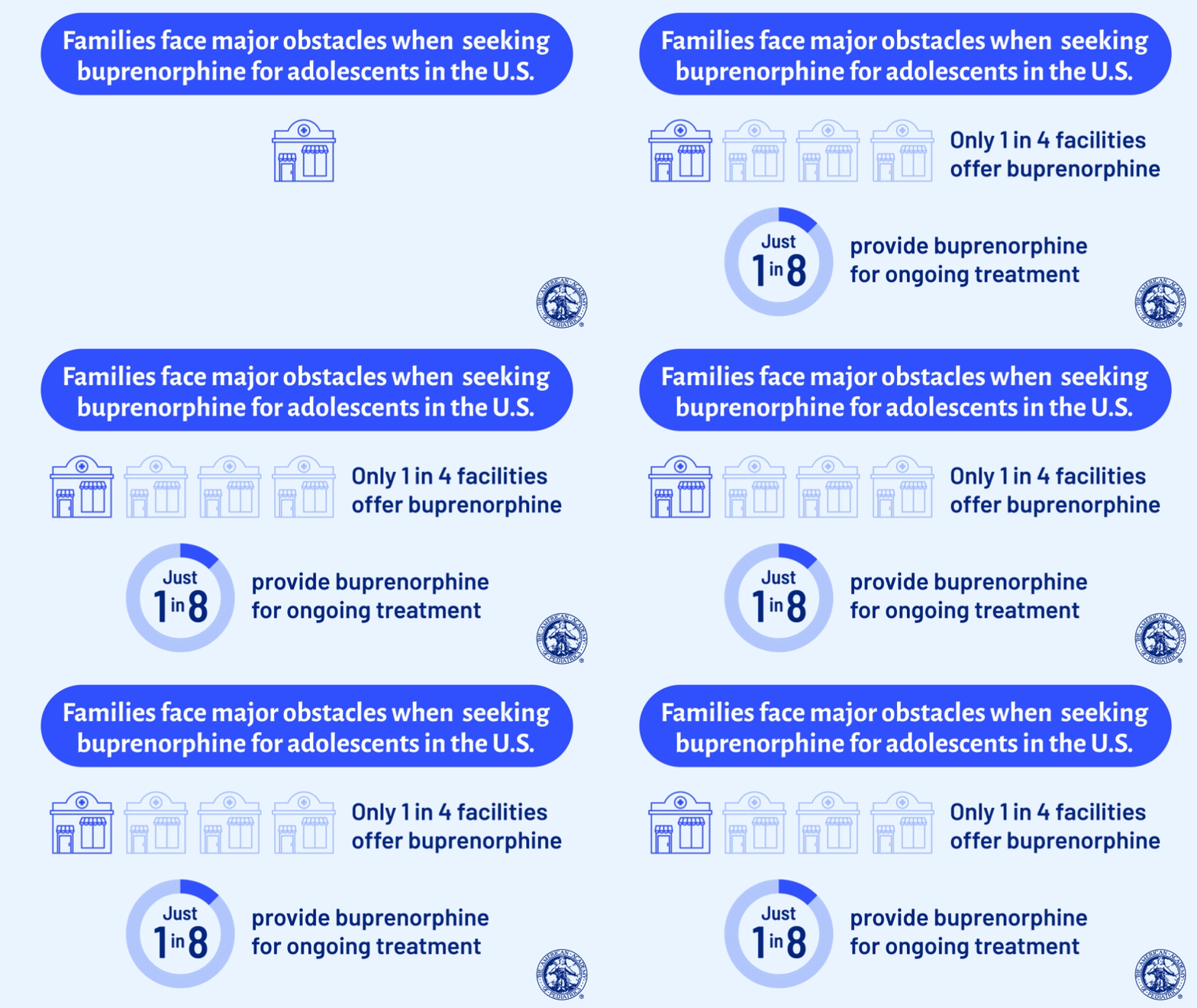
- Pediatricians account for fewer than 2% of all buprenorphine prescriptions for youth.
- Only 1 in 8 treatment facilities offer buprenorphine for adolescents.
- Many families must call multiple clinics before finding appropriate care.
Isn’t substance use treatment outside my scope as a pediatrician?
- Early intervention from trusted clinicians makes a difference even if you’re not the one providing long-term treatment.
- You don’t need to have all the answers to make a meaningful impact.
“Youth may need to call nine different clinics to find help. A single pediatrician asking the right questions can shorten that journey.”
What Teens Say Builds Trust
Youth with lived experience say these approaches help:
- “You can’t tell who’s using. Talk to everyone.”
Normalize substance use screening just like any other health topic. - “I felt supported when my doctor checked in after I missed my appointment.”
Follow-up matters. Consistency builds trust. - “It’s like sex ed: talking about it can help to normalize and educate.”
A calm, honest tone reduces shame and stigma.
Supporting Autonomy and Confidentiality
How can I engage youth while respecting their autonomy?
- Offer choices: Telehealth or in-person? Frequency of visits?
- Frame care as collaborative. Use motivational interviewing and shared decision-making.
- Introduce “mini-experiments” like reducing frequency or timing of use to give teens agency.
- Accept that ambivalence is normal and part of the process of healing.
What about confidentiality?
- Ask adolescents: “Who is safe for you to talk to at home?”
- Be explicit about your confidentiality practices and their limits.
- Reinforce your role as a safe, supportive resource.
- Family involvement can be helpful but should involve the adolescent’s consent (unless safety concerns require otherwise).
Tools for Practice
You don’t have to do this alone. Use these tools to screen, counsel, and refer confidently:
- Screening tools: CRAFFT, SBIRT, S2BI, BSTAD
- Conversation starters: Sample scripts and motivational interviewing tips
- Naloxone prescribing: Clinical guidance and talking points
- Training: Kognito role-play simulations; PCSS mentorship for MOUD
- Visual aids: Counterfeit pill recognition (DEA)
- Legal resources: State-by-state adolescent confidentiality laws
- National resources: SAMHSA overdose prevention and response toolkit
Acknowledgment
This project was funded by the Foundation for Opioid Response Efforts (FORE). The views and conclusions contained in this document are those of the authors and should not be interpreted as representing the official policies or stance, either expressed or implied, of FORE. FORE is authorized to reproduce and distribute reprints for Foundation purposes notwithstanding any copyright notation herein.
Last Updated
08/26/2025