What is the difference between Management and Leadership?
The terms management and leadership are often viewed interchangeably, however, there are vast differences, and each play an essential role in balancing performance in a pediatric practice. One key distinction between management and leadership is that "things" such as systems and processes are managed, whereas people including patients and staff can be led. By contrasting the two, it allows for a better understanding of the differences, as well as the balance it takes for improvement.
Management is the art of implementation. For example, a manager executes activities based upon the goals, objectives, and vision of the practice, making sure that policies and regulations are followed. This in turn can keep employees motivated to deliver on-time results, ensure smooth day-to-day operations, and stay on budget.
Organizational Charts
Organizational charts can vary widely depending on the size of the practice and is meant to provide a visually outline the reporting relationships for every employee within the practice. Examples of organizational charts are provided below.
Basic Organizational Chart
Typically, this organizational chart is used for small pediatric practices directed by a solo pediatrician. The pediatrician oversees the practice's operations as a whole, while the Practice Manager deals with day-to-day administrative functions of the practice. Some smaller pediatric practices may not have a Practice Manager. The owner may assign different administrative tasks to different employees depending upon their skill sets. Very small practices may find it helpful to outsource items like billing, credentialing, payroll, bookkeeping and other administrative tasks.
Sample Organizational Chart:
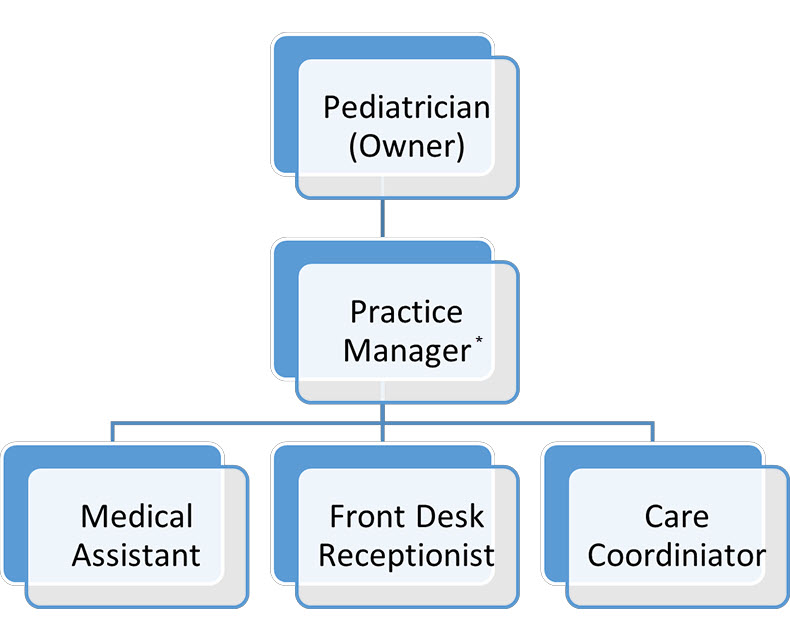
*note: very small practices might not have a practice manager or administrator and some mid-size practices may outsource practice manager tasks (billing, credentialing, etc.).
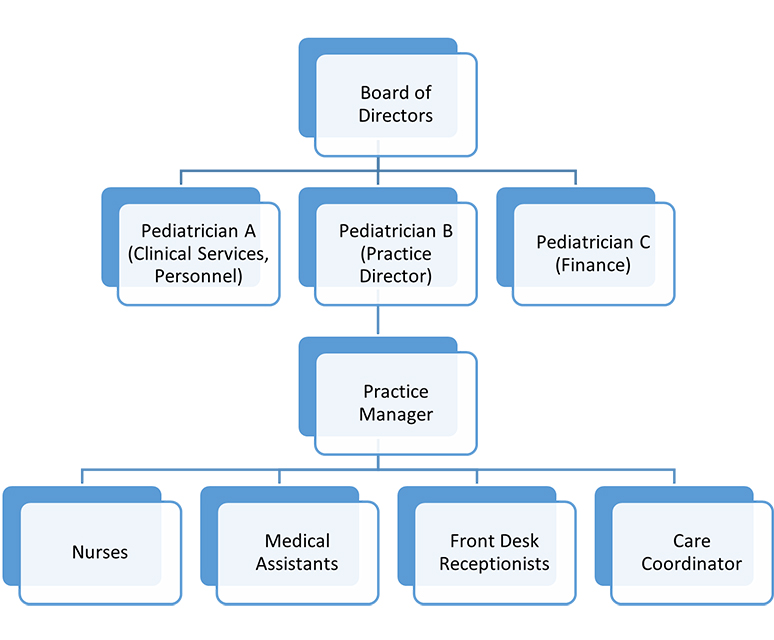
Organizational Chart with Executive Committee (Board of Directors)
Larger pediatric practices can form an Executive Committee that oversees the Practice Manager as well as the clinical and non-clinical support staff. One of the advantages of this type of structure is that it shares decision-making authority. Each pediatrician is assigned a management area (Finance, Clinical Services, Marketing, etc.) and meets with the Board of Directors and Practice Manager, who then manage the practice based upon the executive decisions.
Sample Organizational Chart:
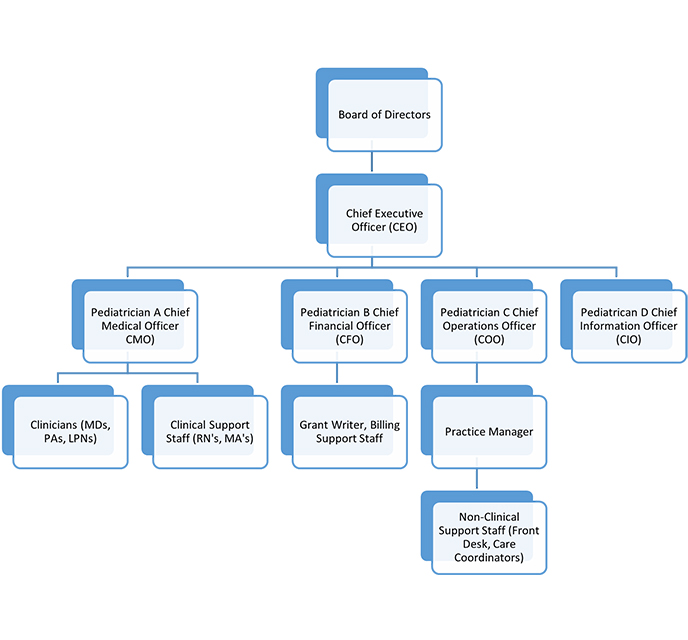
"Big Picture" Organizational Chart
Multi-site pediatric practices may typically have several layers of leadership broken out into departments with supervisors within each department. One major advantage to the “big picture” organization is that staffing responsibilities are divided among the department supervisors and does not overload the Practice Mananger/Administrator staffing responsibilities.
Sample Organizational Chart:
Last Updated
10/24/2025
Source
American Academy of Pediatrics