Internet Explorer Alert

It appears you are using Internet Explorer as your web browser. Please note, Internet Explorer is no longer up-to-date and can cause problems in how this website functions
This site functions best using the latest versions of any of the following browsers: Edge, Firefox, Chrome, Opera, or Safari.
You can find the latest versions of these browsers at https://browsehappy.com

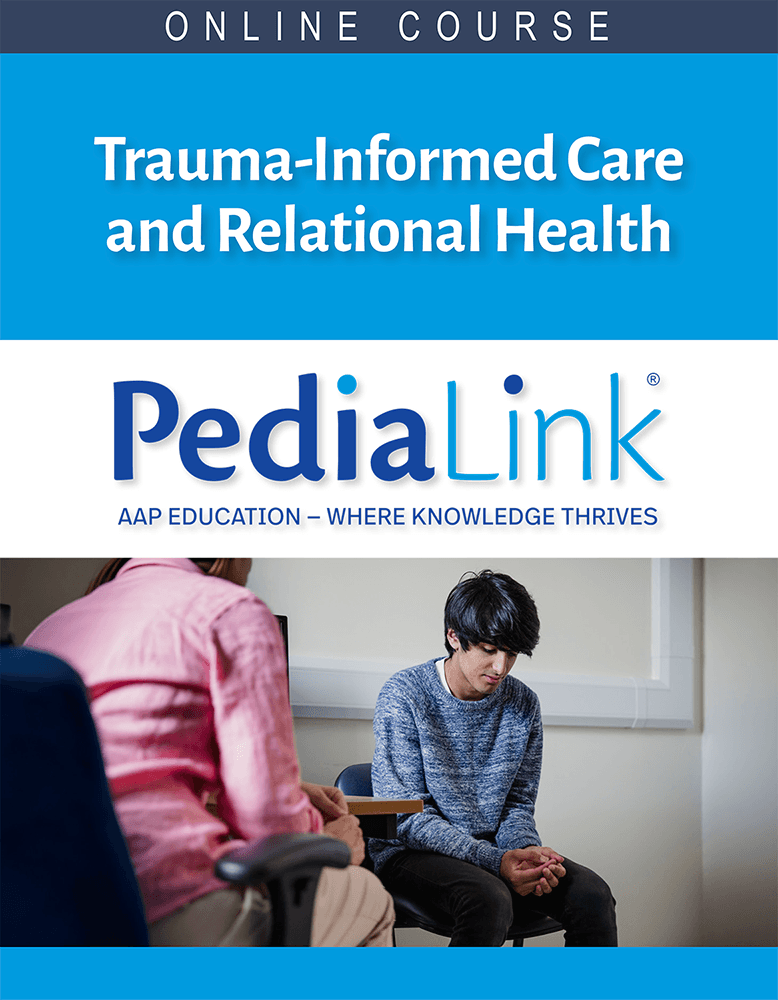
Trauma-Informed Care and Relational Health

MOC

Available: 10/14/2026-10/13/2029

Format

Price: $180.00
Member Price: $0.00

Description

Childhood adversities and trauma, which are highly prevalent among the general pediatric population, can

negatively affect lifelong health, child development, and social outcomes. This 7 session, video-based series aims

to empower pediatric clinicians with the knowledge and skills to implement evidence-based, trauma-informed care

and resilience promotion in their everyday practice. 

This course provides a comprehensive foundation in trauma informed care by reviewing the most common symptoms of trauma, equipping learners to understand the neurobiology and developmental impacts of trauma, promote relational health and resilience, identify, manage, and

respond to trauma through evidence-based screening and interventions, and support children through trauma

informed treatment, referral, and appropriate medication management

1. Trauma-Informed Care: The Science Behind It

Learners will be able to:

  • Compare human stress responses: freeze, fight or flight, and affiliate.
  • Describe effects of prolonged stress without sufficient buffering on brain connectivity and immune function.
  • Identify the seven resilience skills supported by safe, stable, nurturing relationships.

2. Trauma-Informed Care: Presentations of Trauma

Learners will be able to:

  • Summarize the concept of social thinning resulting from trauma.
  • Identify areas of functioning impacted in developmental trauma disorder.
  • Describe how trauma can result in different behavioral health ecophenotypes.
  • Identify how trauma symptoms present differently across developmental stages.

3. Trauma-Informed Care: Primary Prevention - Relational Health Care

Learners will be able to:

  • Describe relational health, relational health care, and affiliate response.
  • Explain the role of safe, stable, nurturing relationships.
  • Describe ways caregivers support healthy child development.
  • Identify anticipatory guidance concepts that support parent-child relational health.

4. Trauma-Informed Care: Secondary Detection - What and How

Learners will be able to:

  • Differentiate trauma screening from social drivers of health screening.
  • Identify validated trauma screening tools.
  • Describe how neuroception can inform strategies that promote psychological safety during patient encounters.

5. Trauma-Informed Care: Primary Prevention and Tertiary Treatment - The What and How in the Office

Learners will be able to:

  • Identify strategies that promote caregiver self-regulation.
  • Provide psychoeducation to families on the effects of trauma.
  • Describe strategies that help children develop regulation skills, including collaborative problem solving and the cognitive triangle.

6. Trauma-Informed Care: Tertiary Treatment - Therapeutic Options

Learners will be able to:

  • Describe key elements of trauma-informed treatment.
  • Demonstrate use of warm-handoff referrals.
  • Identify evidence-based trauma treatments, including:
  • Trauma-Focused Cognitive Behavioral Therapy (TF-CBT)
  • Child-Parent Psychotherapy (CPP)
  • Parent-Child Interaction Therapy (PCIT)
  • Eye Movement Desensitization and Reprocessing (EMDR)

7. Trauma-Informed Care: Tertiary Treatment - Medications

Learners will be able to:

  • Identify when medication is appropriate for children exposed to trauma.
  • Describe medication's role in addressing sleep difficulties associated with trauma symptoms.
  • Develop strategies for deprescribing psychotropic medications when risks outweigh benefits.

Course Details

  • Start Date: October 14, 2026
  • Online Access Expires: October 13, 2029
  • Credit Expires: October 13, 2029
  • Course ID: 62847

Acknowledgements

The National Center for Relational Health and Trauma-Informed Care is supported by the U.S. Centers for Disease Control and Prevention of the U.S. Department of Health and Human Services through cooperative agreement number DD-23-004. The information and opinions expressed reflect solely the opinions of the authors and are not the official position of the Centers for Disease Control and Prevention.

Non-Member Registration Fee: $180

Member Registration Fee: $0

  • AMA PRA Category 1 Credit™

  • Enduring Materials

    3.50
  • NAPNAP

  • NAPNAP Contact Hours

    3.50
  • MOC

  • MOC Part 2

    3.50
  • AAPA

  • AAPA Credit Hours

    3.50

Physician - Trauma-Informed Care and Relational Health

The American Academy of Pediatrics (AAP) is accredited by the Accreditation Council for Continuing Medical Education (ACCME) to provide continuing medical education for physicians.

The AAP designates this enduring material for a maximum of 3.50 AMA PRA Category 1 Credit(s)™. Physicians should claim only the credit commensurate with the extent of their participation in the activity.

This activity is approved for 3.50 points of MOC Part 2 credit by the American Board of Pediatrics through the AAP MOC Portfolio Program.  All approved activities must be completed by the MOC Credit Approval End Date. All deadlines and MOC point values should be confirmed by checking the ABP Activity Catalog within each physician’s ABP Portfolio. Consult your ABP portfolio at www.abp.org for details about your specific certification requirements. For questions about how to access this activity, contact [email protected].


Allied Health Professional - Trauma-Informed Care and Relational Health

The American Academy of Pediatrics (AAP) is accredited by the Accreditation Council for Continuing Medical Education (ACCME) to provide continuing medical education for physicians.

PAs may claim a maximum of 3.50 Category 1 credits for completing this activity. NCCPA accepts AMA PRA Category 1 Credit™ from organizations accredited by ACCME or a recognized state medical society.

This program is accredited for 3.50 NAPNAP CE contact hours of which 0.00 contain pharmacology (Rx) content, (0.00 related to psychopharmacology) (0.00 related to controlled substances), per the National Association of Pediatric Nurse Practitioners (NAPNAP) Continuing Education Guidelines. The AAP is designated as Agency #A17. Upon completion of the program, each participant desiring NAPNAP contact hours must send a completed certificate of attendance to [email protected]. Payment of $15 for NAPNAP members and nonmembers is required via credit card for all NAPNAP contact hour requests. Keep this certificate for your records for six (6) years. Requests for duplicate certificates should be made to the AAP.


Recommended Browsers:

  • Microsoft Edge
  • Google Chrome
  • Firefox 2.0 and above
  • Opera 7.5 and above
  • Safari 1.3.2 and above

Recommended Browser Settings:

  • JavaScript enabled
  • Cookie enabled
  • SSL 2.0 & 3.0 enabled
  • Adobe Reader Plug-in (version 6.0+)

Trauma-Informed Care and Relational Health

Price:: 180.00

Feedback Form