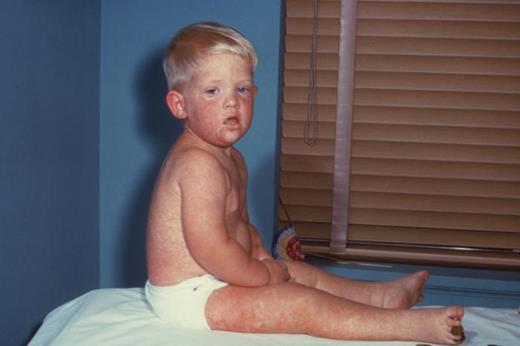
An emerging health threat may be a new or re-emerging infection, disease, exposure or other threat that poses a risk to pediatric health outcomes. Utilize the links below to access educational resources, tools and downloadable content to aid pediatric health practitioners in addressing emerging threats
Web pages whose development was supported by federal government grants are being reviewed to comply with applicable Executive Orders.
Stay up to date with Red Book online's open access document providing information and resource links for current infectious disease outbreaks impacting the pediatric population.
AAP in collaboration with CDC’s Surveillance for Emerging Threats to Mothers and Babies Network (SET-NET) has developed data informed resources and toolkits to address CDC prioritized emerging threats impacting health outcomes for infants and children. To access the toolkits and learn more about CDC’s SET-NET program and the important role it plays to identify the impact of emerging health threats on pregnant women and their infants follow the links below.
Children are more vulnerable than adults in disasters and public health emergency situations, they have specific needs for customized disaster planning to address emerging health threats resulting from disasters. Follow the links below for more information and resources to help pediatric practitioners, families and communities address disaster related emerging health threats.
Select one of the topic areas below to access information and resources that can be shared with families, practices and communities to prepare for and respond to emerging health threats that may impact your community.
Congenital Cytomegalovirus (cCMV)
Congenital Syphilis
COVID-19
Dengue
Perinatal Hepatitis C
Disasters and Children
Family Readiness
Professional Resources
This project is supported by the Centers for Disease Control and Prevention (CDC) of the U.S. Department of Health and Human Services (HHS) as part of a financial assistance award totaling $350,000 with 100 percent funded by CDC/HHS. The contents are those of the author(s) and do not necessarily represent the official views of, nor an endorsement by, American Academy of Pediatrics, CDC/HHS, or the U.S. Government.
06/02/2025
American Academy of Pediatrics