Fiks AG, Ramachandran J, Wittman S, Kelly MK, Davis K, Steffes J, Harris D, Biel F, Hatch B, Macario E, Grundmeier R, Ray KN
Presented at the 2025 Pediatric Academic Societies Annual Meeting
Background: Primary care telemedicine (TM) for children has the potential to improve access to clinical care, however data are limited on its evolving clinical use.
Objective: To describe the evolving patterns of TM use for problem-based visits in primary care for children, across a range of clinical domains and on a national scale.
Methods: Our retrospective repeat cross-sectional study examined electronic health record (EHR) visits from 2019-2023 for children aged < 19 years, from 822 Federally Qualified Health Centers, 76 practices from 2 regional health systems, and 38 independent practices from the AAP Pediatric Research in Office Settings network. Primary care visits were classified into clinical domains using the International Classification of Diseases – 10th revision (ICD-10) codes with a focus on the 6 clinical domains with greatest TM use: behavioral health (F01-F99), respiratory (J00-J99), endocrine (E00-E90), infectious disease (A00-B99), dermatology (L00-L99), and digestive health (K00-K95). We assessed monthly TM use by measuring the volume of problem-based visits per 1,000 active primary care patients (at least 1 primary care visit at the practice in the prior 2 years) and the percentage of those problem-based visits conducted via TM, both overall and for each clinical domain.
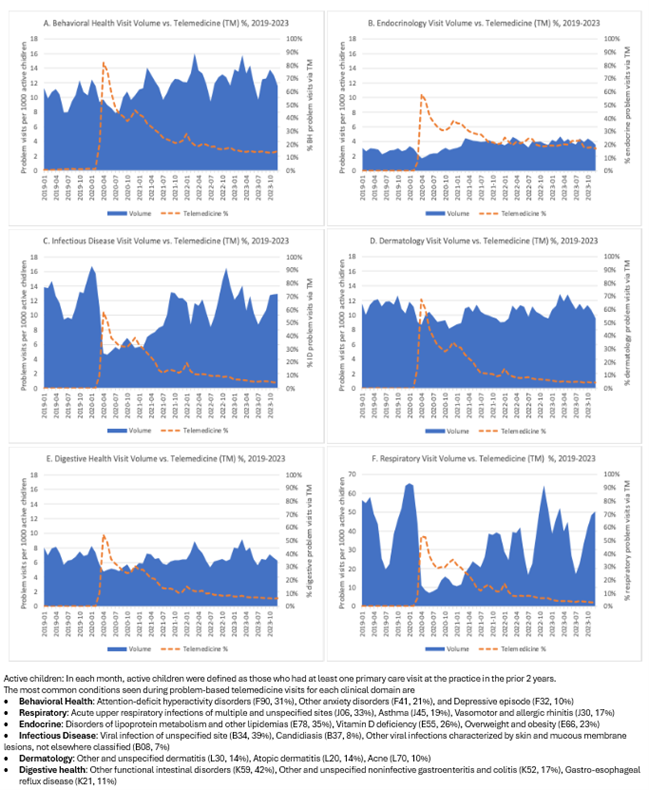
Results:The study sample included 13,903,723 problem-based visits (7.0% telehealth, 55.0% Medicaid insured, 13.5% Spanish family language) over the five-year study period (Table 1). TM represented less than 1% of all problem-based visits in 2019, peaked at 56.3% of problem-based visits in April 2020 (early COVID-19 pandemic), and declined to 7.3% in 2023 (Fig 1). Across clinical domains, TM use peaked and plateaued at the same times, but at different levels of use (Fig 2). In April 2020, behavioral health (81.8%) and dermatology (67.4%) had the highest percentage of problem-based visits conducted via TM while respiratory conditions (53.2%) had the lowest. By 2023, endocrinology (19.7%) and behavioral health (14.5%) had the highest proportion of problem-based visits conducted by TM, while respiratory conditions (3.7%) had the lowest.
Conclusion: In 2023, 1 out of every 14 problem-based visits in our sample of child primary care sites was conducted through TM, with TM most commonly used for endocrinology and behavioral health clinical concerns. In this context, future scholarship should examine how best to optimize TM use to support high-quality, accessible, and equitable care in these distinct clinical contexts within primary care settings.
Table 1. Patient demographic characteristics for problem-based visits from 2019-2023
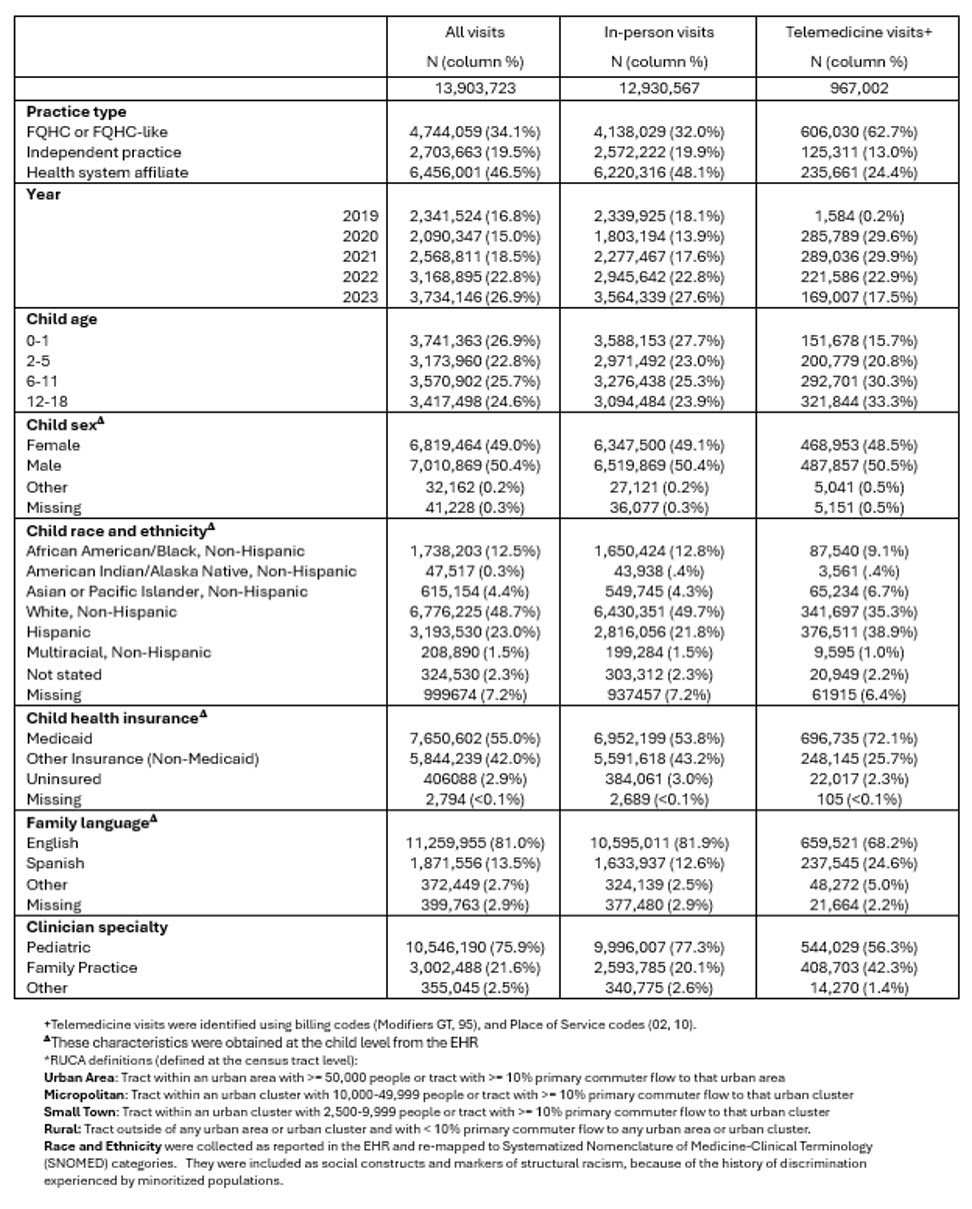
Figure 1. Problem-Based Visit Volume, and Percentage of Problem-Based Visits Conducted Via Telemedicine from 2019-2023
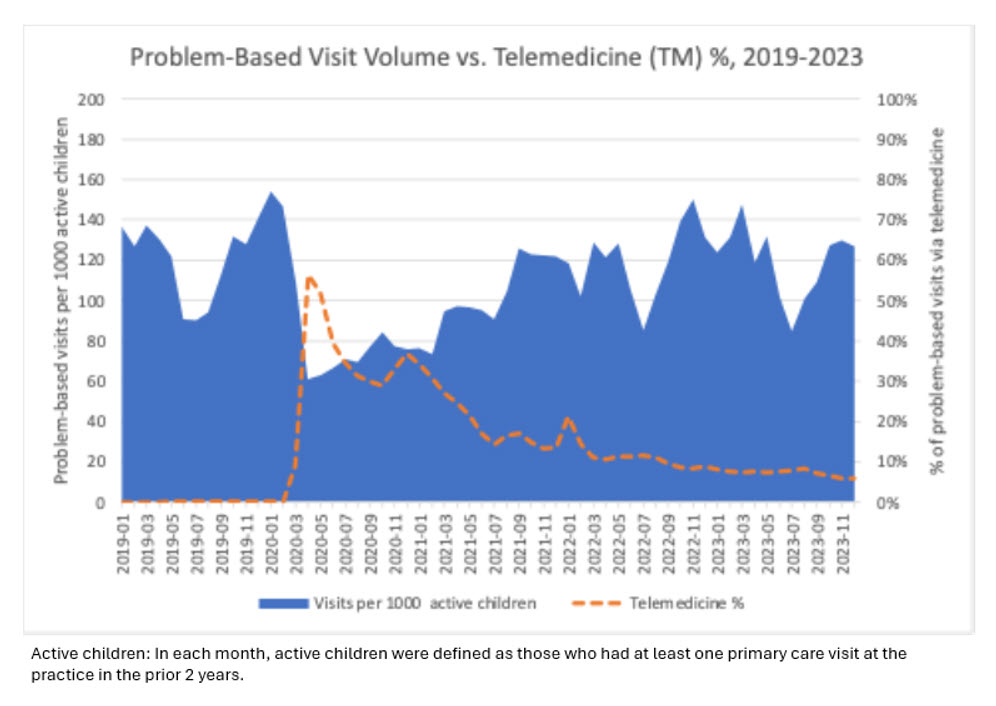
Figure 2. Problem-Based Visit Volume, and Percentage of Problem-Based Visits Via Telemedicine from 2019-2023 – By Clinical Domain
Last Updated
05/15/2025
Source
American Academy of Pediatrics