William Burr, Chloe Somberg, Alex Fiks
Presented at the 2026 Pediatric Academic Societies Annual Meeting
Background: Anxiety and depression are among the most commonly diagnosed mental health conditions in children and adolescents. Primary care pediatricians are often their first point of contact, yet little is known about their experiences and barriers in managing anxiety and depression.
Objective: Describe primary care pediatricians’ attitudes and experiences managing patients’ anxiety and depression. Examine barriers to treating and referring mental health and the association of practice characteristics with the most common barriers.
Methods: A 2025 AAP Periodic Survey, national random sample of non-retired US primary care AAP members, queried attitudes about anxiety and depression, frequency these conditions are identified in primary care and barriers to treating and referring mental health. Response rate was 46% (analytic n=801; includes those who provide health supervision). Chi-square examined associations between the top 3 reported barriers (strongly agree vs agree, disagree, strongly disagree) and practice characteristics.
Results: Nearly all primary care pediatricians agreed or strongly agreed that pediatricians should be responsible for identifying and referring anxiety and depression (97% & 96%, respectively). Eight in 10 agreed they should be responsible for prescribing medications to treat these conditions. Most cared for patients with anxiety and depression at least weekly (90% & 85%), with some seeing such patients daily (33% & 23%). Many pediatricians reported that patients and families were often or very often reluctant to discuss mental health (21%[FAG1.1]), start counseling (46%) and start medication (54%).
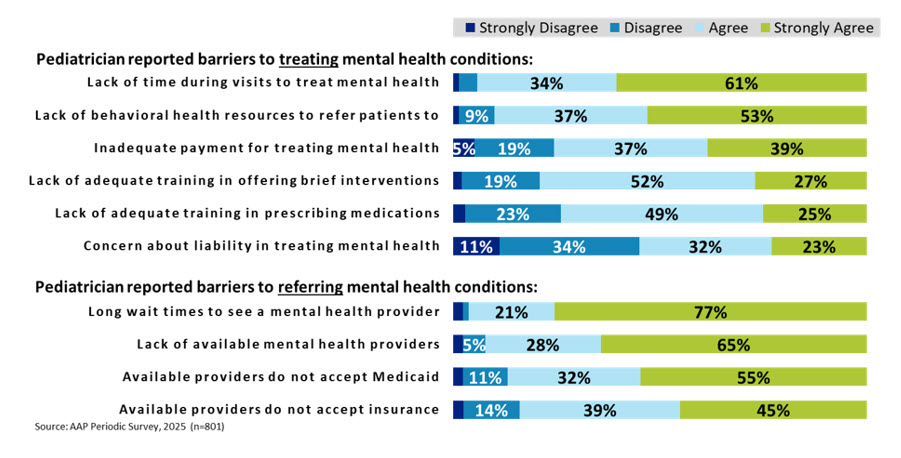
The top 3 reported barriers to treating and referring mental health conditions included long wait times to see a mental health provider (77%), lack of available mental health providers (65%) and lack of time during visits to treat mental health (61%) [Figure].
Pediatricians in practices with an on-site therapist, counselor or social worker were less likely to strongly agree that long wait times to see mental health providers and lack of available mental health providers were barriers [Table]. Those with an on-site psychiatrist or psychologist were also less likely to report long wait times. Pediatricians in rural areas were most likely to report lack of mental health providers.[FAG2.1]
Conclusion: Primary care pediatricians reported commonly caring for patients with anxiety and depression. Barriers to managing patients with mental health conditions underscore the continued lack of access to [FAG3.1]mental health providers. Those with on-site mental health providers reported fewer barriers.
Table 1. Association Between Primary Care Pediatricians Reported Barriers to Treating and Referring Mental Health and Practice Characteristics
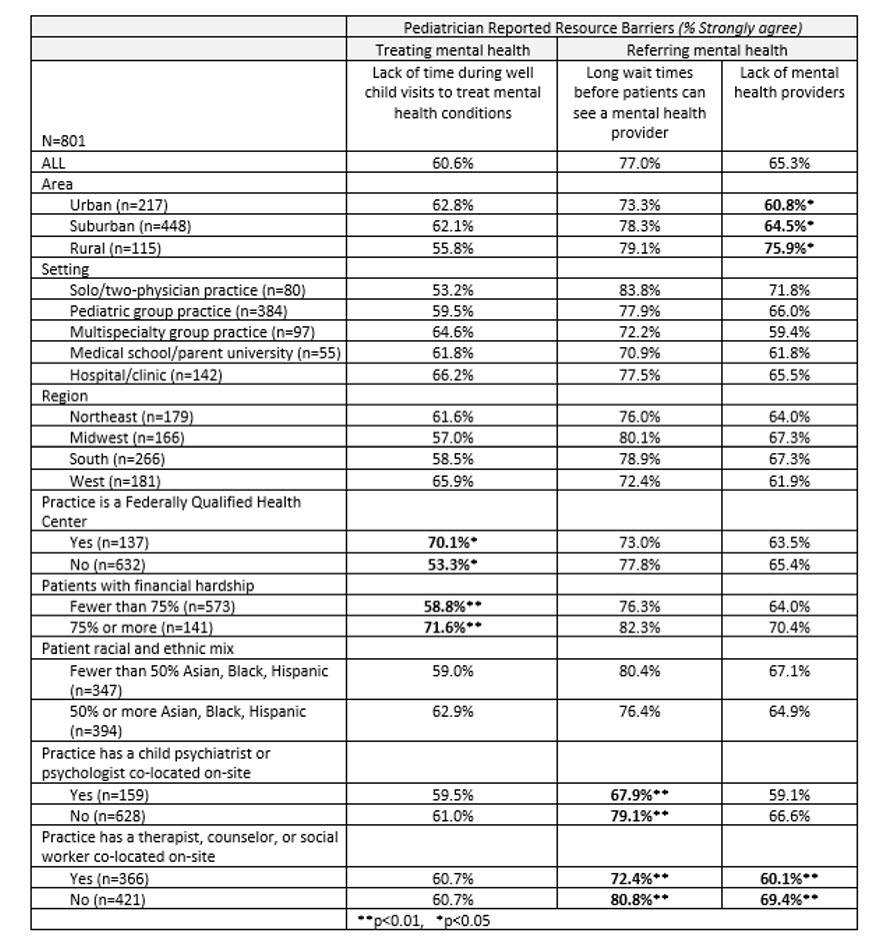
Figure 1. Pediatrician Reported Barriers to Treating and Referring Mental Health Conditions in Primary Care
Last Updated
04/27/2026
Source
American Academy of Pediatrics