William Burr, Chloe Somberg, Becky Baum, Mary Beth Miotto
Presented at the 2026 Pediatric Academic Societies Annual Meeting
Background: Current AAP clinical practice guidelines for management of anxiety and depression recommend an individualized multimodal approach including both talk and drug therapies. Selective serotonin reuptake inhibitors (SSRIs) are a first-line medication within a comprehensive treatment plan for anxiety and depression. In the last 10 years during the youth mental health crisis, SSRI prescribing in primary care has increased over 7-fold, but little is known about pediatrician preparedness to prescribe and manage them.
Objective: Examine primary care pediatricians’ perceptions, preparedness and practices prescribing and managing SSRIs.
Methods: We analyzed data from the nationally representative 2025 Periodic Survey of non-retired, primary care US AAP members (residents excluded). The survey asked about perceptions of responsibility to prescribe SSRIs, preparedness to prescribe and manage SSRIs and comfort discussing different treatment options with patients and their families. 46% completed the survey (analytic n=801). We used McNemar tests to compare respondents’ comfort (very comfortable vs. comfortable/somewhat/not at all comfortable) discussing SSRIs relative to 3 other treatment options (emotional regulation skills like deep breathing, cognitive-behavioral therapy (CBT), second-line meds like SNRIs).
Results: Most primary care pediatricians strongly agreed/agreed it is their responsibility to prescribe medication to treat anxiety and depression (80%). Three in 4 reported feeling very prepared/prepared to prescribe SSRIs to treat anxiety and depression for children 14+ years, 63% for children 12-13 years and 44% for children <12 years [Figure 1]. Fewer than half reported feeling very prepared/prepared to manage a patient’s SSRI dosage when their anxiety or depression worsens, but two-thirds were very prepared/prepared to do so when a patient’s condition improves.
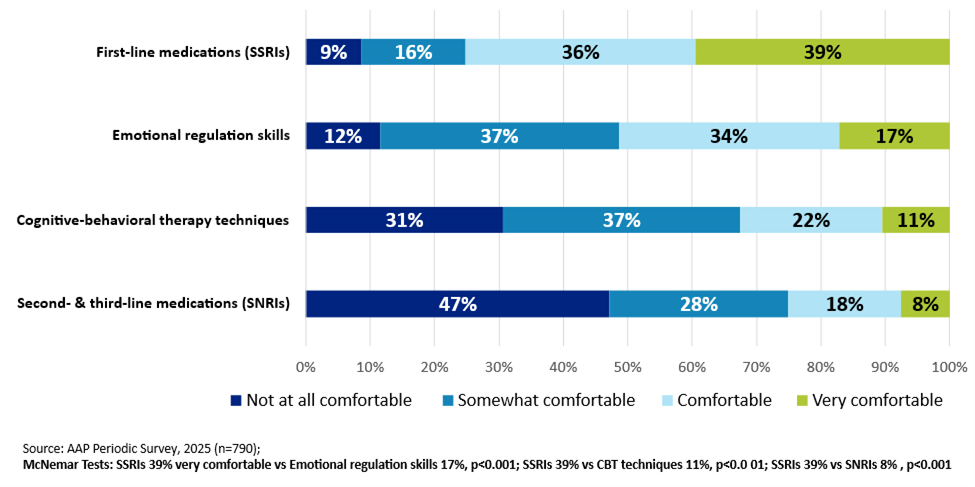
Respondents were more comfortable discussing SSRIs with patients and families compared to other treatment options [Figure 2]. For example, 39% reported being very comfortable discussing SSRIs compared to emotional regulation skills (17%, p<.001), CBT (11%, p<.001) and SNRIs (8%, p<.001).
Conclusion: While the majority of primary care pediatricians agree SSRIs are needed to treat anxiety and depression when clinically indicated and feel prepared to prescribe SSRIs for children 12+ years, more training may be required to improve pediatrician competence and confidence providing the full spectrum of anxiety and depression care for children including emotional regulation and cognitive behavioral therapy as well as the care of children under 12.
Figure 1. Primary Care Pediatricians’ Reported Preparedness to Practice and Manage Medication for Patients with Anxiety and Depression
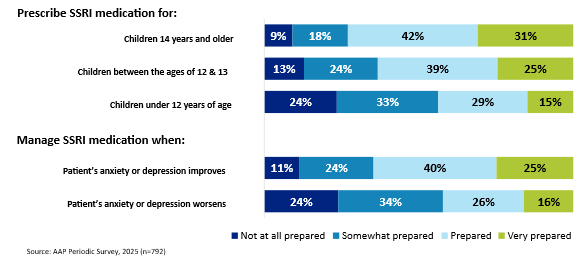
Figure 2. Primary Care Pediatricians’ Reported Comfort Level Discussing the Following Topics with Patients and Their Families
Last Updated
05/05/2026
Source
American Academy of Pediatrics