The Way in Which We Treat Our Children
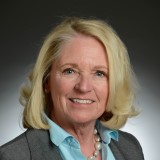
Jennifer Lail, MD, FAAP
September 6, 2022
Early this summer, AAP staff welcomed participants to the National Convening on the Future of Care for Children with Medical Complexity at their gleaming headquarters outside Chicago.
For many of us, this was our first in-person medical meeting in nearly three years because of the COVID-19 pandemic. I was, admittedly, a bit nervous as I considered my own role in mapping the future of children’s care after a global public health emergency.
The building’s lobby features a mural and quote from Nelson Mandela — "There can be no keener revelation of a society’s soul than the way in which it treats its children”— and that wisdom fortified me to join the assembling experts.
The conference, focused on children with multiple conditions, functional impairments, and high resource/support needs, was a culmination of five years of intense assessment, countless “tests of change” and quality improvement work by 10 clinical teams under Boston University’s Collaborative Improvement and Innovation Network to Advance Care for Children With Medical Complexity — all accomplished during our national public health emergency.
One of the core principles of this Improvement Collaborative was investment in family members on each team as foundational in the design, implementation, and evaluation of all the work done.
Here to celebrate their achievements for our sickest children, we also wanted to strategize about sustainability and spread of their remarkable efforts. Fully masked, I joined the leadership team and guests in a conference room where white drawing paper blanketed the walls, awaiting real-time documentation of the meeting by Karina Branson, an amazing graphic artist and facilitator. In this hybrid meeting, two vast Zoom screens supported virtual attendance by more family members, nurses, educators, Title V directors, physicians, Maternal and Child Health Bureau administrators, and more — each bringing their expertise in the way in which we treat our children.
Over the next 36 hours, we pediatricians joined a broad array of experts from many disciplines, both in-person and virtually, in collaborative, respectful dialogue, all working to wrangle innovations and solutions for our children and families who never chose “medical complexity.” Families described barriers to care and the navigation of convoluted and siloed systems; they elevated their lived experiences to inform system-level changes, demonstrating expertise in so much more than just their own child/ren. With their lived experience, authority, and passion, they revealed some of the best of our society’s soul.
Over coffee, I met members of the clinical teams, including a parent and co-presenter from Family Voices with expertise in care navigation, a young adult with cerebral palsy who is a writer, disability advocate and competitive swimmer, and the mother of five children who prompted her team to revolutionize pre-operative care and planning for complex surgical procedures.
The meeting began with a video memorial for Julie Beckett, whose disability rights advocacy for her daughter, Katie, and countless other children created the first Medicaid Home- and Community-based Services waiver, letting children with significant disabilities live at home with their families instead of institutions. It was vibrantly clear: Just as Katie belonged at home with her family, these family colleagues belonged as critical partners on their improvement teams. It was inspiring to see how being a valued and accountable multi-disciplinary team member empowered families with knowledge, relationship, and communication skills to speak, advise and recommend confidently in this collection of expertise.
And the improvement was measurable and significant. Data from this 5-year initiative documented progress in access to a medical home, shared plan of care, care coordination and shared decision making across the 10 teams.
The data from the National Convening are forthcoming, along with graphic illustrations and recommendations for how pediatricians, as trusted child advocates, can transcend hierarchies, improve our systems of care with equitable access, and create alliances with the countless people who work for, live with, speak out for, and love children.
As pediatricians, teamed up with our family colleagues, we must work at our own state and community levels to identify unmet needs and unwieldy systems and to address them. We can share power with leaders in housing, insurance, education, social justice, mental health, home health care, public safety, and more.
“With our collective knowledge, we can … steadily apply quality improvement methodologies to improve how our children are treated and create sustainable change for the better.”
With our collective knowledge, we can, as the 10 state teams did, steadily apply quality improvement methodologies to improve how our children are treated and create sustainable change for the better.
Our children, families and our society demand our investment.
*The views expressed in this article are those of the author, and not necessarily those of the American Academy of Pediatrics.
About the Author
Jennifer Lail, MD, FAAP
Jennifer Lail, MD, FAAP, is a semi-retired general pediatrician who consults on quality improvement in systems of care for children with chronic and complex conditions. She also advises on the AAP National Resource Center for Patient/Family-Centered Medical Home.