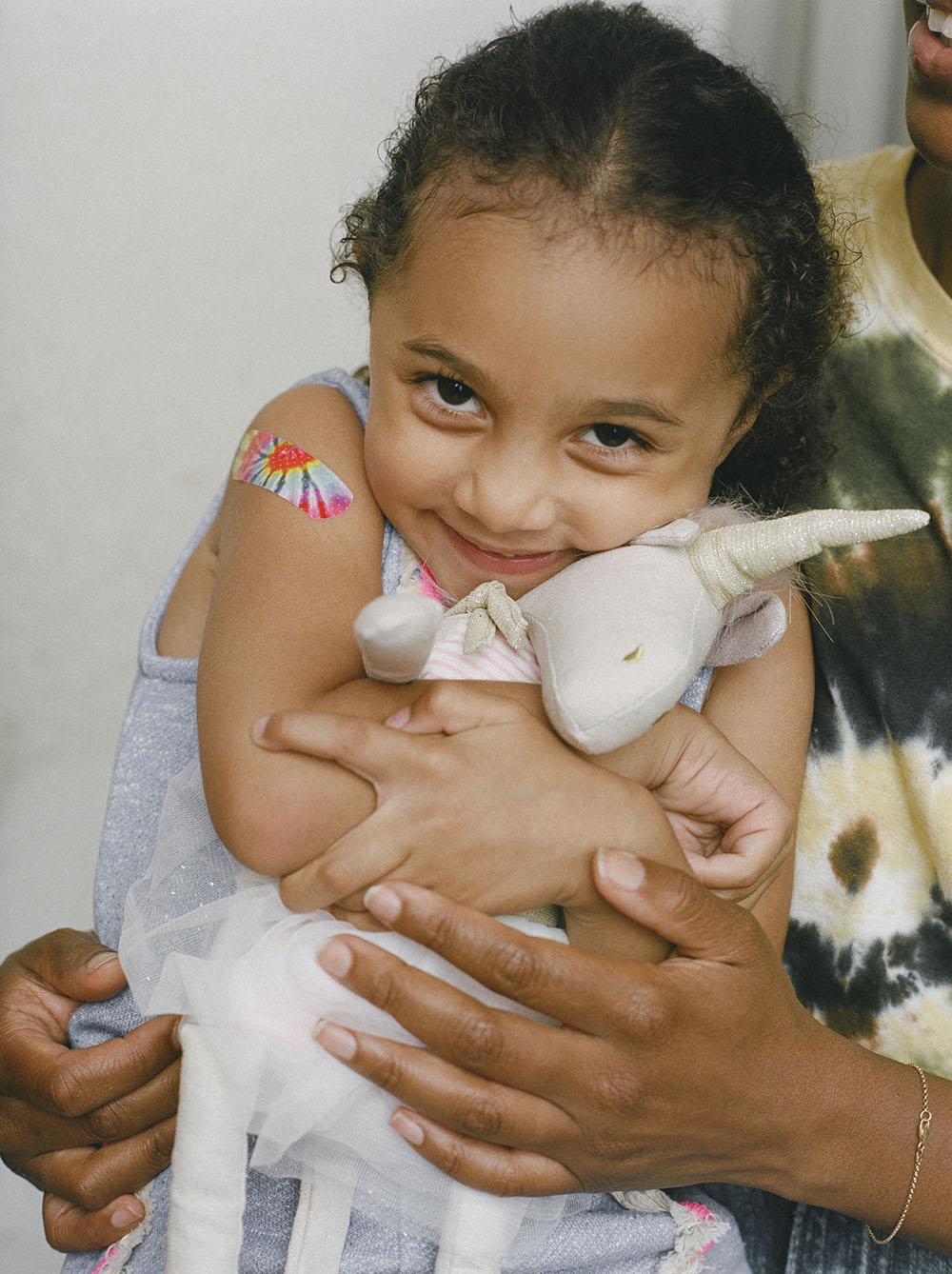
Join us in this national, multi-channel Vaccine Confidence campaign to help restore confidence in childhood immunizations and push the percentage of kindergarteners with recommended vaccinations back to, or above, the target 95 percent level. Use the variety of sharable communication tools below to help underscore the importance and power of immunizations.
Some parents may wonder "Can I Really Ask My Pediatrician That? " the answer is yes! Your pediatrician is your partner in your child's health. If you have questions about getting your baby to sleep, vaccines, or anything else — please give them a call or come in for a visit. Pediatricians have specialized knowledge and experience around keeping kids healthy, and they want to help you and your family.
Follow Pediatricians for Trustworthy Content on Children’s Health
Your child deserves care backed by science and expertise. Stay informed with reliable, expert-backed information from pediatricians.
Download and print these fact sheets for families to help facilitate immunization conversations.
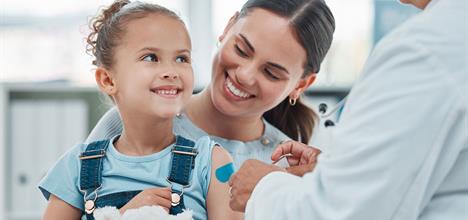
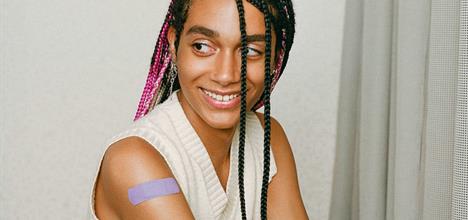
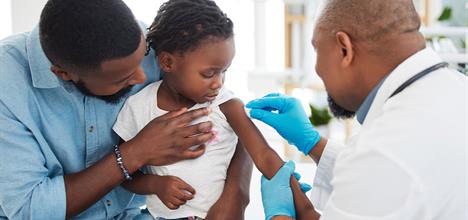
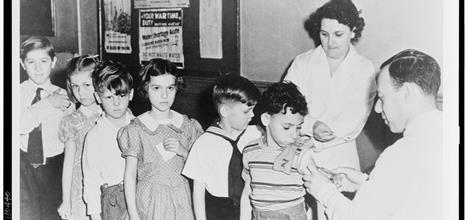
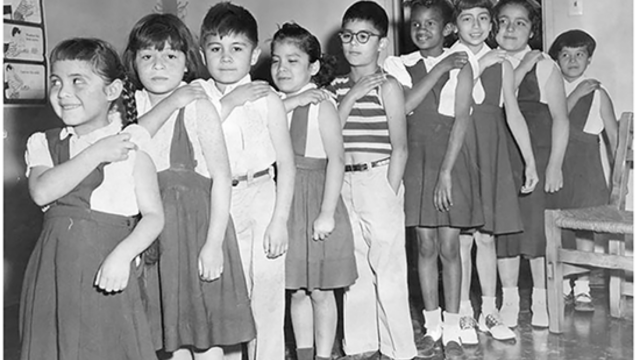
Looking for images that accurately and responsibly portray vaccination? Available for anyone to download and use in print, broadcast or online.
Professional News and Updates from the AAP:





Messaging to Share with Parents and Families from HealthyChildren:
How to Use This Toolkit
Each toolkit contains a set of key messages, social media graphics and copy, and related resources to share across your own channels.
Back-to-School Vaccination Vaccine Schedule Common Questions About Vaccines Hepatitis B Vaccine
Multiple Vaccines in One Visit Community Immunity Vaccine Ingredients Respiratory Viruses Measles
General Posting Guidelines
When posting about vaccines on social media, be sure to tag AAP or Healthy Children, and consider using the hashtags #AAP and #HealthyChildrenAAP to help amplify your message. Please encourage your followers, parents and families to talk with their pediatrician if they have vaccine questions or concerns.
Back-to-School Vaccination
Below are key messages, resources, graphics and social media posts you can use on your own channels to highlight back-to-school vaccination.
Key Messages
- Use these messages to incorporate across digital content, including newsletters, social media, blogs and more.
- Be sure your back-to-school checklist includes a visit to your pediatrician so your child is prepared to learn, play and thrive. Ask your pediatrician if your child is up to date on vaccinations so their immune system is ready to learn, too.
- In the classroom, in the cafeteria, on the playground — school is a place where kids play and learn alongside lots of other kids. They share classrooms, crayons, snacks … and germs. Their immune systems are busy, too. Staying up to date on vaccines prepares your child’s immune system to recognize and resist serious diseases they encounter. On-time immunization keeps kids in school — and school communities healthier.
- The American Academy of Pediatrics’ recommendations on vaccine timing is based on how kids’ immune systems develop and learn. Vaccines work best when a child’s body is best ready to respond.
- Did you know that on-time vaccination helps not only your child, but all of their friends and families too? That’s how community immunity works. If enough people are vaccinated, contagious diseases are stopped in their tracks. And when kids are healthy, everybody gets to stay in school, at work, and living their best life.
Graphics and Sample Social Copy
Below are sample social media posts and related graphics that you can use on your social media channels.
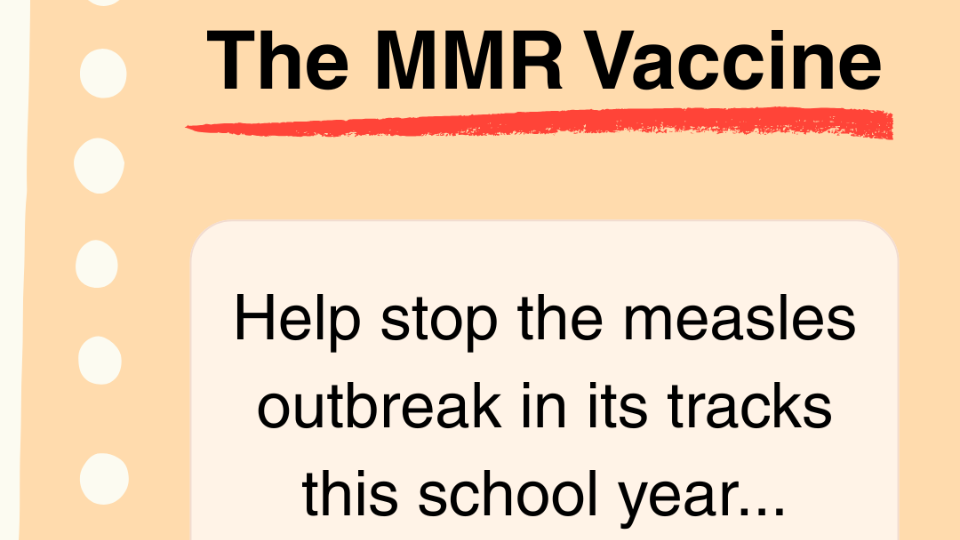
Carousel
Back to School: MMR
Suggested post: This school year, pediatricians urge parents to ensure their children are up to date on their vaccinations for preventable diseases, like measles, to keep them safe and healthy.
Following ongoing measles outbreaks, it’s important to recognize the critical need for immunization to create community immunity and protect the most vulnerable kids. Talk to your pediatrician to learn more about the importance of the MMR vaccine for kids.
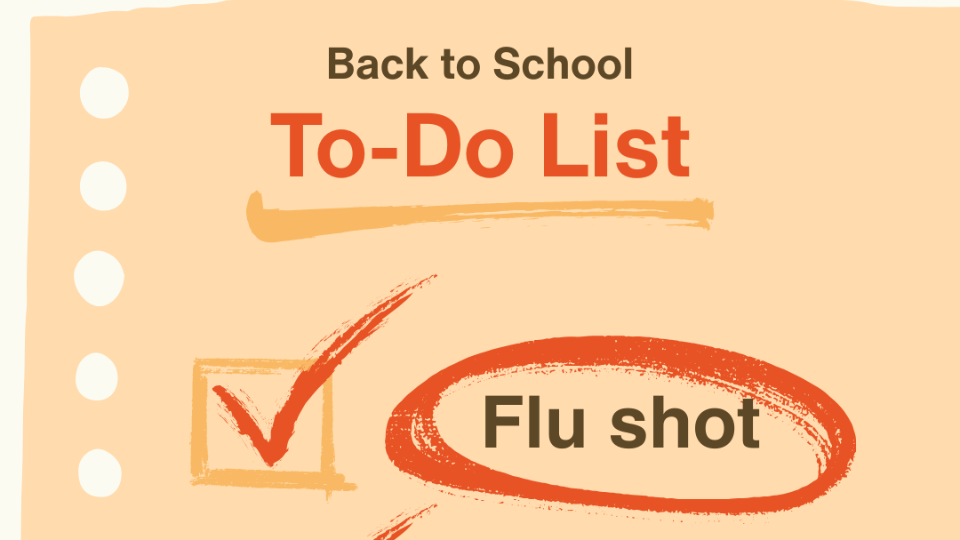
Back to School: Flu
Suggested post: It’s a busy time of year for parents as kids go back to school. While ensuring they have everything on their school supply list, don’t forget one of the most important ways to set your child up for success: making sure they’re up to date on their vaccinations.
When your child’s body develops lasting immunity, they stay healthy and can play, learn, and grow. Vaccines keep their friends at school healthy, too. Because when more kids have immunity, it’s harder for contagious diseases to spread. Talk with your pediatrician if you have any questions about the American Academy of Pediatrics’ recommended vaccine schedule.
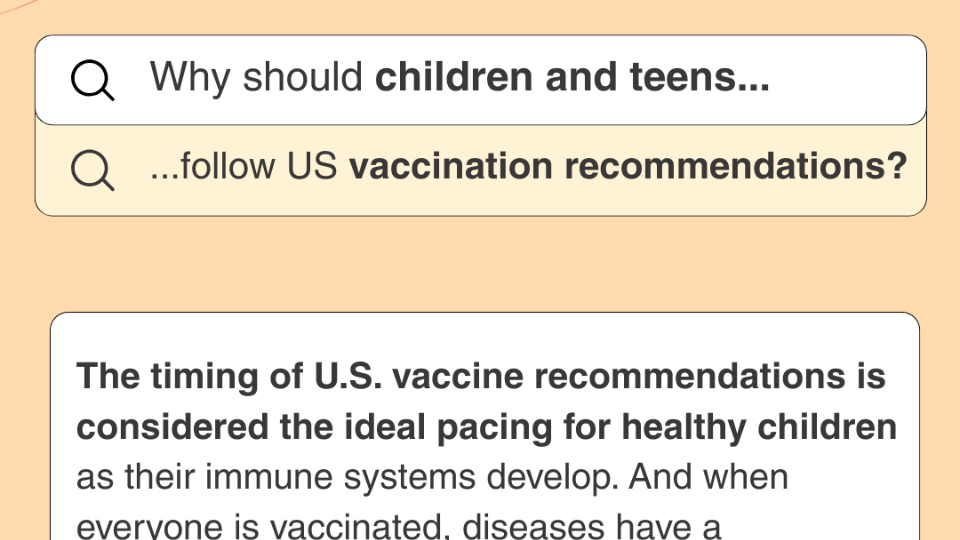
Follow the AAP's vaccine schedule
Suggested post: For many kids, the best part of school is being with friends — sharing space, playing on the playground and (gulp) trading germs. Close contact makes it easy for contagious diseases to spread quickly. When everyone in a school is vaccinated, it’s harder for diseases to spread.
As families get ready for a new school year, the AAP’s vaccine schedule helps make sure children are protected before they return to classrooms, buses, and busy hallways. These recommendations help keep kids healthy, learning, and thriving. If you have any questions about the AAP’s immunization schedule, don’t hesitate to reach out to your pediatrician.
Videos
Video
Healthy Kids, Stronger Classrooms: Here's How

Video
Back to School! Time to Check Your Child’s Vaccinations

Video
Join the Parents Keeping Classrooms Healthy This Year
Video
What Do Crayons, Snacks & Germs Have in Common?
Video
Respiratory Virus Season: Tips to Keep Your Kids Healthy
Video
Immunity in Action: Learning to Resist Viruses
Related HealthyChildren.org Resources


Vaccine Schedule
Below are key messages, resources, graphics and social media posts you can use on your own channels to highlight AAP's recommended immunization schedule.
Key Messages
Use these messages to incorporate across digital content, including newsletters, social media, blogs and more.
- Vaccine recommendations from the American Academy of Pediatrics are designed to help children in the United States resist serious illnesses so they can stay healthy, and our communities can stay healthy.
- AAP continues to recommend routine immunization against respiratory syncytial virus (RSV), hepatitis A, hepatitis B, rotavirus, COVID, flu, and meningococcal disease, in contrast to recent CDC recommendations that downgraded these vaccines. AAP also continues to recommend routine immunization against diphtheria, tetanus, pertussis (whooping cough), haemophilus influenzae type b (Hib), pneumococcal, polio, measles, mumps, rubella, varicella (chicken pox), and HPV.
- Nobody can predict which children will get seriously ill from these diseases, so choosing to skip or delay these vaccines is risky.
- AAP will continue to publish recommendations for childhood immunizations that are based in the latest evidence for what is important to protect children in the U.S.
- If you have questions about vaccines, talk with your child’s pediatrician. Working together, you can make informed decisions about your child’s health.
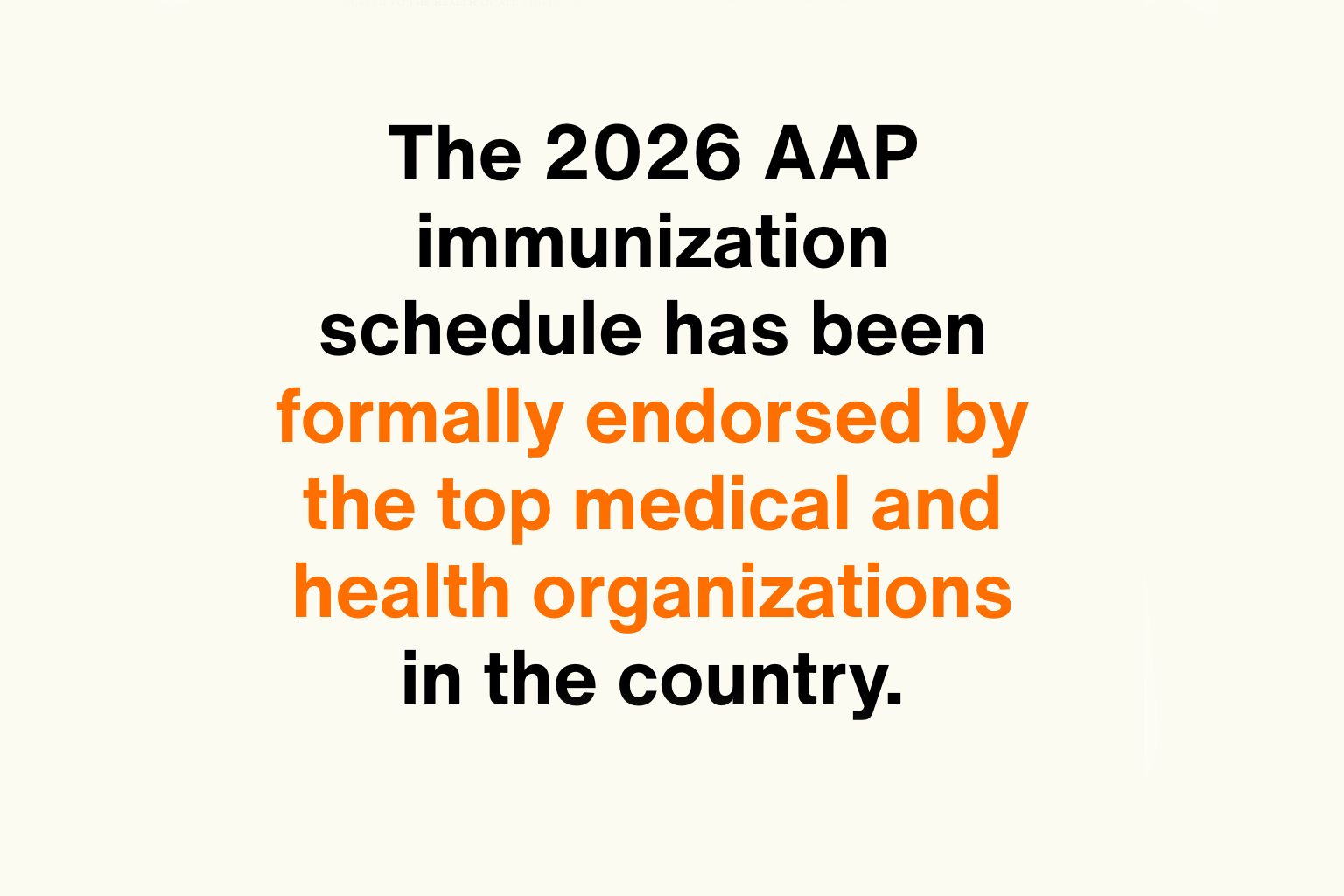
- The AAP immunization schedule is endorsed by 12 medical and health organizations representing more than 1 million clinicians, physicians, pharmacists and other pediatric health care professionals.
Graphics and Sample Social Copy
Below are sample social media posts and related graphics that you can use on your social media channels.
Carousel
Vaccine Schedule
Suggested post: The AAP schedule is updated annually to provide the latest, trusted guidance on when children and teens should receive each vaccine. This year 12 leading medical and healthcare organizations—including the American Medical Association and the American College of Obstetrics and Gynecologists—formally endorsed AAP’s schedule. This year’s schedule includes recommendations for protection against 18 serious diseases, including RSV, hepatitis A and B, rotavirus, influenza and meningococcal disease. Your pediatrician cares about your child’s health and development. Talk with your pediatrician if you have any questions about vaccines or the AAP’s recommended immunization schedule.
U.S. Vaccine Recommendations
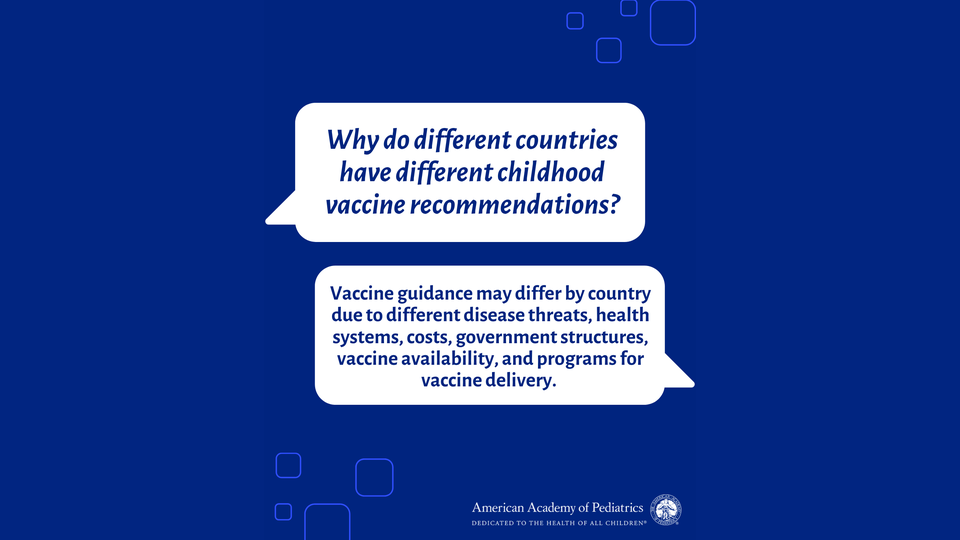
Suggested post: The AAP's vaccine recommendations for kids in the U.S. are designed to prepare children’s bodies to resist contagious diseases when their bodies respond best. Misinformation designed to instill fear in vaccines undermines the importance of on-time vaccination. It is difficult to predict which children will get seriously ill from a vaccine-preventable disease, so choosing to skip or delay some vaccines is risky. Pediatricians can serve as a trusted partner for parents when it comes to decisions on vaccines.
Vaccine Pacing and Timing
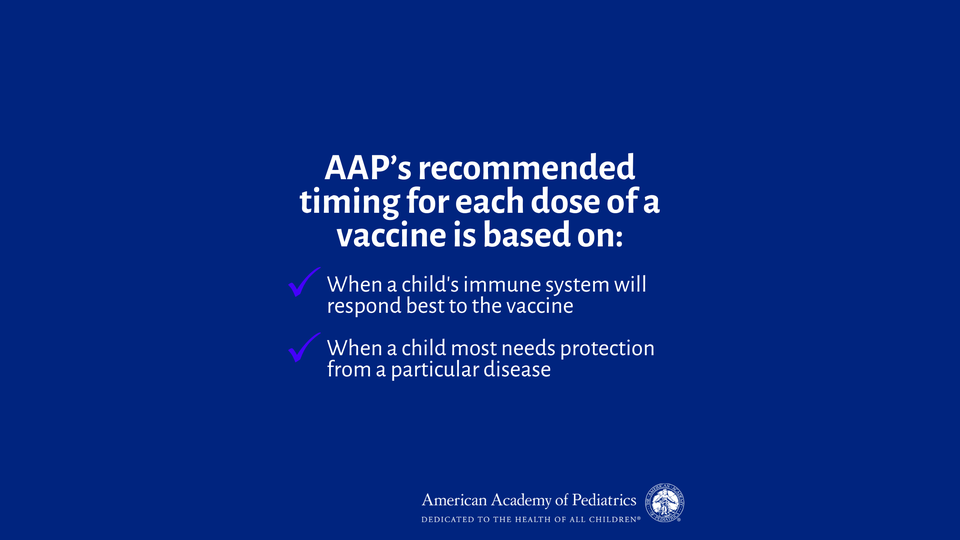
Suggested post: The AAP’s recommended pacing of childhood vaccines considers when children are most likely to be exposed to contagious diseases and when children’s immune systems will respond best. This timing has kept millions of kids healthy, so they can focus on growing, playing, and learning.
AAP’s recommendations are based on decades of research and the expertise of pediatricians and public health professionals. Talk to your child’s pediatrician with any vaccine-related questions.
Show Your Support of AAP’s Vaccine Schedule
Suggested use: Consider adding this badge to your printed and digital content like clinic signs, educational flyers, email signatures, websites, and social media posts. The “follow” badge is designed for clinics and other places that administer vaccines. The “support” badge is designed for all immunization champions.
Related HealthyChildren.org and AAP Resources


Common Questions About Vaccines
Below are key messages, resources, graphics and social media posts you can use on your own channels to highlight the benefits of widespread immunization.
Key Messages
Use these messages to incorporate across digital content, including newsletters, social media, blogs and more.
- Just like kids learn to read, their immune systems learn too. Vaccines are like books that teach the immune system to recognize and resist a disease. Immunized kids are healthier kids who can focus on growing, playing, and learning.
- Nobody can predict which children will get seriously ill from a vaccine-preventable disease, so choosing to skip some vaccines is risky. To help keep your child healthy and active, follow the American Academy of Pediatrics’ vaccine schedule.
- Booster shots for vaccines are like software updates for your phone. They help your child’s immune system perform better when they encounter contagious viruses. Ask your pediatrician if your child is up-to-date with recommended vaccines.
Graphics and Sample Social Copy
Below are sample social media posts and related graphics that you can use on your social media channels.
Carousel
An Open Letter to Parents
Suggested post: It’s important to lean on pediatricians for guidance and support when it comes to making decisions for your children, especially with so much confusing information being shared on vaccines.
Check out the American Academy of Pediatrics or Healthy Children’s website for more information and additional resources.
Carousel
Immunization Schedule FAQs
Suggested post: One of the most important steps you can take in ensuring your child grows up happy and healthy is keeping them up to date on their vaccinations. Each year, the American Academy of Pediatrics works with medical researchers to update its recommendations for childhood vaccines. Learn more about childhood vaccines and the latest recommendations from AAP.
Carousel
Questions About Vaccines
Suggested post: Routine vaccinations keep kids safe, healthy and learning. Childhood vaccines are one of the most critical tools we have to help kids develop immunity to serious diseases, so they can continue to grow and thrive in their communities. Visit the AAP’s website or healthychildren.org to learn more about routine immunizations.

How Vaccines for Children and Teens Work
Related HealthyChildren.org Resources



Measles
Below are key messages, resources, graphics and social media posts you can use to promote timely measles vaccination and combat misinformation.
Key Messages
Use these messages to incorporate across digital content, including newsletters, social media, blogs and more.
- Measles is of the most contagious viruses on the planet: one child with measles can spread the disease to up to 18 other unvaccinated people.
- Did you know that you can help stop a measles outbreak in its tracks? The measles vaccine is very good at keeping people from catching and spreading measles; two shots are 97% effective. Ask your pediatrician if your child has had both MMR shots.
- Measles spreads very quickly, and can keep kids away from friends, fun, and learning for weeks. Nobody can predict which children will get seriously ill from measles, so opting out of the childhood MMR vaccine is risky.
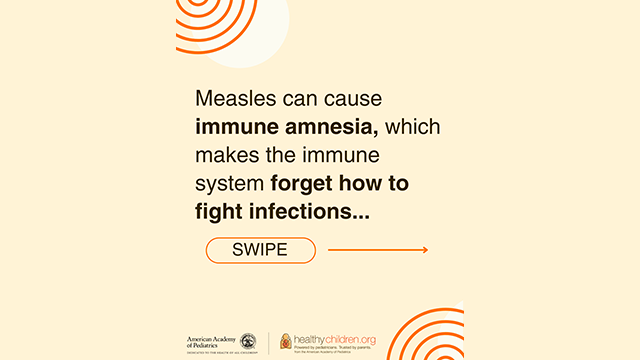
- Measles is not just a rash: it can make some children very sick and can even wipe out the immune system’s “memory.” This leaves the immune system less equipped to resist germs it has encountered before.
- Vaccines help keep our communities healthy. When most people have immunity, it’s harder for contagious diseases like measles to spread.
- For more messaging guidance, visit the AAP measles toolkit here.
Graphics and Sample Social Copy
Below are sample social media posts and related graphics that you can use on your social media channels.
Carousel
Immune Amnesia
Carousel
Early MMR
Carousel
How to Protect Your Kids During Measles Outbreak
Carousel
Pediatricians Answer Measles Questions
Hepatitis B Vaccine
Below are key messages, resources, graphics and social media posts you can utilize on your own channels to highlight the benefit of the hepatitis B vaccine.
Key Messages
Use these messages to incorporate across digital content, including newsletters, social media, blogs, and more.
- Many people infected with hepatitis B don’t even know they have it, so mothers can unknowingly pass it along during birth. Getting hepatitis as a baby leads to chronic liver disease or cancer, so help your baby’s immune system learn to resist the virus by following the recommended vaccine schedule.
- Vaccines work best when your child’s body is ready to learn and respond best, and birth is the optimal time for the first hepatitis B vaccine. It will stop a virus that leads to chronic liver disease — and give your baby the gift of a longer, healthier life.
- From the moment your baby is born, their incredible immune system is working non-stop to recognize and respond to viruses. One of the first things they may encounter is hepatitis B, which moms can unknowingly pass to their babies during delivery. That’s why the hepatitis b vaccine is the first one most babies receive.
- If they get it within 24 hours of birth, it can help their immune system stop a hepatitis B infection. On-time vaccination keeps babies healthy and active and on track to develop, learn, and grow.
- To protect as many people as possible, it helps for every newborn to get the hepatitis B vaccine right away. The reason: If a mother has hepatitis B, she can pass it to her baby during birth.
- Many people with hepatitis B don’t know they have it until they face serious liver problems later in life. If you’re an expecting parent with concerns about this vaccine, please talk with your OB/GYN and pediatrician before your baby is born.
Graphics and Sample Social Copy
Below are key messages, resources, graphics and social media posts you can use on your own channels to highlight the importance of the hepatitis B vaccine.
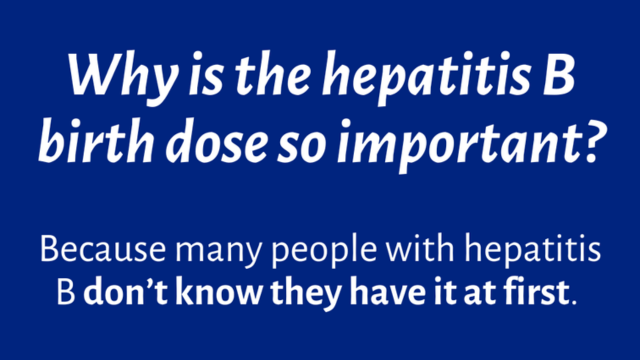
Hepatitis B Birth Dose
Suggested post: A baby’s immune system is ready for the hepatitis B vaccine as soon as they are born. On-time immunization is important, so your infant doesn’t get sick now — or later, because getting hepatitis B as a baby can lead to chronic liver problems later in life. Talk with your pediatrician if you have questions about the hepatitis B vaccine.
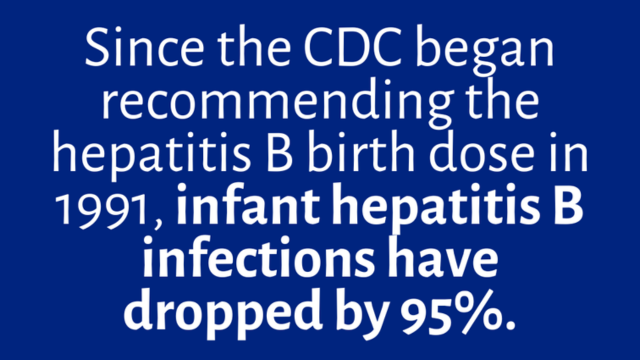
Hepatitis B Statistic
Suggested post: At birth, your baby’s immune system is ready to learn. The hepatitis B vaccine is the first one most babies get. Many people who are infected with hepatitis B don’t even know it and can easily pass it along to their baby at birth. Help your baby’s immune system learn to resist the virus by following AAP’s recommended vaccine schedule.
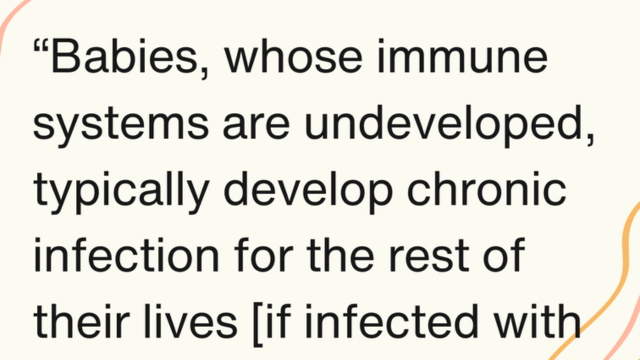
Hepatitis B Quote Card
Suggested post: Babies go through ages and stages, and their immune system does, too. Vaccines work best when your child’s body is ready to learn and respond, and birth is the best time for the first hepatitis B vaccine. It stops a virus that leads to chronic liver disease and gives your baby the gift of a longer, healthier life. If you have questions about the hepatitis B vaccine, talk with your pediatrician or visit healthychildren.org.
Related HealthyChildren.org Resources

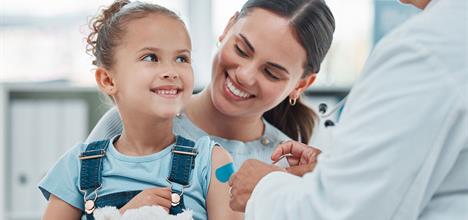

Multiple Vaccines in One Visit
Below are key messages, resources, graphics and social media posts you can utilize on your own channels to highlight the benefit of getting multiple vaccines over a short period.
Key Messages
Use these messages to incorporate across digital content, including newsletters, social media, blogs, and more.
- Children’s immune systems are constantly learning, and vaccines help them build critical immunity. Multiple vaccines over a short period of time don’t overwhelm a child’s immune system, they help it learn to resist preventable illnesses.
- Each childhood vaccine has been carefully tested on its own and in combination with others. Science-backed evidence from across decades points to a truth we can trust: On-time immunization keeps our kids and our communities healthier.
- The American Academy of Pediatrics’ vaccine schedule is designed to prepare children’s bodies to resist contagious diseases as early and fully as possible, which sometimes means receiving several vaccines in a short period of time. The schedule’s pacing has a purpose: it keeps kids healthy and active.
Graphics and Sample Social Copy
Below are sample social media posts and related graphics that you can use on your social media channels.
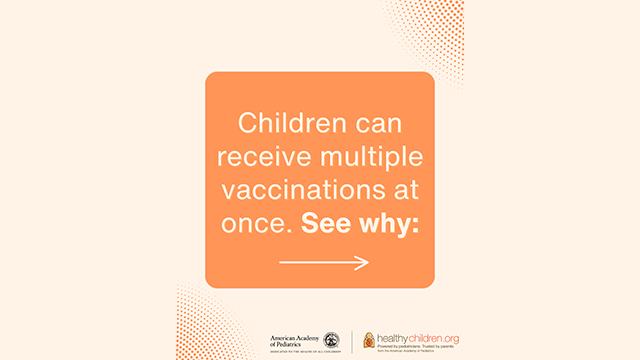
Carousel
Multiple Vaccines
Suggested post: The American Academy of Pediatrics’ vaccination schedule recommends specific pacing and combinations of vaccinations when your child’s body is ready to learn and respond best. These vaccines are thoroughly tested and help build children's immunity against many different illnesses. Visit the AAP or Healthy Children’s website for more information.
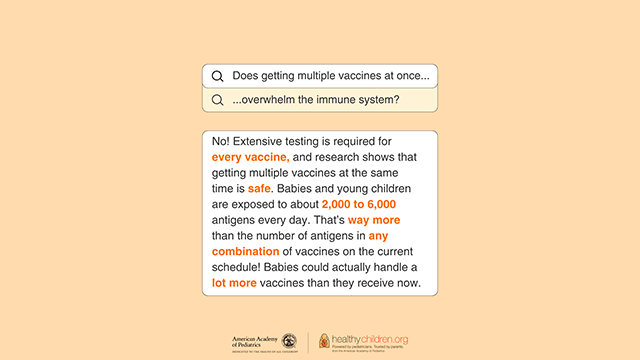
Multiple Vaccines Q&A Card
Suggested post: Science shows that there is no benefit to delaying childhood vaccines – doing so can put kids’ health at risk.
If you have any questions or concerns about vaccinations for your child, talk with your pediatrician or visit the AAP or Healthy Children’s website.
Related HealthyChildren.org Resources

Community Immunity
Below are key messages, resources, graphics and social media posts you can use on your own channels to highlight the need for community immunity to prevent the spread of illnesses.
Key Messages
Use these messages to incorporate across digital content, including newsletters, social media, blogs, and more.
- Because routine childhood immunizations are widely available and widely used in the U.S., most kids today will never get whooping cough, tetanus, polio or meningitis.
- When vaccination is widespread, contagious diseases have a hard time spreading. That’s called community immunity.
- Measles outbreaks are happening in communities where vaccination rates have dipped below levels needed to maintain community immunity. When enough people are vaccinated, measles can’t spread.
Graphics and Sample Social Copy
Below are sample social media posts and related graphics that you can use on your social media channels.
Carousel
Community Immunity at School
Suggested post: High childhood vaccination rates help to foster community immunity, which creates widespread protection against the most contagious diseases. it's critical to ensure your children are up to date on their vaccines so that they can keep learning, thriving and growing in and out of the classroom. Visit the AAP or Healthy Children’s website for more information.
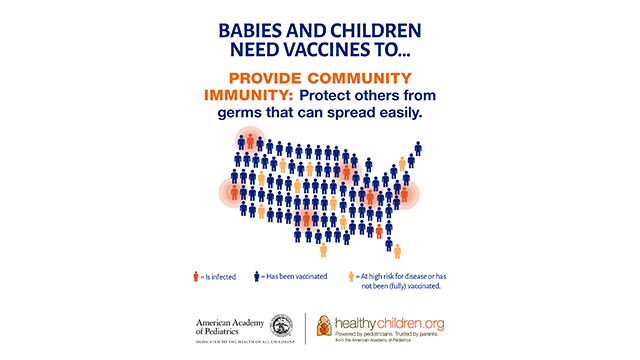
Community Immunity Card
Suggested post: Dangerous illnesses, like measles, can spread when too many people don’t receive vaccines. This puts community immunity against some of the most serious preventable-illnesses at risk. Learn more at the AAP’s website or by visiting healthychildren.org.
Related HealthyChildren.org Resources

Vaccine Ingredients
Below are key messages, web links, graphics and social media posts you can use on your own channels to share information and resources on vaccine ingredients.
Key Messages
Use these messages to incorporate across digital content, including newsletters, social media, blogs, and more.
- Each ingredient in a vaccine has a specific function, making the vaccine work better with children’s immune systems.
- On-time immunizations are an ingredient of a healthy childhood: Kids who aren’t sick are out there playing, learning and growing.
- Vaccines contain antigens that spark the immune system’s response to a virus, preservatives that keep vaccines from expiring too early or getting contaminated in the vial, and adjuvants which help the body create a stronger immune response.
Graphic and Sample Social Copy
Below are sample social media posts and related graphics that you can use on your social media channels.
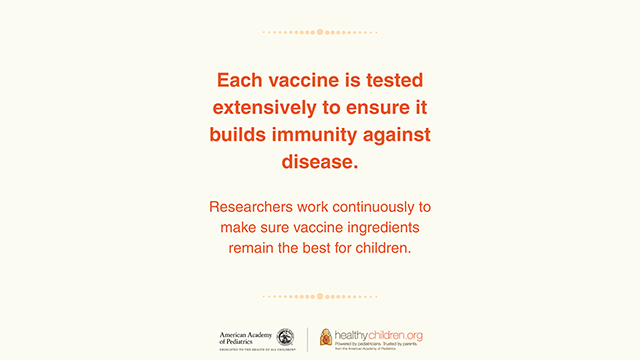
Vaccine Ingredients are Tested Extensively
Suggested post: Each ingredient within a vaccine plays a key role in its efficacy, making it safer or allowing it to work better. If you have any questions or concerns, don't hesitate to speak with your pediatrician or visit HealthyChildren.org for more information.
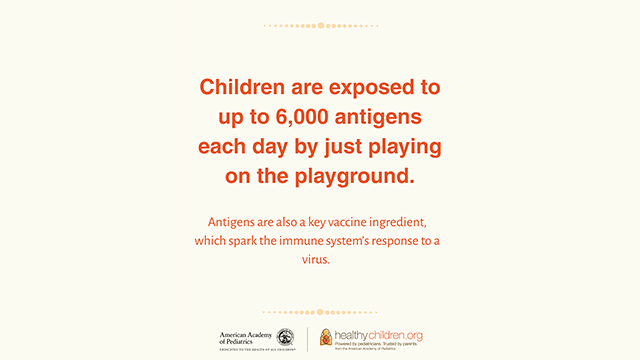
Antigens
Suggested post: All vaccines contain antigens that help the body create the immune response needed to protect against an infection. What’s more, kids are exposed to up to 6,000 naturally occurring antigens each day, just by going to places like the playground.
If you have any questions or concerns about vaccinations for your child, talk with your pediatrician or visit the American Academy of Pediatrics’ website.
Carousel
Vaccine Ingredient Questions
Suggested post: It’s natural to want to understand exactly what is in the vaccines children receive. Each vaccine ingredient serves a specific purpose to help children build immunity against preventable diseases. Visit HealthyChildren.org for additional information on vaccine ingredients.
Related HealthyChildren.org Resources

Respiratory Viruses
Below are key messages, resources, graphics and social media posts you can utilize on your own channels to highlight the importance of vaccination ahead of respiratory virus season.
Key Messages
Use these messages to incorporate across digital content, including newsletters, social media, blogs, and more.
- When it comes to serious illnesses like RSV and the flu, your child’s immune system can use a little help. Your child’s immune system learns from immunizations how to recognize and resist infection.
- RSV season begins in October and lasts through March — and RSV can be serious for newborns and scary for parents. Parents have options when it comes to the RSV shot: pregnant mothers can receive the shot late in their pregnancy, or your baby can get the shot soon after they are born.
- The American Academy of Pediatrics' recommended vaccine schedule is based on when a child’s immune system is most ready to learn and respond. For the flu vaccine, the recommended pace is yearly, starting at 6 months. Make sure your baby stays ahead of preventable diseases so they can keep moving ahead toward their developmental milestones.
- Your child’s immune system and the COVID vaccine are a winning team. The vaccine teaches your child’s immune system to recognize and resist the virus that causes COVID, so they can stay in school and participate in the group activities they love.
Graphics and Sample Social Copy
Below are key messages, resources, graphics and social media posts you can use on your own channels this respiratory virus season.
Carousel
What to Know: Respiratory Virus Season
Suggested Post: As children come in contact with various germs, their immune systems work to resist illnesses and viruses. But children need the help of immunizations to build immunity against more serious illnesses, like RSV and influenza. Learn more about the American Academy of Pediatrics’ recommended immunization schedule this respiratory virus season.
Carousel
RSV Season
Suggested Post: Babies who get RSV can get much sicker than older kids because their lungs and airways are so tiny. Immunizations — for pregnant moms and infants — give babies a strong start, especially during RSV season. Talk with your pediatrician to learn more about the AAP’s recommended vaccination schedule for your baby.
Related HealthyChildren.org Resources

Printables
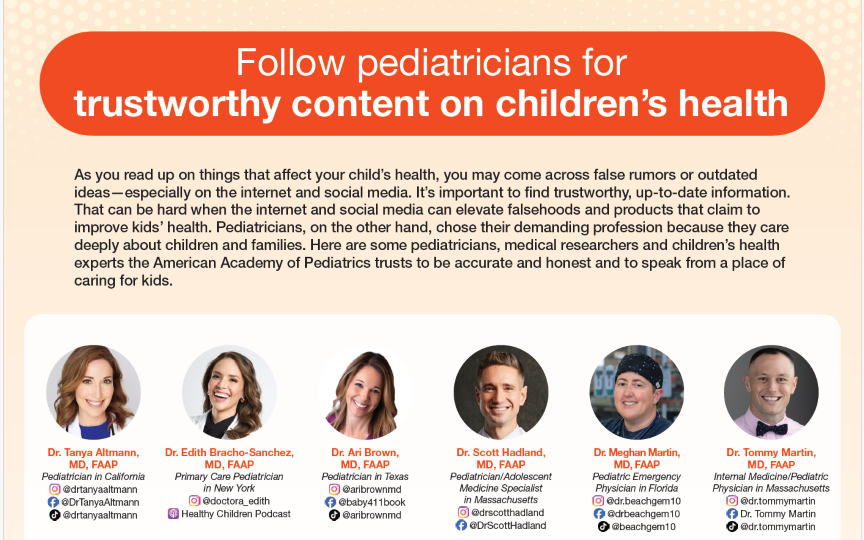
'Follow Pediatricians for Trustworthy Content' Flyer or Poster
This template prints an 8.5” x 11” page of pediatricians to follow in social media.
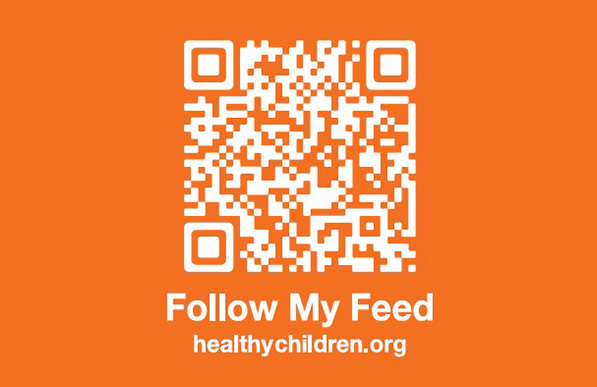
“Follow My Feed” QR Button Pin
This template prints a 2.25-inch round button.
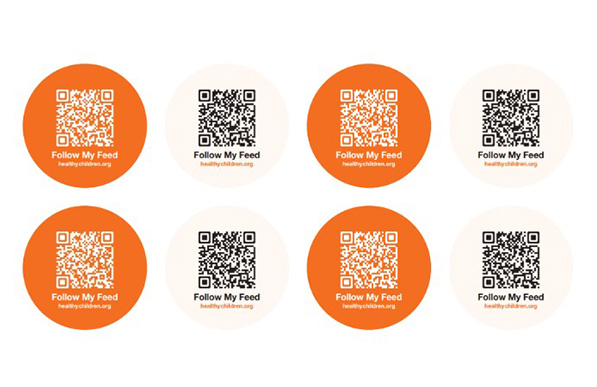
“Follow My Feed” QR Sticker Sheet
This QR code links to the HealthyChildren.org page of AAP members who post trustworthy content on children’s health. Print this template using Avery label sheet #94506.
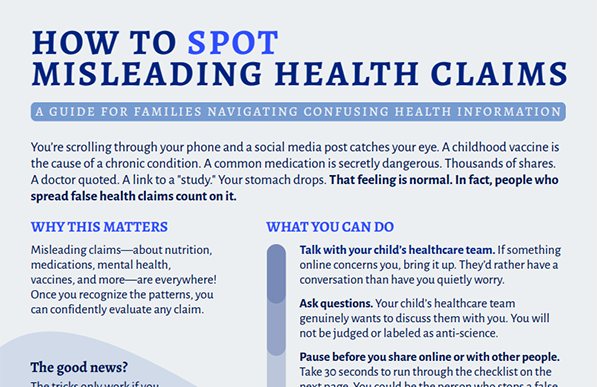
How to Spot Misleading Health Claims
Pediatricians everywhere have seen it in the exam room: a parent who has already made a decision based on a misleading claim they saw online, and no amount of reassurance seems to help. The AAP, in partnership with the Center for Unbiased Science and Health, has developed a simple resource to help families navigate today’s flood of online health information. “How to Spot Misleading Health Claims” walks parents and caregivers through eight practical questions, from “Is this trying to scare or inform me?” to “Is someone profiting from this claim?”, so they can confidently evaluate claims. Download and share with your patients and families today.
Last Updated
01/23/2026
Source
American Academy of Pediatrics