Olson LM, Barkin SL, Burr WH, Somberg CM, Hoffman BD
Presented at the 2025 Pediatric Academic Societies Annual Meeting
Background: In the late 1980s gun injury among children began surging to historic levels. In response, pediatricians led the way in firearm injury prevention as advocates and clinicians. After substantial decline starting in the mid-1990s, fatalities again surged. From 2011 to 2021 firearm deaths among children 19 and under increased 76%. In 2021 firearms were the leading cause of death for those aged 10-19.
Objective: Assess trends from 1994-2024 on pediatricians’ experience treating gun injuries, providing counseling, & attitudes toward legislative options.
Methods: National random sample Periodic Surveys of AAP members in 1994 (n=982, response rate=69%), 2000 (922, 62%), 2008 (853, 55%), 2013 (654, 44%), 2019 (597, 41%), and 2024 (773, 41%); analysis restricted to respondents in direct patient care (primary care & subspecialty). Topics: attitudes toward gun violence as a priority, clinical experience treating gun injuries, counseling practices, and legislative options. Additional counseling related items were added in 2000. Additional legislative Items added in 2013. Chi-square assessed changes across years.
Results: VIOLENCE PREVENTION: In all years, 88% or more pediatricians reported violence prevention should be a pediatric priority.
TREATMENT & COUNSELING: In 2024, 20% of pediatricians treated or consulted on one or more gun injuries in the past 12 months; ranging from 20% (2024) to a low of 9% (2008). In 2024, 54% reported ever treating or consulting on a gun injury, ranging from 54% (2024) to 39% (2008). Generally, rates of reported barriers to counseling have remained constant or increased, e.g., lack of time during visits, and perceived parent resentment (Table 1). Over 30 years, there was a significant increase in pediatricians' own reported counseling practices (Table 2), e.g., those reporting they always/sometimes identify if there are firearms in the home increased: 51% (1994) to 77% (2024).
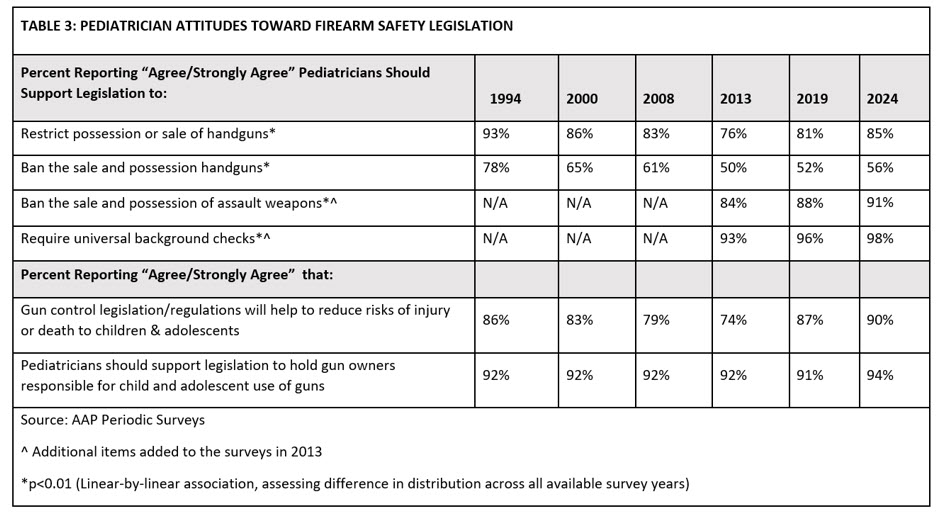
ATTITUDES ON LEGISLATION: Across all years, 74+% reported they believe legislation/regulation will help reduce injury or death; 91+% supported legislation to hold gun owners responsible for child use of guns (Table 3). Support for handgun bans declined and support to ban assault weapons and universal background checks increased.
Conclusion: While barriers remain constant, pediatricians’ counseling on firearm injury prevention increased significantly over the past 30 years, indicating firearm injury prevention remains a high priority for pediatricians. Views on legislative options changed significantly over time, likely reflecting historic increases in mass shootings. Results can help inform next steps.
Table 1. Pediatrician Assessment of Factors Related to Firearm Counseling Practices
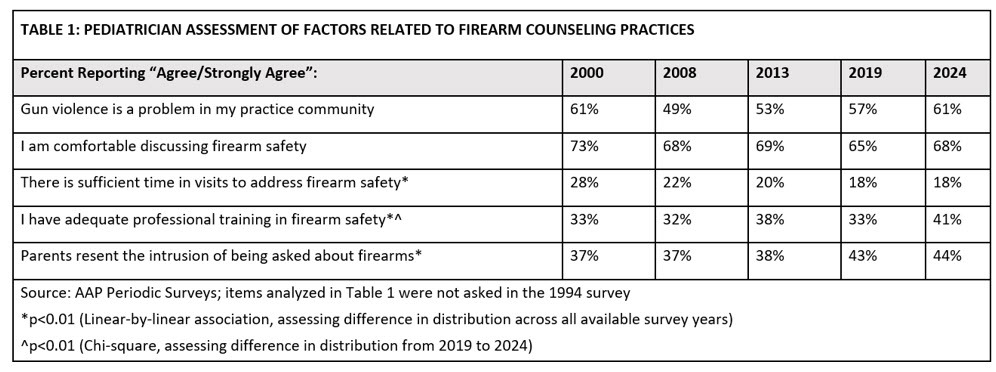
Table 2. Pediatrician Firearm Counseling Practices
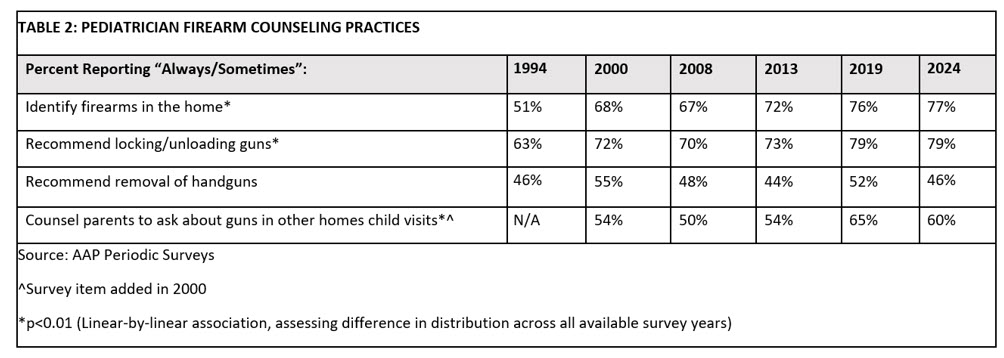
Table 3. Pediatrician Attitudes Toward Firearm Safety Legislation
Last Updated
05/15/2025
Source
American Academy of Pediatrics