JoAnna Leyenaar, Kelsey Jackson, Mary Pat Frintner, Elizabeth Gottschlich, Barrett Fromme
Presented at the 2026 Pediatric Academic Societies Annual Meeting
Background: Over the past decade, pediatric hospital medicine (PHM) in the US has evolved, gaining subspecialty recognition in 2016. After 2019, PHM fellowship training was the only pathway toward American Board of Pediatrics subspecialty board certification for residency graduates. These changes may have shaped graduating residents’ career paths.
Objective: Examine percent of pediatric residents graduating in the last 10 years who reported a post-residency PHM position (fellowship or job) and identify which characteristics and other factors were associated with starting a PHM fellowship vs job after residency graduation.
Methods: The American Academy of Pediatrics Annual Survey of Graduating Residents was sent yearly to a national random sample of 1,000-1,200 pediatric graduates (2016-2025). Overall, 46% responded; responses were pooled across years (n=4740). Chi-square linear-by-linear tests examined differences over time in the percent starting PHM positions. Chi-square tests or t-tests were used to examine differences in residency graduation year (grouped 2016-2019 vs 2020-2025 based on eligibility criteria for subspecialty board certification), characteristics, finances and future clinical practice goal between those starting PHM fellowships vs jobs.
Results: Overall, 9% reported they were starting a PHM job and 2% reported PHM fellowship. Slightly fewer residents reported a PHM position (job or fellowship) across years, p<.05 [Fig 1].
Among those starting a PHM position (n=495), percent reporting fellowship increased from 2016 to 2025: 10% to 20%, p<.01 [Fig 2]. Examining 2020 to 2025, no significant increase was observed (p=.46).
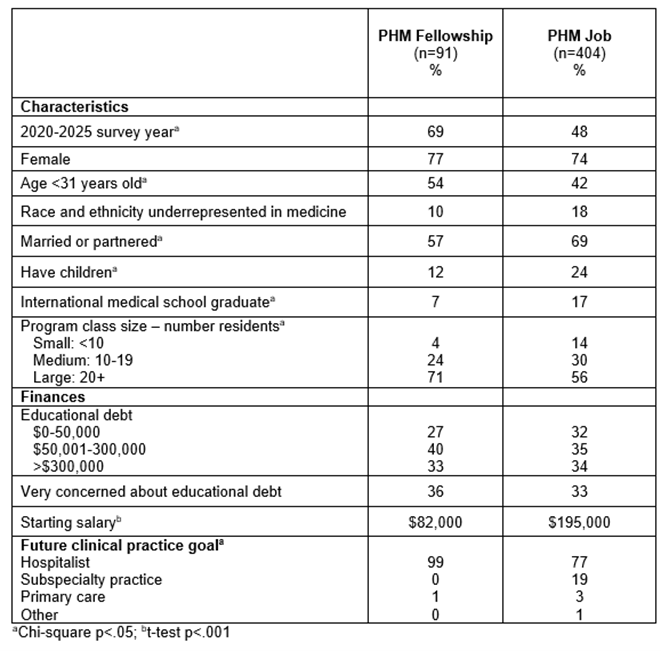
Residents starting a PHM fellowship were more likely than those starting a PHM job to have graduated after 2019 (69% vs 48%, p<.001), be < 31 years old (54% vs 42%, p<.05) and be from a larger residency program (71% vs 56%, p<.01) [Table]. They were less likely to be married or partnered (57% vs 69%, p<0.05), have children (12% vs 24%, p<.05) and have graduated from an international medical school (7% vs 17%, p<.05). Residents starting a PHM job reported a higher salary ($195,000 vs $82,000, p<.001) and were less likely to report hospitalist as their future practice goal (77% vs 99%, p<.001).
Conclusion: About 1 in 10 residents reported starting a PHM position after residency, with an increase in those pursuing fellowship after 2019. Overall, nearly 8 in 10 of those starting a PHM position planned to work as a hospitalist long term. These findings provide valuable data regarding growth of PHM as a subspecialty and can inform national workforce planning initiatives.
Figure 1. Percent of Graduating Pediatric Residents Reporting they were Starting a PHM Position (Fellowship or Job) by Year
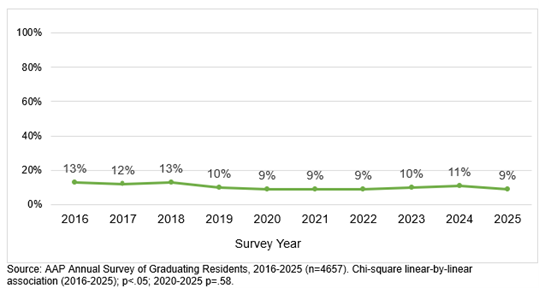
Figure 2. Percent of Graduating Pediatric Residents Reporting PHM Job or PHM Fellowship by Year (Among Subgroup Reporting 1 of These 2 Post-Residency Positions)
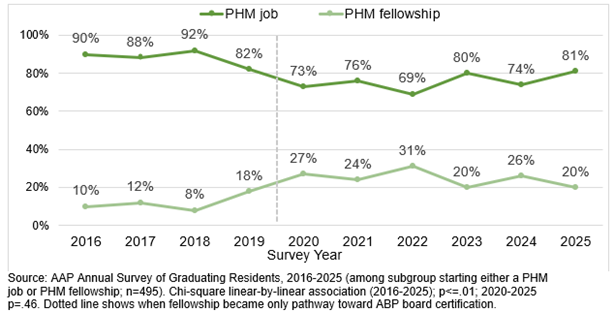
Table 1. Resident Graduation Year, Characteristics, Finances, and Future Clinical Practice Goal of Graduating Pediatric Residents Starting Post-Residency PHM Fellowship vs Job
Last Updated
05/05/2026
Source
American Academy of Pediatrics